Key Points
- Bristol City Council has agreed an exclusive deal with developers to revive a long-neglected waterfront site at Redcliffe Wharf, ending more than three decades of stalled regeneration efforts.
- The harbour committee has approved teaming up with Bristol Temple Quarter, the partnership leading the wider Temple Quarter regeneration programme.
- Concerns have been raised about the exclusive nature of the deal and the long history of delays at the site.
- The wider Temple Quarter scheme, overseen by the Bristol Temple Quarter Limited Partnership (BTQ LLP), aims to deliver up to 10,000 new homes, commercial space and public realm across 135 hectares near Temple Meads station.
- Developers Muse Places have been appointed to lead delivery at Temple Meads West, with an outline planning application expected in early 2027.
- A £23 million eastern entrance to Temple Meads station and the University of Bristol’s £500 million Enterprise Campus are due to open in September 2026 as part of the wider regeneration.
- A Southern Gateway transport hub, including a multi-storey car park, cycle pavilion and bus stops, has secured planning permission and work is expected to start in July 2026.
Bristol (Bristol Express News) July 2, 2026 – Bristol City Council and Bristol Temple Quarter, 2 July 2026 – After more than 30 years of failed attempts, the long-derided Redcliffe Wharf waterfront site in Bristol has been given a fresh chance at regeneration following an exclusive deal agreed by Bristol City Council with developers linked to the wider Temple Quarter programme.
- Key Points
- What is the new deal for Redcliffe Wharf and who is involved?
- Why has Redcliffe Wharf been called an ‘eyesore’ for 30 years?
- What are the wider Temple Quarter regeneration plans?
- What infrastructure and campus projects are already under way?
- What transport upgrades are planned for Temple Quarter?
- What concerns have been raised about the exclusive deal?
- What are the next steps for Redcliffe Wharf and Temple Meads West?
- Background: How the Redcliffe Wharf and Temple Quarter developments evolved
- Prediction: How this development could affect residents, businesses and visitors in Bristol
The city’s harbour committee has approved a proposal to team up with Bristol Temple Quarter, the joint venture between Homes England, Bristol City Council and the West of England Combined Authority (WECA) that is already driving one of the UK’s largest urban regeneration schemes.
The move marks a potential turning point for a site that has become synonymous with stalled plans and missed opportunities on Bristol’s Floating Harbour.
What is the new deal for Redcliffe Wharf and who is involved?
The harbour committee’s decision clears the way for the Redcliffe Wharf site to be brought forward as part of the wider Temple Quarter regeneration framework.
As reported by Bristol247, the committee has approved “teaming up with Bristol Temple Quarter” to take the site forward, effectively ending a long period in which the land remained underused despite repeated proposals over the past three decades.
Under the emerging structure, the site will be progressed through Bristol Temple Quarter Limited Partnership (BTQ LLP), the delivery vehicle established by the council, Homes England and WECA to coordinate development across the 135-hectare (333-acre) Temple Quarter area.
The partnership has already appointed Muse Places as its lead developer for Temple Meads West, a key component of the wider scheme, following a selection process that highlighted Muse’s regeneration experience in Salford, Plymouth, London and its existing work at Wapping Wharf in Bristol.
Why has Redcliffe Wharf been called an ‘eyesore’ for 30 years?
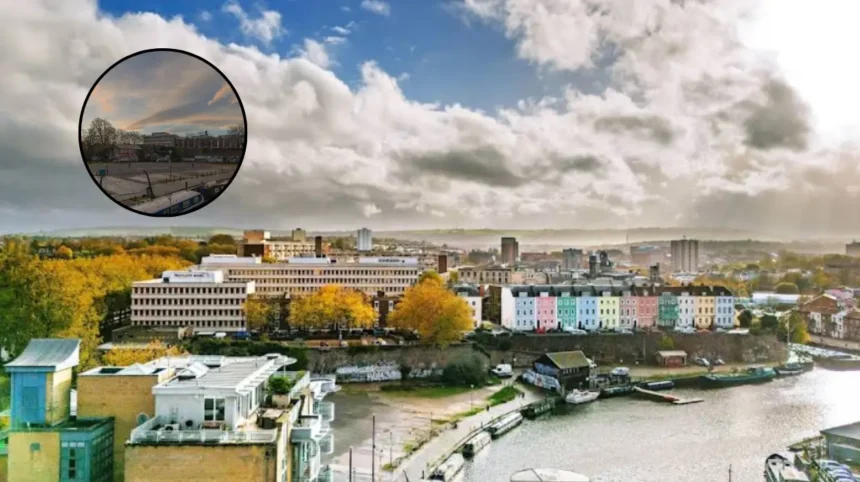
Redcliffe Wharf sits on the south side of Bristol’s Floating Harbour, close to Temple Meads station and the emerging Enterprise Campus of the University of Bristol.
For more than three decades, the site has been the subject of multiple regeneration proposals that failed to materialise, leaving parts of the waterfront underutilised and in a condition that critics have described as an “eyesore”.
The repeated failure to deliver meaningful change at Redcliffe Wharf has stood in contrast to the rapid transformation of other parts of the city centre and nearby areas such as Wapping Wharf, which have seen substantial new housing, commercial and leisure development.
Local observers and regeneration specialists have pointed to complex ownership arrangements, funding gaps and shifting policy priorities as factors behind the long delay.
What are the wider Temple Quarter regeneration plans?
The Redcliffe Wharf deal is taking place within the context of the much larger Temple Quarter programme, one of the most ambitious regeneration projects in the UK outside London.
As outlined by the Construction Enquirer, the Bristol Temple Quarter scheme is being brought forward by a partnership between Homes England, Bristol City Council and the West of England Combined Authority, with BTQ LLP acting as the delivery arm.
The overall vision encompasses up to 10,000 new homes alongside major commercial development, public realm improvements and transport upgrades focused around Bristol Temple Meads railway station.
The area covered by the regeneration is described as roughly equivalent to 100 football pitches, with portions of the scheme expected to open by the end of 2026 even if full completion will take longer.
What infrastructure and campus projects are already under way?
Significant elements of the Temple Quarter regeneration are already at an advanced stage, with major infrastructure and education projects due to open in the coming months.
A £23 million eastern entrance to Temple Meads station is under construction, funded from a £95 million government grant allocated to BTQ LLP in 2022.
This entrance is expected to transform access to the station and is projected to serve more than two million visitors annually once operational.
Alongside this, the University of Bristol’s £500 million Enterprise Campus, which will accommodate around 5,000 students and staff, has completed its main construction phase and is scheduled to open in September 2026.
As reported by the BBC, the final phase of construction of the campus is complete ahead of it opening to students in September, marking the first major infrastructure project delivered under the Temple Quarter regeneration scheme overseen by WECA.
The campus is anticipated to provide space for start-ups and community initiatives and is intended to be open to a wide range of users beyond the university itself.
Explore More Local Bristol News
Historic Primary School Refurbishment in Bristol Planning Applications 2026
Bristol Airport Expansion Plans Include New Routes to US and Middle East Bristol 2026
What transport upgrades are planned for Temple Quarter?
Transport improvements form a central pillar of the Temple Quarter plans, with several major projects already in the pipeline.
In November 2025, BTQ LLP secured a resolution to grant planning permission for the Southern Gateway transport hub, which will include a new pedestrian entrance over the River Avon, a dedicated cycle facility with capacity for more than 700 bicycles, and a multi-storey car park with 350 spaces.
As reported by Bristol247, construction work on the £35 million multi-storey car park element of the Southern Gateway scheme is due to begin in July 2026 after a contractor was appointed following unanimous planning approval in autumn 2025.
The Southern Gateway will also link to walking and cycling paths being developed through Bedminster, Mead Street and Whitehouse Street, improving connectivity between the station, the new campus and surrounding neighbourhoods.
These upgrades are designed to support the anticipated growth in housing, employment and visitor numbers associated with the wider regeneration.
What concerns have been raised about the exclusive deal?
Despite the optimism surrounding the new deal, concerns have been raised about the decision to proceed via an exclusive agreement with developers linked to the Temple Quarter partnership.
Critics have pointed to the long history of delays at Redcliffe Wharf and questioned whether the latest arrangement will deliver a fundamentally different outcome.
There are also wider debates about the balance of power between public authorities and private developers in large-scale regeneration projects, and whether exclusive deals limit competition and transparency.
Local stakeholders and community groups are likely to scrutinise the detailed plans as they emerge, particularly in relation to the mix of housing, affordability, public access to the waterfront and the impact on existing communities.
What are the next steps for Redcliffe Wharf and Temple Meads West?
Following the harbour committee’s approval, the focus will shift to the development of detailed proposals for Redcliffe Wharf within the wider Temple Quarter framework.
In parallel, Muse Places has begun work on an outline planning application for Temple Meads West, which includes a string of publicly owned sites adjacent to the station such as land at the Friary, the City Point building and car parks at Temple Gate, Lower Station Approach and Portwall Lane.
Submission of the outline planning application for Temple Meads West is pencilled in for early 2027, with Muse also supporting BTQ LLP on emerging plans for St Philip’s Marsh, another major brownfield regeneration opportunity in central Bristol.
Contractors for the Southern Gateway transport hub are due to be named in July 2026, with on-site works expected to start shortly afterwards.
Background: How the Redcliffe Wharf and Temple Quarter developments evolved
Redcliffe Wharf and the wider Temple Quarter area have been identified as strategic regeneration sites for Bristol for more than three decades.
The Temple Quarter framework was formally adopted by Bristol City Council in May 2023 and now serves as a material consideration in planning decisions across the area.
The creation of BTQ LLP, a joint venture between Bristol City Council, Homes England and WECA, marked a significant step in consolidating delivery of the scheme, with a focus on coordinating housing, employment,infrastructure and public realm.
The appointment of Muse Places as lead developer for Temple Meads West in early 2026, and the parallel progress of major projects such as the university campus and station entrances, represent the most tangible progress to date in turning long-standing plans into built reality.
Redcliffe Wharf’s inclusion in this programme follows years of aborted proposals and represents an attempt to align the site with the broader strategic vision for the area.
Prediction: How this development could affect residents, businesses and visitors in Bristol
If the new deal delivers on its stated aims, residents, businesses and visitors in Bristol are likely to experience a significant shift in the city’s urban landscape and economic trajectory.
Local residents may see increased access to new housing, improved transport links and enhanced public spaces around the harbour and Temple Meads, though the balance of market and affordable housing will be a key determinant of who benefits most.
Businesses, particularly in the technology, creative and knowledge sectors, could gain from the proximity to the University of Bristol’s Enterprise Campus and the concentration of start-up and innovation space planned within the quarter.
Visitors and commuters are likely to encounter a more integrated transport hub at Temple Meads, with better pedestrian, cycle and rail connections that could alter travel patterns across the city.