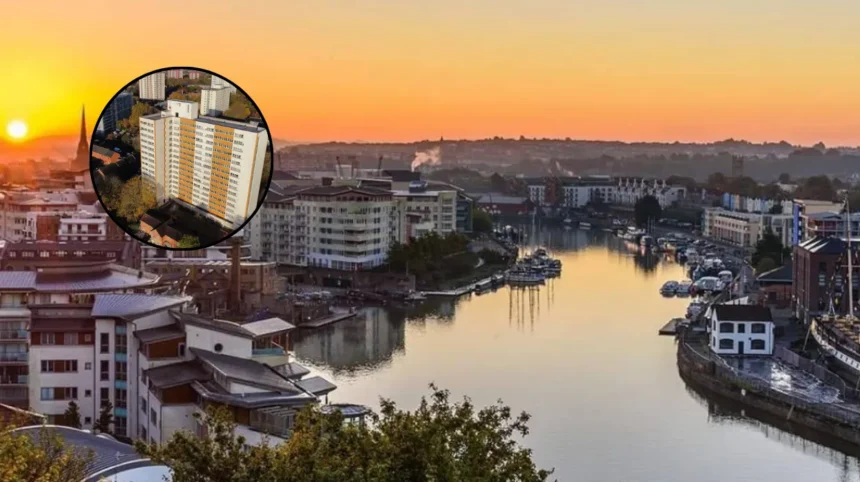
Key Points
- Bristol’s housing cabinet member has called on incoming Prime Minister Andy Burnham to create a nationwide fund to help councils demolish ageing, unsafe 1960s tower blocks.
- The demand comes as taxpayers face a multi‑million pound bill to repair or patch up high‑rise buildings that no longer meet modern fire and structural safety standards.
- Bristol City Council says residents will ultimately decide the future of the city’s ageing blocks, including whether they are refurbished or demolished.
- The issue follows years of cladding and structural safety concerns in Bristol, highlighted by the 2023 evacuation of Barton House and ongoing disputes over remediation costs for leaseholders.
- National housing and building safety reforms have so far left significant gaps for older social and leasehold blocks, prompting calls for a dedicated demolition and rebuild fund.
Bristol (Bristol Express News) July 18, 2026 – The politician responsible for housing in Bristol has urged the incoming Prime Minister, Andy Burnham, to establish a new national fund enabling local authorities to demolish the city’s ageing 1960s tower blocks rather than continually spending large sums on patching them up. According to reporting by the Bristol Post, the housing chief said residents would ultimately decide the future of the ageing blocks, but warned that without a dedicated demolition fund, taxpayers could be left footing a multi‑million pound bill to make unsafe high‑rises compliant with current safety standards.
- Key Points
- Who is making the call for a demolition fund and what reasons are given?
- What is the scale of the problem with Bristol’s 1960s high‑rises?
- How have recent tower block evacuations and safety reviews shaped the debate?
- What funding and policy mechanisms currently exist for unsafe blocks?
- What has been the reaction from residents and housing campaigners so far?
- What are the potential implications for council budgets and housing strategy?
- Background of the particular development
- Prediction: how this development can affect Bristol residents and other urban communities
The call comes as Bristol continues to grapple with the legacy of post‑war high‑rise construction, much of which now requires expensive remediation work to address fire safety, cladding and structural issues identified in recent years.
The council’s housing lead framed the demand as part of a wider national problem, arguing that many cities face similar choices over whether to invest heavily in retrofitting old blocks or to replace them entirely with new, safer homes.
Who is making the call for a demolition fund and what reasons are given?
As reported by journalists at the Bristol Post, the man in charge of housing in Bristol said that while residents must have a say in whether their blocks are kept or knocked down, the current funding arrangements leave councils with limited realistic options.
The implication, as set out in the coverage, is that repeated rounds of safety works and partial repairs are becoming increasingly costly and may not deliver long‑term value compared with comprehensive redevelopment.
The housing chief’s intervention is directed specifically at Andy Burnham, who is widely reported in UK media as the incoming Prime Minister following the resignation of Sir Keir Starmer, and who has previously outlined ambitious housing plans including a large council house building programme.
Bristol’s housing lead is effectively asking Burnham to extend those plans to include a specific mechanism for dealing with the most problematic older high‑rises, rather than leaving councils to fund major demolition and rebuild projects from existing, constrained budgets.
What is the scale of the problem with Bristol’s 1960s high‑rises?
The story in the Bristol Post highlights that taxpayers face a multi‑million pound bill to patch up unsafe 1960s high‑rises in Bristol, with some buildings requiring extensive works to meet modern fire and structural safety requirements.
While the article does not provide a full inventory of affected blocks, it situates the issue within a broader pattern of cladding and building safety concerns that have emerged across the city since the Grenfell Tower fire in 2017.
Bristol City Council has previously identified at least 17 buildings in the city where residents have raised concerns about fire safety, with leaseholders describing feeling “trapped” in unsafe blocks due to difficulties selling or remortgaging their homes.
In parallel, private landlords and building owners have faced enforcement action over unsafe cladding on 1960s‑era conversions, with tribunals ordering remediation where fire risks were identified.
How have recent tower block evacuations and safety reviews shaped the debate?
The demand for a demolition fund follows high‑profile incidents in Bristol, most notably the evacuation of Barton House in November 2023, when around 400 residents were told to leave the 15‑storey block after surveys identified major structural faults.
Bristol City Council declared a major incident, saying the building would be unsafe in the event of a fire, explosion or large impact, and residents were initially told to pack for “a day or two” but were unable to return until February 2024.
An independent review commissioned by the council later concluded that the evacuation was “appropriate and justified” but caused “avoidable harm” to residents, some of whom experienced significant disruption and distress. Health professionals described the episode as a “mass‑traumatising event”, and community groups have continued to press for clarity over the long‑term future of the block, with the council indicating it has considered options including demolition.
These episodes have sharpened local debate over whether it is more sensible to invest repeatedly in ageing stock or to replace it.
Residents of Bristol’s oldest tower block have called for clearer decisions about the long‑term future of their building after an independent report into the circumstances surrounding the evacuation, according to local reporting.
The housing chief’s call for a national demolition fund can be read as an attempt to give councils a clearer route to resolve such cases without leaving residents in limbo or burdening local budgets with open‑ended repair costs.
What funding and policy mechanisms currently exist for unsafe blocks?
At present, a range of government funds and obligations address building safety, but gaps remain for certain types of block and ownership.
The UK government has created funds such as the Building Safety Fund to cover the costs of removing dangerous cladding from high‑rise buildings, and additional schemes to replace “waking watch” fire patrols with alarm systems. Legislation has also been changed to make it easier to pursue developers for defects and to limit leaseholders’ costs in some circumstances.
However, leaseholders and campaigners in Bristol and elsewhere have argued that the existing framework does not fully resolve situations where entire blocks are structurally problematic or where the cost of comprehensive remediation is so high that demolition and rebuild may be more rational.
The Bristol Post’s reporting on the housing chief’s remarks implies that the current system risks committing public money to repeated, partial fixes on 1960s towers that may never be fully future‑proofed, rather than enabling a clean break through demolition and replacement.
What has been the reaction from residents and housing campaigners so far?
While the latest Bristol Post article focuses on the housing chief’s call to Andy Burnham, it notes that residents will decide the future of the ageing blocks, indicating an expectation of consultation and resident input into any major plans.
Previous coverage of Bristol’s tower blocks shows that residents and leaseholders have been highly engaged, forming action groups and pressing both the council and central government for solutions to cladding and safety issues.
In cases such as Barton House, residents have organised through community unions and campaigned for better communication, compensation and long‑term housing security following evacuation.
The emphasis on resident decision‑making in the housing chief’s reported comments suggests that any move towards demolition would need to be accompanied by extensive engagement, particularly where blocks contain a mix of council tenants and leaseholders.
What are the potential implications for council budgets and housing strategy?
The warning that taxpayers face a multi‑million pound bill to patch up unsafe 1960s high‑rises points to significant fiscal implications for Bristol City Council if no additional national funding is made available. Large‑scale demolition and rebuild programmes are themselves expensive, but proponents argue they can be more cost‑effective over the long term when maintenance, safety works and void costs are taken into account.
A dedicated national fund, as requested by Bristol’s housing chief, would potentially allow councils to plan coherent area‑based regeneration rather than dealing with individual blocks on an ad hoc basis.
It could also align with wider housing objectives, such as increasing the supply of energy‑efficient, accessible homes and improving the overall quality of social housing stock. Without such a fund, councils may be forced to prioritise only the most dangerous buildings, leaving others in a state of uncertainty while repair bills accumulate.
Background of the particular development
Bristol’s current debate over 1960s tower blocks sits within a longer national story about post‑war high‑rise housing, fire safety and building regulation. Many of the city’s high‑rise estates were built in the 1950s and 1960s to address housing shortages, using construction methods and materials that are now considered inadequate by modern fire and structural standards.
After the Grenfell Tower fire in 2017, a series of surveys and inspections across England identified widespread issues with external cladding, fire doors, alarms and structural elements in high‑rise residential buildings.
In Bristol, this led to a cladding crisis affecting both private leasehold blocks and council‑owned towers, with residents reporting difficulties selling homes and facing large potential remediation bills.
The situation was brought into sharp focus in November 2023 when Barton House, the city’s oldest tower block, was evacuated after surveys found major structural faults that could compromise the building in the event of a fire, explosion or impact.
Around 400 residents were displaced, with many placed in temporary accommodation for several months before returning after safety works were completed.
Subsequent reviews and reports have highlighted both the justification for the evacuation and the significant human cost of the disruption, reinforcing concerns about the long‑term viability of some older blocks.
At the same time, national housing policy has evolved, with new building safety legislation, developer obligations and targeted funds aiming to address cladding and fire risks.
However, as Bristol’s housing chief has now argued, these measures do not fully resolve the strategic question of what to do with entire 1960s towers where repeated remediation may be less sustainable than demolition and replacement.
Explore More Local Bristol News
Kingsdown Vaults Pub Wins Licence Battle in Bristol 2026
Bristol workplace parking levy: Labour urges transformational impact 2026
Prediction: how this development can affect Bristol residents and other urban communities
If Andy Burnham’s government were to create a dedicated national fund for demolishing and replacing ageing, unsafe tower blocks, the most direct impact would be on residents of 1960s high‑rises in cities like Bristol. Council tenants and leaseholders in blocks currently earmarked for expensive safety works could see a clearer pathway to decanting, demolition and rehousing in new, purpose‑built accommodation that meets modern standards for fire safety, energy efficiency and accessibility.
For some, this could mean reduced uncertainty about the long‑term future of their homes and an end to years of living with the stigma and financial blight associated with “unsafe” buildings.
At the same time, such a policy would carry significant implications for local communities and council housing strategies.
Large‑scale demolition and rebuild programmes can disrupt neighbourhoods for extended periods, requiring careful phasing, temporary rehousing and robust guarantees that displaced residents can return to the same area.
If not managed well, there is a risk that regeneration could lead to a net loss of social housing or changes in the social mix of estates, concerns that have arisen in other UK cities pursuing similar programmes.
For Bristol specifically, a national demolition fund could accelerate decisions on blocks such as those in Barton Hill and other post‑war estates where the council has already been weighing long‑term options.
It could also influence how the council approaches ongoing cladding and structural issues in other towers, shifting the balance away from incremental repairs towards more comprehensive redevelopment.
For other urban communities facing similar challenges, Bristol’s push for a dedicated fund may set a precedent, encouraging additional councils to lobby for central government support to resolve the legacy of 1960s high‑rise housing in a systematic rather than piecemeal way.