Key Points
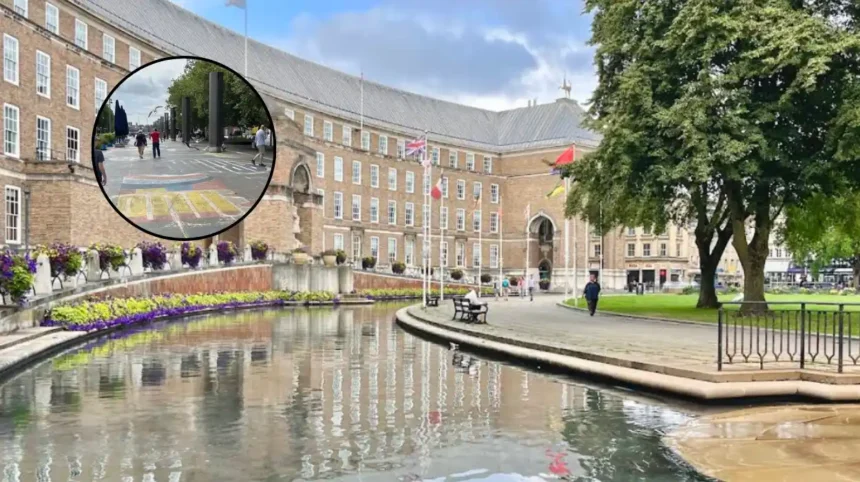
- The ‘Our Common Ground’ artwork on Bristol’s Centre Promenade has deteriorated rapidly since it was installed in September 2025.
- The mural cost £61,000 in total, with Bristol City Council contributing £31,000.
- Bristol Live reports that sections of paint eroded soon after installation, and the space had to be repainted within a month.
- ITV West Country reported that the council estimates further repainting and maintenance will cost between £3,000 and £5,000 a year.
- Bristol City Council says the work cannot be restored until spring because repainting requires dry conditions and temperatures above 10°C.
- The mural was designed by local artist Oshii and is intended to celebrate Bristol’s African heritage communities and wider cultural identity.
- The council is investigating why the artwork has worn away so quickly.
- Deputy leader Heather Mack has described the state of the artwork as “embarrassed”, according to BBC reporting cited in the search results.
- The installation remains visible on a busy public route used by locals and tourists.
Bristol (Bristol Express News) August 3, 2026 – Bristol Live reported that the city centre mural ‘Our Common Ground’ has become a political and financial headache for Bristol City Council after failing to hold up on the Centre Promenade. The artwork, which was installed in September 2025 as part of a wider attempt to revitalise the area, was meant to be a bold public installation celebrating Bristol’s history, identity and communities. Instead, it has quickly become a symbol of concerns about durability, maintenance and spending.
What is the Bristol mural controversy?
As reported by Bristol Live, the installation on the Centre Promenade was commissioned by Bristol City Council and unveiled as a large-scale piece spanning the public space in the city centre. The project was developed with support from the Bristol City Centre Business Improvement District and the Bristol Legacy Foundation, while the artwork itself was created by local artist Oshii and installed by Upfest Projects.
The stated purpose of the artwork was to honour Bristol’s African heritage communities and celebrate the creativity and resilience associated with that history. Visit West described it as a “new landmark artwork” and said it was intended to transform the promenade into a place of “cultural connection, reflection and pride”. The prominence of the site, in an area used daily by thousands of people, made the project highly visible from the outset.
How much did it cost?
According to Bristol Live, the artwork cost £61,000 in total. Bristol City Council contributed £31,000, which covered installation, materials, labour, production and health and safety equipment. The remaining £30,000 was provided through the Bristol City Centre Business Improvement District to the Bristol Legacy Foundation for the artist’s fee, engagement activity, curation and production.
ITV West Country reported a slightly rounded figure of £60,000, but both outlets agree that the project was expensive and that the cost has become a central part of the criticism. Bristol Live also reported that the foundation had not responded to requests for a detailed breakdown of how the £30,000 was spent.
Why has it deteriorated so quickly?
Bristol Live said sections of the paint began to erode soon after the mural was installed. The outlet reported that the council was advised that more durable thermoplastic materials were available, but that a cheaper road-marking paint was chosen instead. Bristol Live said this choice was made at the council’s insistence.
ITV West Country reported that the council is now investigating why the work wore away so quickly. Cllr Andrew Brown, Chair of the Economy and Skills Policy Committee, told ITV that the council was “deeply frustrated” that the paint had not taken on first application and that officers were trying to find out what went wrong. The council has said repainting can only be done in dry weather and when temperatures are consistently above 10°C.
Bristol Live reported that some in the arts community had warned the council the chosen materials might not survive in such a busy area. The council, however, has said it has no record of such warnings.
What have councillors and artists said?
ITV West Country reported that deputy leader Heather Mack described the condition of the artwork as “an embarrassment”. The same outlet quoted artist Oshii as saying it was “upsetting” to see the condition of the work so soon after completion. The BBC reporting surfaced in the search results also said the council was “mystified” by the speed of deterioration.
Bristol Live reported that the council website has said the deterioration was unforeseeable and not the fault of any one individual. The outlet also said the authority has not publicly explained what its long-term plan is for the site, despite months passing since the problems first appeared.
How much will repairs cost?
ITV West Country reported that the council estimates repainting the piece will cost between £3,000 and £5,000. Bristol Live said that annual maintenance and repainting could also cost between £3,000 and £5,000 each year, adding to the financial burden outside the original budget.
The repair work cannot begin until spring because conditions need to be dry and above 10°C for the paint to be applied properly. That has left the mural in a visibly damaged state through the colder months.
What does the mural mean for Bristol city centre?
Bristol Live argued that the mural has become a broader symbol of the gap between Bristol’s public image and its practical challenges. The article linked the artwork to the city’s street-art reputation, noting that Bristol was featured in Lonely Planet’s 2026 “Best in Travel” book partly because of its artistic culture. The damaged mural therefore sits awkwardly within a city that promotes itself through creativity and public art.
At the same time, the installation was meant to do more than decorate a public space. Its stated purpose was to recognise the legacy of transatlantic slavery and celebrate the resilience of descendants of enslaved Africans. That makes the rapid deterioration more significant than a simple maintenance issue, because it affects both the image and the intended meaning of the piece.
Explore More Local Bristol News
Bristol cafe chain and bar close in 2026, new venue opens — Bristol, 2026
Bristol Train Disruption: Rail Buses Replace GWR Services August 2026
Background of the development
‘Our Common Ground’ was commissioned as part of a broader effort to improve the Centre Promenade in Bristol city centre. The artwork was installed in September 2025 and promoted as a major public piece linked to heritage, community identity and city-centre regeneration. Its rapid wear and repeated repainting have since raised questions about design choices, material selection and value for money.
What could happen next?
For Bristol residents, visitors and local businesses around the Centre Promenade, the short-term impact is likely to be continued disruption to the look and feel of the space until repainting can take place in spring. If the council restores the mural successfully, it may recover some of its original purpose as a public landmark; if not, it could remain a visible example of a project that failed to last as intended.
For the wider audience, especially people following council spending and urban regeneration, the case may increase scrutiny of how public art projects are planned, budgeted and maintained. It could also influence how future city-centre schemes are designed, with greater emphasis on durability, consultation and long-term upkeep.