Key Points:
- British Prime Minister Keir Starmer warned during a London press briefing that the ongoing conflict involving Iran will significantly affect the future of the UK, while confirming that Britain will not be drawn directly into the war.
- Mr. Starmer announced that Foreign Secretary Yvette Cooper will convene international partners to discuss diplomatic and political measures to restore freedom of navigation and secure the vital Strait of Hormuz.
- Australian Prime Minister Anthony Albanese addressed his nation, stating that economic ripples from the Middle East crisis will impact Australia for months, prompting the adoption of the National Fuel Security Plan.
- The White House stated that U.S. President Donald Trump would deliver a national address providing updates on Iran, following claims that U.S. forces have severely degraded Iranian missile facilities.
- Iranian Foreign Ministry spokesperson Esmaeil Baqaei asserted that no direct negotiations have taken place with the Trump administration since hostilities began, amidst unverified regional threats targeting U.S. tech companies.
- Israeli Defence Minister Israel Katz announced intentions to establish a buffer zone in southern Lebanon, declaring that displaced residents from southern villages will not be allowed to return until northern Israel is fully secure.
- Lebanese authorities reported that multiple overnight airstrikes hit the Jnah neighbourhood of Beirut, resulting in at least 10 deaths and deepening local displacement risks as outlined by Lebanon’s Minister of Social Affairs, Haneen Sayed.
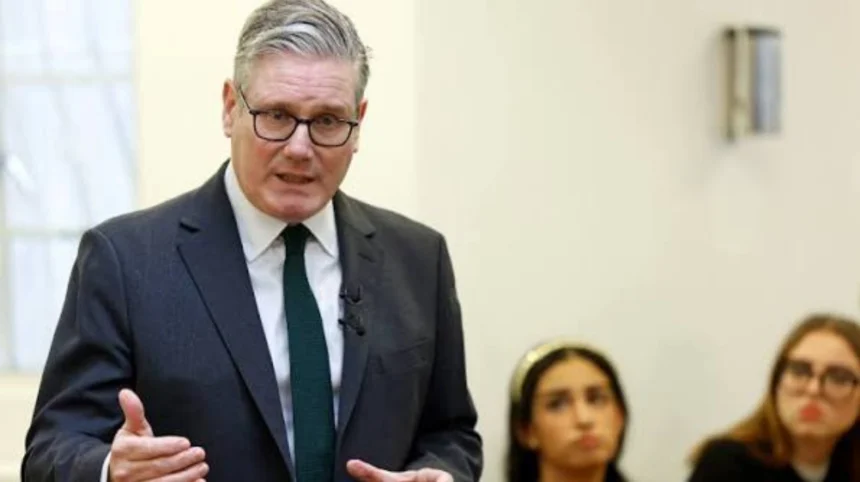
London (Bristol Express News) August 7m 2026 — British Prime Minister Keir Starmer warned that the ongoing conflict involving Iran will affect the future of their country while insisting that Britain is prepared to endure the economic fallout. Speaking at a press conference in London, the British Prime Minister also reiterated that this is not their war and that the UK will not be drawn into it because that is not in our national interest. Addressing concerns over rising living costs, Mr. Starmer said the most effective way we can support the cost of living in Britain is to push for de-escalation in the Middle East and a reopening of the Strait of Hormuz.
- Key Points:
- What measures are international governments taking to buffer domestic economic shocks?
- What are the latest developments from Washington and Tehran regarding diplomatic engagement?
- How is the ground situation unfolding across Lebanon and the wider border regions?
- Background of the Particular Development
- Prediction
As reported by political correspondents, Mr. Starmer announced that Foreign Secretary Yvette Cooper will convene international partners later this week to assess all viable diplomatic and political measures to restore freedom of navigation, guarantee the safety of trapped ships and seafarers, and resume the movement of vital commodities.
The remarks come as tensions in the region continue to raise concerns over global energy supplies, particularly through the strategically vital Strait of Hormuz.
What measures are international governments taking to buffer domestic economic shocks?
Earlier, Australian Prime Minister Anthony Albanese, in his address to the nation, said that the months ahead might not be easy due to the ongoing Middle East crisis.
He noted that although Australia has nothing to do with the war in West Asia, Australians are suffering because of it. He said that the economic ripples the war has sent will affect Australia for months.
Mr. Albanese stated that the National Cabinet adopted the National Fuel Security Plan, which would help Australians in case supplies are seriously disrupted over the long term.
He urged common citizens against hoarding fuel and asked them to use only the bit they need, further encouraging the use of public transport where feasible.
What are the latest developments from Washington and Tehran regarding diplomatic engagement?
The White House has indicated that U.S. President Donald Trump will deliver an address to the nation to provide an important update on Iran. Earlier, Mr.
Trump stated he expected that U.S. military forces would leave Iran in two or three weeks, claiming they have knocked out tremendous amounts of missile-making facilities in Iran and asserting that Tehran has asked for a ceasefire.
However, Iranian Foreign Ministry spokesperson Esmaeil Baqaei countered that there had been no direct negotiations with the Trump administration since the conflict began. Tehran has reportedly threatened to retaliate against American tech companies if further Iranian leadership casualties occur.
How is the ground situation unfolding across Lebanon and the wider border regions?
Meanwhile, Israeli Defence Minister Israel Katz stated that they will destroy all homes in Lebanese villages near the border, adding that 600,000 people who fled the south will not be allowed home until northern Israel is secure. He reiterated Israeli plans to establish a permanent buffer zone in southern Lebanon.
At least 10 people were reportedly killed and several others injured after multiple missiles hit the Jnah neighbourhood of Lebanon’s capital, Beirut, during an overnight bombing campaign.
Lebanon’s Minister of Social Affairs, Haneen Sayed, told news agencies that Israel’s ground operation was deepening the risk that displaced Lebanese citizens would be stuck in long-term displacement.
Explore More Uk News
Blind Singer Ms Sunny Sarah Pursues Music Career in Liverpool
Poplar Reclaims Its Place in History as the Festival of Britain Returns Home
Background of the Particular Development
The current escalation stems from long-standing geopolitical friction in the Middle East, which sharply deteriorated following extensive military engagements involving U.S. and Israeli forces against Iranian infrastructure.
The strategic chokepoint of the Strait of Hormuz—through which a massive share of the world’s petroleum and liquefied natural gas passes—became a focal point of disruption, severely impacting global shipping lanes, driving up international energy prices, and sending profound shockwaves through Western and Asia-Pacific economies alike.
Concurrently, localized border conflicts between Israel and various groups in southern Lebanon have displaced hundreds of thousands of civilians, escalating humanitarian strains across the Eastern Mediterranean.
Prediction
Looking ahead, prolonged disruptions in the Strait of Hormuz and persistent supply chain bottlenecks are projected to sustain upward pressures on global inflation, directly affecting consumer fuel costs, utility bills, and household purchasing power for citizens in nations like the United Kingdom and Australia.
For everyday audiences, this translates to an extended period of tighter economic conditions, forcing governments to rely heavily on strategic domestic reserves, alternative trade routes, and international diplomatic coalitions to stabilize local markets and protect vulnerable consumers from deeper financial distress.
This video provides an overview of the Australian government’s national response and economic measures deployed to manage fuel security and supply chain pressures amid the Middle East crisis.