Key Points:
- Former Cambridge University professor Jason Arday was found dead at his home in Battersea, London, at the age of 41.
- The academic stepped down from his chair in sociology of education on August 5 following public allegations of plagiarism and inaccuracies on his personal biography.
- Conservative Member of Parliament James Cleverly criticized higher education institutions for failing to conduct proper due diligence, suggesting universities rushed to promote a “poster child” for diversity.
- Windrush campaigner Sir Patrick Vernon condemned the disproportionate media hounding, highlighting that the level of press scrutiny faced by Professor Arday exceeded standards applied to major political figures.
- The Metropolitan Police confirmed the death is being treated as unexpected, but officers do not consider the circumstances to be suspicious.
London, UK (Bristol Express News) August 19, 2026 – The death of former Cambridge University academic Jason Arday at his south London home has ignited an intense national dispute spanning higher education standards, press ethics, and racial inequality across the United Kingdom.
- Key Points:
- What Are The Details Surrounding Jason Arday’s Unexpected Death In London?
- How Have Politicians And Public Figures Reacted To The Controversy?
- What Allegations Led To Cambridge University’s Internal Investigation?
- What Is The Background Of Jason Arday’s Academic Career And Media Rise?
- How Can This Particular Development Affect The Higher Education Sector And Press Standards?
What Are The Details Surrounding Jason Arday’s Unexpected Death In London?
As reported by police correspondents, officers from the Metropolitan Police were called by the London Ambulance Service to an address in Battersea on Friday afternoon following reports of an unresponsive man. Emergency services pronounced 41-year-old Jason Arday dead at the scene. Metropolitan Police officials stated that while the death is being treated as unexpected, it is not currently believed to be suspicious, with a file being prepared for the coroner.
In a public statement issued through publisher Simon & Schuster, Professor Arday’s family expressed profound grief, writing:
“Jason was subjected to a campaign of sustained abuse for more than three years since he accepted the role of professor at Cambridge University by those who would leave no stone unturned in their quest to undermine him. The campaign of misinformation was too much for Jason, who was a gentle man and who always wanted to see the best in everyone.”
Prior to his death, Professor Arday had formally resigned from his post as professor of sociology of education and fellow of Jesus College on August 5. In a letter released upon his departure, Professor Arday stated that his resignation should not be interpreted as an admission of guilt, writing:
“It is simply the decision of someone who has reached the limits of what any person should reasonably be expected to endure. For my own wellbeing, for my family, and for those who have stood by me throughout this difficult period, I have concluded that the only way to bring this chapter to an end is to step away.”
How Have Politicians And Public Figures Reacted To The Controversy?
As reported by journalists at Times Radio, Conservative MP James Cleverly stated that multiple higher education institutions had failed to exercise fundamental academic oversight during recruitment processes. James Cleverly stated:
“We see now that he was not completely honest and he clearly did have frailties and failings. But he was teed up by a number of academic institutions because they desperately wanted a wunderkind. They desperately wanted to play on the fact he was young and Black and good-looking, and they wanted him to be their poster child.”
Conversely, racial equality campaigner Sir Patrick Vernon challenged the nature of the media coverage that preceded the academic’s resignation and death. As reported by news reporters, Sir Patrick Vernon stated:
“The level of scrutiny that the late Professor Jason Arday faced was unprecedented. He’s not the prime minister of this country. He’s not a current secretary of the civil service or local government or the NHS or a chief executive of a major PLC… But he was treated at the same standard, which is outrageous.”
The Mayor of London, Sadiq Khan, also released a statement attributing the outcome to systemic public hounding. As reported by regional correspondents, Sadiq Khan stated:
“Jason Arday was the victim of a pernicious public shaming that other people in his position simply wouldn’t have faced. His death was a tragedy, but once again it should be a wake-up call for all of us.”
Additionally, National Education Union General Secretary Daniel Kebede commented on the broader societal tone surrounding the allegations, stating that Professor Arday was subjected to a “public and brutal takedown that unleashed a tirade of racism by the worst elements of the British media and right-wing commentariat.”
What Allegations Led To Cambridge University’s Internal Investigation?
The initial scrutiny concerning Professor Arday emerged when US researcher Nathan Cofnas published claims alleging that Arday’s 2015 PhD thesis, completed at Liverpool John Moores University, contained uncredited textual overlaps with previously published works. Liverpool John Moores University had previously reviewed accusations regarding the 2015 doctoral dissertation and concluded that allegations of deliberate plagiarism were not proven.
However, subsequent claims escalated online and across national broadsheets, questioning additional published papers, claims on his curriculum vitae, and biographical details regarding his early life and charitable fundraising.
In response to the mounting public scrutiny, the Vice-Chancellor of the University of Cambridge, Professor Deborah Prentice, initially defended Professor Arday, characterizing early criticisms as part of a targeted campaign. However, as further national reports surfaced, Cambridge University announced an independent internal inquiry into his academic qualifications, appointment procedures, and published research. Hours after the university announced the review, Professor Arday submitted his resignation.
Following news of his death, Professor Deborah Prentice released a statement on behalf of the university:
“We are desperately saddened to hear this tragic news. Our heartfelt sympathies go to Jason Arday’s family and friends at this incredibly difficult time.”
What Is The Background Of Jason Arday’s Academic Career And Media Rise?
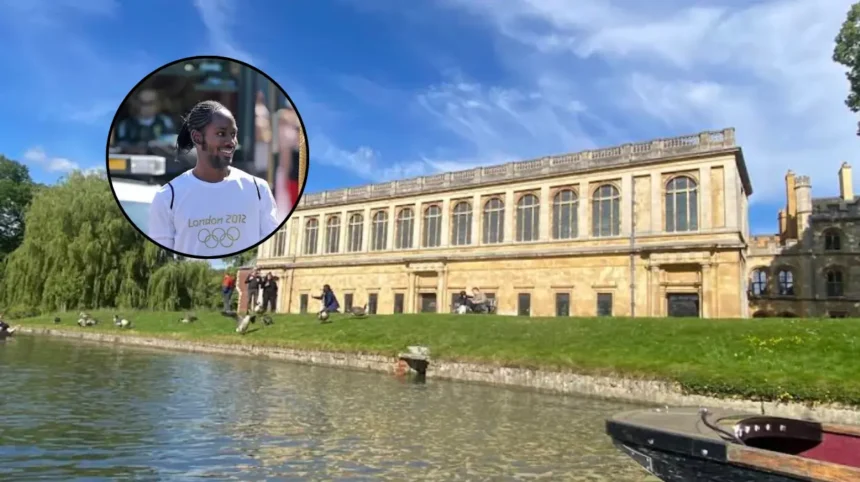
In 2012, Jason Arday gained national visibility after being chosen to carry the Olympic flame in the torch relay preceding the London Olympic Games.
His profile grew significantly within British higher education over the following decade. In 2023, at the age of 37, he was appointed as the professor of sociology of education at the University of Cambridge, making him the youngest Black scholar ever appointed to a professorial chair in the history of the university.
According to biographical details released during his appointment, Professor Arday was diagnosed with global developmental delay and autism spectrum condition in early childhood, remained non-verbal until the age of 11, and learned to read and write in his late teens before pursuing higher education at Surrey, Liverpool John Moores, and held positions at Durham University and the University of Glasgow.
Explore More UK News
D&T Electrical Services: Trusted Family-Run Electricians in Havering and Essex
UK Tech Start-Ups Lose Faith in Public Procurement, London 2026
How Can This Particular Development Affect The Higher Education Sector And Press Standards?
This development is likely to have significant operational and political consequences for leadership bodies across UK higher education, editorial boards, and academic research institutions.
For universities, executive recruitment committees are expected to overhaul appointment protocols and due diligence procedures for senior professorial chairs. Institutions may face heightened pressure to balance rigorous credential verification with institutional diversity initiatives, ensuring that equity measures do not leave appointees exposed to political or institutional backlash.
For the British press and regulatory media oversight bodies, the circumstances surrounding Professor Arday’s death will intensify debates regarding the boundaries between legitimate public-interest investigative journalism and systemic media hounding. Higher education authorities, academic unions, and civil rights groups are expected to press for formalized guidelines on safeguarding vulnerable academics when they become the focus of national media scrutiny and online commentary.