Key Points
- The number of lived-in vehicles in Bristol has decreased by over a quarter within six months, dropping from 400 to 295.
- Bristol City Council attributes the reduction to a combination of targeted enforcement action and enhanced support services for vehicle dwellers.
- Council leaders have raised concerns that strict enforcement measures may have shifted vehicle encampments to neighbouring local authority areas rather than resolving the root issue.
- Outreach teams successfully assisted several individuals in transitioning from vehicle living into permanent or temporary housing.
- The local authority faces ongoing challenges in balancing community concerns regarding public space management with the welfare needs of vulnerable residents.
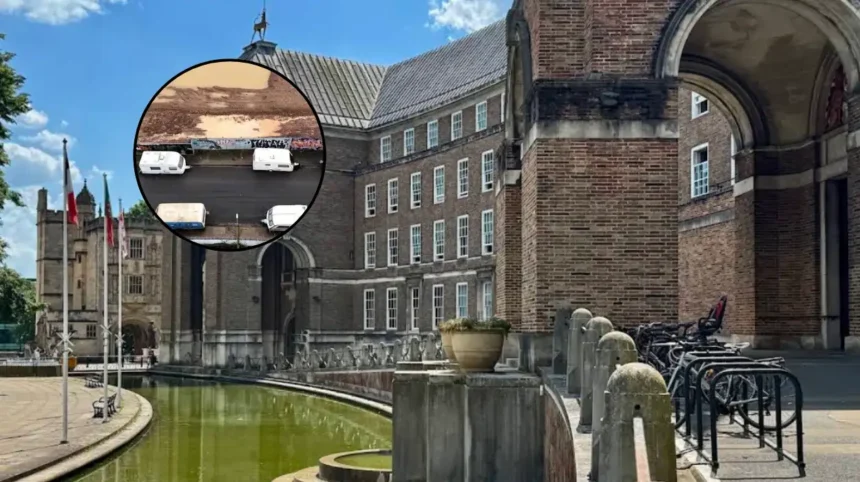
Bristol (Bristol Express News) August 21, 2026 — In a significant shift regarding alternative living arrangements across the city, official figures reveal that the number of lived-in vehicles in Bristol has fallen to 295 following a coordinated local authority initiative combining regulatory enforcement and structured support interventions. The latest data indicates a reduction of more than 25 per cent over a six-month period, down from an estimated peak of approximately 400 vehicles previously recorded parked on public highways and green spaces.
- Key Points
- Why have the numbers of van dwellers in Bristol decreased so significantly?
- What concerns do local council leaders hold regarding the recent enforcement push?
- How have support services contributed to the transition of vehicle residents?
- Background of the Bristol vehicle dwelling phenomenon
- Predictions: How this development could affect local communities and vehicle dwellers
Why have the numbers of van dwellers in Bristol decreased so significantly?
The notable decline in lived-in vehicles follows the implementation of an updated approach by Bristol City Council, designed to address growing public complaints concerning sanitation, parking availability, and long-term encampments in residential neighbourhoods. Local authority officers, working in conjunction with housing support organisations and outreach teams, launched a twin-track strategy. This policy focused on enforcing existing parking and highways regulations while simultaneously offering paths into fixed accommodation for vehicle occupants willing to accept assistance.
Outreach workers conducted systematic visits to major encampment sites across the city, providing occupants with direct access to housing advice, tenancy support, and emergency accommodation options. Concurrently, the council issued formal notices and enforced parking restrictions in areas designated as high-impact zones, effectively limiting the ability of individuals to remain parked indefinitely in specific locations without appropriate permits or statutory permissions.
What concerns do local council leaders hold regarding the recent enforcement push?
Despite the headline reduction in numbers within the city boundaries, council leaders and cabinet members have expressed clear reservations about the long-term efficacy and wider geographical impact of the crackdown. Concerns have been formally raised that the stringent enforcement measures implemented within Bristol may have merely displaced vehicle dwellers into surrounding rural and suburban administrative districts, such as South Gloucestershire and North Somerset, rather than fundamentally solving their underlying housing instability.
Elected officials highlighted that while the city’s internal metrics demonstrate a visible decline, displacement across administrative borders often obscures the true scale of vehicle residency across the wider region. Critics of relying heavily on enforcement argue that pushing individuals outside municipal borders creates additional hurdles for outreach services, which struggle to maintain continuous support networks, healthcare access, and social care provision for displaced individuals.
How have support services contributed to the transition of vehicle residents?
The supportive arm of the local authority’s strategy focused on identifying vulnerable individuals residing in cars, campervans, and converted commercial vehicles who were willing to engage with local housing services. Dedicated multi-agency teams provided tailored casework to address the complex needs often associated with vehicle living, including physical health conditions, mental health support requirements, and financial difficulties.
Through these dedicated pathways, a substantial proportion of former vehicle dwellers were successfully reassigned into supported accommodation, social housing schemes, or private rented properties. Council housing officers emphasised that the provision of viable, long-term alternatives proved essential in persuading long-term vehicle residents to leave their vehicles, contrasting with purely punitive measures that frequently result in non-compliance or temporary relocation to adjacent streets.
Background of the Bristol vehicle dwelling phenomenon
The growth of vehicle living in Bristol developed over several years, driven primarily by severe housing affordability pressures, rising rental costs, and a broader shortage of social housing across the South West of England. The city became a notable locus for vehicle residency, attracting individuals who chose the lifestyle for environmental or personal reasons, as well as those forced into it by economic hardship and the risk of homelessness.
Prior to the recent reduction, various parking hotspots had formed around public parks, industrial estates, and residential roads, leading to friction with local residents over waste management, noise, and anti-social behaviour. In response, Bristol City Council formulated specific vehicle dwelling policies to classify encampments based on their impact levels, attempting to balance human rights considerations and welfare duties with the management of public highways and community amenities.
Explore More Bristol Council News
Bristol Council Approves Vape Shop Licensing Ordinance 2026 Bristol CT
City Council Appoints Jennifer Tagariello to Bristol School Board 2026
Predictions: How this development could affect local communities and vehicle dwellers
This recent reduction in vehicle numbers and the ongoing council strategy are poised to impact several distinct groups across the region:
- Local Residents and Business Owners: Neighborhoods that previously experienced dense vehicle encampments are likely to see reduced pressure on street parking, decreased accumulation of uncollected waste, and lower levels of public space conflict. However, if encampments reform nearby, localized friction may simply transfer to new areas.
- The Vehicle Dweller Community: Individuals remaining in vehicles will face increasingly constrained options within Bristol city limits. Heightened enforcement means higher risks of receiving penalty notices or facing eviction orders, making long-term parking progressively difficult. This environment may compel remaining dwellers either to accept council housing support or move away entirely.
- Neighbouring Local Authorities: District councils surrounding Bristol are likely to experience an influx of lived-in vehicles shifted out of the urban centre. These neighbouring councils may need to allocate additional resources towards outreach, waste management, and parking enforcement to manage the regional displacement effect.