Key Points
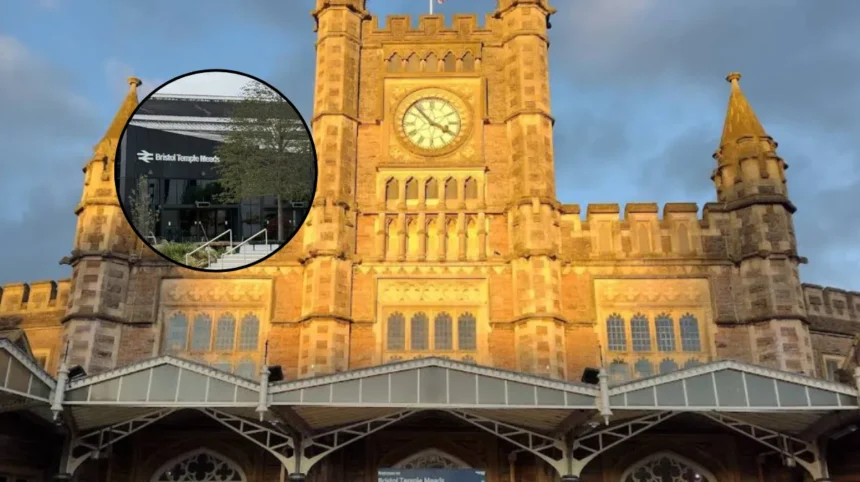
- Opening Schedule: A new £23 million eastern entrance at Bristol Temple Meads railway station is scheduled to open to the public at 4:00 pm on Monday, 7 September.
- Direct Campus Link: The entrance creates a direct link between the railway station and the University of Bristol’s brand-new Temple Quarter Enterprise Campus, situated on the former sorting-office site.
- Access Improvements: It provides direct pedestrian access for communities in east Bristol, including St Philip’s Marsh.
- Part of Larger Expansion: The project represents the first of three planned new entrances at the station, aimed at doubling overall passenger capacity.
- Government Funding: The £23 million scheme was funded via a £94.7 million allocation from the UK Government to the West of England Mayoral Combined Authority.
- Passenger Forecast: Infrastructure manager Network Rail projects that the eastern entrance will accommodate approximately 2.5 million passengers annually by 2030.
- Engineering Scope: Works required excavating beneath existing station structures and extending the underlying subway underneath platforms 13 and 15, along with foundational and drainage updates.
- Project Timeline: Construction work officially began in late 2023, with main structural works reaching completion in October 2024.
- Public Transport Integration: From Tuesday, 8 September, the number 8 bus service operating between Bristol Temple Meads and Clifton will serve a new bus stop located on Cattle Market Road, replacing the previous stop on Station Approach.
- Partnership Scheme: The development was delivered under the broader Bristol Temple Quarter partnership, involving the West of England Mayoral Combined Authority, Bristol City Council, Network Rail, the University of Bristol, and Homes England.
Bristol (Bristol Express News) September 3, 2026 — A major infrastructure milestone has been achieved in the West of England as a new £23 million eastern entrance officially opens at Bristol Temple Meads railway station at 4:00 pm today, Monday, 7 September. The strategic gateway provides a direct connection between the regional transport hub and the University of Bristol’s new Temple Quarter Enterprise Campus, while drastically shortening travel routes for surrounding East Bristol communities, including St Philip’s Marsh. Executed by Network Rail alongside public and educational sector partners, the new portal marks the first phase of an overarching plan to construct three additional access points designed to double the station’s long-term passenger capacity.
Funding for the £23 million entrance was secured through a dedicated £94.7 million financial package awarded by the UK Government to the West of England Mayoral Combined Authority to deliver transport improvements across the Temple Meads precinct. According to official growth models released by Network Rail, the newly opened eastern structure is projected to process roughly 2.5 million passengers annually by the year 2030, significantly redistributing pedestrian movement away from the historic main entrance.
The physical construction required complex civil engineering solutions to link the existing site with the newly redeveloped surrounding land. Engineering teams were tasked with excavating through historical station infrastructure to extend the existing subterranean passenger subway beneath active platforms 13 and 15. The scope of works encompassed extensive foundation reinforce, updated drainage systems, and interior structural alterations. Onsite operations officially commenced in late 2023, with primary building contractors finishing the core enclosure in October 2024 prior to final fitting and safety integrations.
The opening date has been deliberately aligned with the launch of the University of Bristol’s Temple Quarter Enterprise Campus, erected on the footprint of the city’s former railway sorting office. To support the altered pedestrian traffic, transport operators have updated local connectivity: starting Tuesday, 8 September, the popular number 8 bus route servicing the corridor between Bristol Temple Meads and Clifton will reroute to call at the new eastern entrance. A purpose-built bus stop on Cattle Market Road will officially begin operations, taking over duties from the former stop situated on Station Approach.
Highlighting the economic role of the infrastructure, Great Western route director at Network Rail, Marcus Jones, stated:
“By connecting the railway directly to the Temple Quarter Enterprise Campus and one of the UK’s most exciting innovation districts, we’re connecting new jobs, investment and economic growth to the rest of the West and beyond.”
Validating the investment within the wider scope of regional transport upgrades, West of England Mayor Helen Godwin noted that the project follows recent roof restoration efforts at Temple Meads and represents an essential component of ongoing investment into the site’s future operational capabilities.
The delivery of the entrance sits within the wider Bristol Temple Quarter regeneration programme—a multi-agency partnership comprising the West of England Mayoral Combined Authority, Bristol City Council, Network Rail, the University of Bristol, and Homes England. Together, the agencies are leveraging transport infrastructure investments to unlock land for thousands of new homes, commercial employment spaces, and modernised travel connections across the city core.
What is the background to the Bristol Temple Quarter development?
The unveiling of the £23 million eastern entrance represents an incremental step in one of the United Kingdom’s largest urban regeneration projects: the Bristol Temple Quarter initiative. Historically dominated by industrial sites, rail yards, and mid-century commercial zones, the area surrounding Bristol Temple Meads has long been targeted for comprehensive structural modernsation.
Bristol Temple Meads itself is a Grade I listed historic asset originally designed by Isambard Kingdom Brunel, opening in 1840. While remaining an architectural focal point of the West of England, the facility’s Victorian layout has presented physical bottlenecks as regional rail passenger traffic surged over recent decades. To address these space constraints, regional authorities established a master plan designed to preserve the heritage buildings while expanding functional station capacity outwards.
In recent years, Network Rail initiated extensive physical renovations, including multi-million-pound structural repairs to the station’s historic shed roof, stone masonry conservation, and signaling upgrades across the Great Western line. The wider Temple Quarter regeneration project gained significant momentum through a central government allocation of £94.7 million granted to the West of England Mayoral Combined Authority. This ring-fenced grant was specifically earmarked to fund three brand-new station entrances, alongside surrounding public realm improvements.
Concurrently, the University of Bristol identified the vacant former Royal Mail sorting office site adjacent to the tracks as the ideal footprint for its flagship Temple Quarter Enterprise Campus. The university’s vision centered on establishing a dedicated hub for technology, research, quantum computing, and digital innovation. Achieving this required direct access to rail networks, making an eastern underground link essential to integrate the campus directly into regional and national transit corridors.
By combining educational expansion, real estate development, and rail transport infrastructure under the unified Bristol Temple Quarter partnership—bringing together local authorities, central government housing agencies, rail bodies, and higher education—the regional leadership created the framework that allowed complex structural civil works beneath platforms 13 and 15 to begin in late 2023.
Explore More Local Bristol News
Henbury Family Faces Homelessness Amid Bristol City Council Silence 2026
Mayor’s Column: Civic Meetings and Events Overview | London 2026
How will this new station entrance affect rail passengers, students, and local residents?
The opening of the new eastern entrance will directly alter daily routines and transit patterns across several distinct user groups in Bristol and the wider region.
University of Bristol Students and Academic Staff
For the incoming academic community at the Temple Quarter Enterprise Campus, the entrance removes previous geographical barriers. Rather than exiting via the main concourse and taking a lengthy detour around the station perimeter along public roads, students, researchers, and university workers can now move seamlessly between train platforms and campus facilities via the extended underground subway. This direct connection reduces transfer times, lowers walking friction during peak hours, and positions the campus as a highly accessible destination for daily commuters travelling from London, Cardiff, Bath, and the broader West Country.
Residents of East Bristol and St Philip’s Marsh
Historically, residents living east of the station faced limited direct pedestrian access through the railway line, often having to navigate around the perimeter of the railyards to access central rail services. The eastern portal creates a short, dedicated walking and wheeling route for communities in St Philip’s Marsh and surrounding eastern suburbs. Local commuters will experience shortened walking times to board train services, improving neighborhood connectivity to the regional rail network.
Local Bus Commuters
The shifting of transport connections on Tuesday, 8 September will alter routes for users of the city’s public bus network. Commuters relying on the number 8 bus route to Clifton will no longer use the old stop at Station Approach; instead, they will board at the new facility on Cattle Market Road directly outside the eastern entrance. This configuration creates a smoother interchange between bus and rail travel on the eastern side of the complex, helping clear traffic congestion on the historical Station Approach ramp.
Wider Rail Passengers and Regional Business
Over the long term, general rail passengers using Bristol Temple Meads will benefit from reduced station congestion. By absorbing an estimated 2.5 million passengers per year by 2030, the eastern portal relieves pressure on the main historic booking hall and platform corridors. Furthermore, regional businesses are expected to see improved connectivity to the enterprise district, facilitating easier physical movement for commercial partners, tech startups, and investors traveling into Bristol’s growing innovation district.