Key Points
- An MP representing the city of Bristol has come out in the open for calling for a full-scale apology and a total rethink of the plan by local authorities concerning the Liveable Neighbourhood project.
- Concerns about the effect of the traffic plan have been voiced by local business owners and residents. There is also information that such a project has done damage to local trust.
- Opponents of the plan have brought up the leaked maps and errors in road closures and modal filters.
- The community, especially from South Bristol and important business areas such as North Street, are concerned about disruption caused by traffic changes.
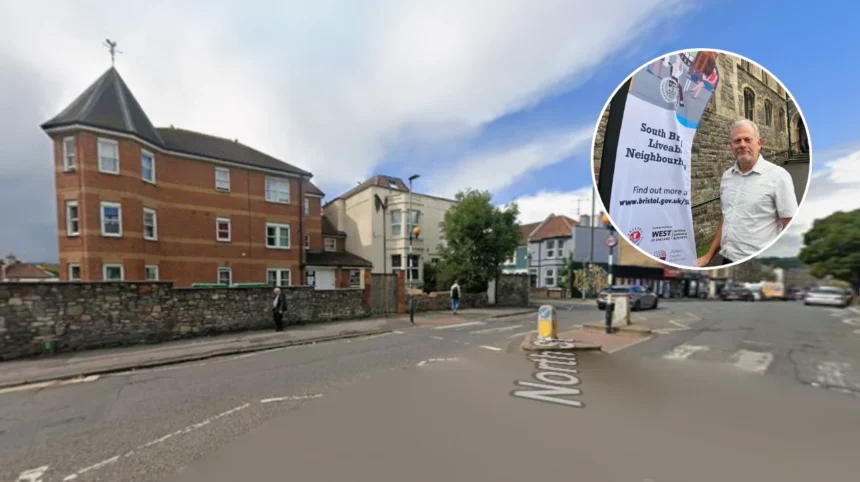
Bristol (Bristol Express News), September 8, 2026 — Tension has escalated sharply across the city following mounting public concern over municipal transit proposals, prompting fierce political intervention. As reported by Tristan Cork of the Bristol Post, a local Member of Parliament has stepped forward to demand a public apology and an immediate overhaul of the controversial Liveable Neighbourhood plan managed by Bristol City Council. The development follows intense community pushback over proposed road layouts, modal filters, and traffic management schemes that critics argue have severely damaged relations between local citizens and the administration.
Why is the Bristol Liveable Neighbourhood Plan Facing Intense Backlash?
The controversial traffic framework has faced continuous resistance from local residents, motorists, and business owners alike. According to reporting by Tristan Cork of the Bristol Post, community apprehension intensified following concerns over leaked mapping errors and unexpected road closures that caught local communities off guard. Business owners operating along key commercial arteries, such as North Street, have voiced unified opposition, warning that restrictions and modal filters threaten commercial viability and daily logistics.
As noted by Tristan Cork of the Bristol Post, the Member of Parliament emphasized that the handling of the scheme has deeply damaged community confidence. Quoted within the discourse, local stakeholders highlighted that “this incident appears to have only further eroded trust” between the electorate and local decision-makers. Critics argue that insufficient consultation combined with confusing logistical rollouts have left neighborhoods vulnerable to gridlock and isolation.
What Are the Core Demands Made by Local Representatives?
The intervention by the Bristol MP centres on accountability and structural reform. Rather than minor tweaks to the existing proposal, representatives are calling for a wholesale reassessment of how the traffic scheme has been structured and implemented. As highlighted by Tristan Cork of the Bristol Post, the demand for an apology underscores the severity of the miscommunication between city planners and the neighborhoods directly affected by the changes.
Local groups maintain that the implementation of modal filters and road blocks fails to reflect the practical transport needs of everyday commuters, families, and commercial operators. Traders operating in South Bristol have similarly rallied against measures they believe will create unnecessary congestion on alternative routes, increasing travel times and hurting local commerce.
Explore more Bristol News:
Bristol Council Rolls Out New Bins And Bags In Bristol 2026
Supermarket Fly-Tipping Concerns in Brislington 2026
Background of the Particular Development
Liveable Neighbourhood schemes—often referred to elsewhere as Low Traffic Neighbourhoods (LTNs)—have become a central pillar of urban planning strategies across the United Kingdom in recent years. Bristol City Council, like many metropolitan authorities, has sought to introduce these schemes to reduce carbon emissions, curb rat-running, and prioritize active travel such as walking and cycling.
However, these initiatives have frequently sparked friction between urban planners and motorists, who argue that restricting vehicle access displaces traffic onto boundary roads, harms local high street businesses, and fails to account for individuals dependent on automobiles. In Bristol, localized friction over traffic orders, consultation processes, and implementation errors has consistently tested the relationship between local communities and municipal leadership.
How This Development Can Affect Local Residents, Businesses, and Commuters
The ongoing dispute over the Liveable Neighbourhood plan carries significant implications for the local community in Bristol. If authorities choose to press ahead without addressing the grievances raised by the MP and local business owners, public trust in municipal governance is likely to suffer long-term damage, potentially triggering further legal challenges or prolonged civil resistance similar to opposition seen in other urban transit zones.
Conversely, a comprehensive rethink and genuine consultation could mend relations, ensuring that future transport infrastructure balances environmental objectives with the economic and logistical realities faced by Bristol residents and traders.