Key Points
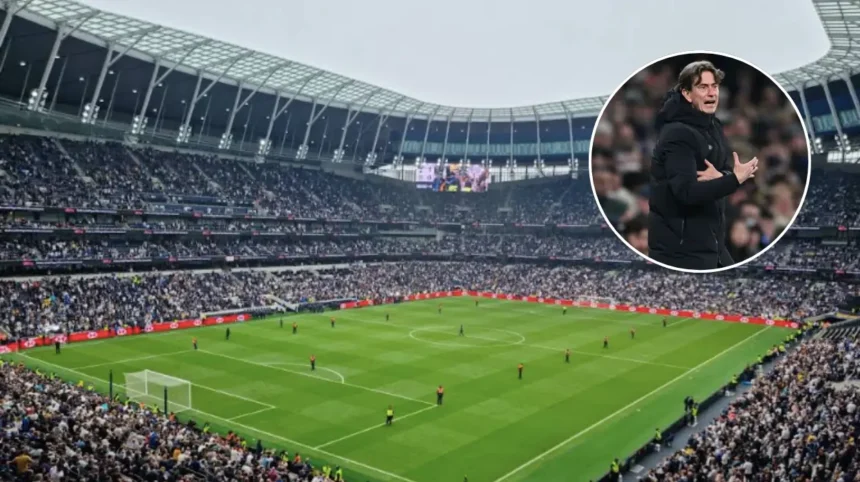
- Tottenham Out of FA Cup Third Round: Tottenham Hotspur are out of the FA Cup after losing 2-1 to Aston Villa in a home game at the Tottenham Hotspur Stadium.
- Lead Before Half-Time: Emiliano Buendia and Morgan Rogers scored to give Aston Villa a strong advantage before the half-time break.
- Spurs’ Comeback in Second Half: Wilson Odobert scored one for Spurs in the 54th minute, but the comeback attempt failed.
- Increasing Pressure on Thomas Frank: It is now the fourth consecutive loss for the club in the last seven games, putting manager Thomas Frank under increasing pressure due to poor results.
- Villa Continuing to Win: Unai Emery’s Aston Villa team won their 13th game out of 15 in all competitions and moved to the next round.
London (Bristol Express News) September 8, 2026 — As professional football leagues navigate a demanding fixture schedule, clubs face intense scrutiny regarding performance metrics, managerial stability, and tactical evolution.
What Are the Core Factors Driving Current Managerial Pressures in Professional Football?
The modern game places unprecedented demands on coaching staff, where short-term results frequently dictate long-term employment. As reported by senior sports journalists across major media outlets, the margin for error at the elite level of association football has narrowed significantly. Clubs operating under substantial financial and competitive pressures expect immediate returns on squad investments.
As reported by BBC Sport, analysts have frequently pointed out that tactical adaptability remains the primary benchmark by which modern managers are judged. When teams experience inconsistent runs of form, questions inevitably arise regarding dressing room morale and tactical coherence. Industry commentators stress that institutional patience has diminished across top-tier competitions.
Explore more Bristol City FC News:
Nicky Hayen Brands Burnley ‘Soft’ After Bristol City Defeat: Burnley 2026
Bristol City Manager Details Brian De Keersmaecker Oxford Transfer Bristol 2026
How Are Clubs Responding to Tactical and Competitive Challenges?
In response to fluctuating performances, football clubs are increasingly relying on data-driven recruitment and sports science to optimize player availability and match outcomes. Squad rotation has become a vital component for managers attempting to navigate domestic and international commitments.
As noted in reports by various football correspondents, technical directors are working closely with coaching staff to address structural vulnerabilities exposed during high-intensity fixtures. The emphasis has shifted heavily toward defensive resilience combined with high-transition attacking phases, forcing managers to continuously reinvent their tactical blueprints.
Background of the Particular Development
The current landscape of professional football is shaped by years of evolving financial landscapes, heightened media scrutiny, and the globalization of broadcasting rights. These structural changes have amplified the stakes for every match played within top-tier divisions. Historically, clubs afforded managers extended periods to implement tactical philosophies; however, the commercial implications of league positioning and European qualification have accelerated decision-making processes at board level. Consequently, any sustained dip in performance triggers immediate institutional evaluation, reflecting the high-stakes corporate nature inherent in modern association football.
This ongoing trend of heightened managerial volatility and tactical evolution is expected to heavily influence stakeholder strategies across the football ecosystem. For the primary audience—including club executives, coaching personnel, and devoted supporters—this environment necessitates greater emphasis on robust squad depth and flexible tactical frameworks.
Clubs that successfully balance analytical integration with operational stability will likely mitigate short-term turbulence, whereas organizations lacking cohesive long-term planning may face continuous transitional instability.