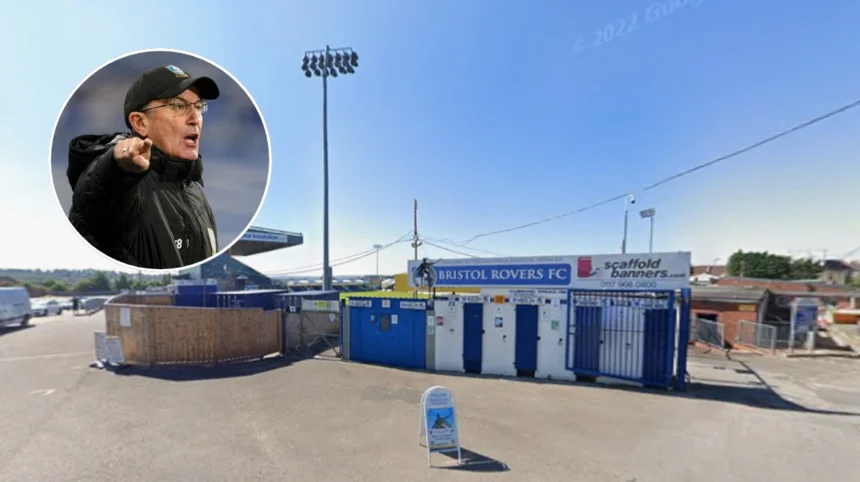
Key Points
- Tony Pulis, former defender of Bristol Rovers, has openly called on the city council to give direct support to Bristol Rovers when searching for better stadium facilities or even new stadiums.
- According to Pulis, the club and its fans should continuously lobby the municipality for help, as he says quoted by Will Murray of Bristol Post, “You’re hammering on their door every single day, every single day.”
- This seasoned former professional has used the example of Bristol City and their recent work on Ashton Gate as a standard of how to make your stadium commercial and competitive.
- He recognized the emotional connection the fans have with Memorial Stadium but stressed that the club needs modern and top quality stadium to ensure its long-term financial stability.
Bristol (Bristol Express News) September 07, 2026 — Former Bristol Rovers defender and prominent football figure Tony Pulis has issued a robust call to action regarding the club’s long-term stadium infrastructure, insisting that municipal authorities must step forward to assist the club in acquiring an improved home venue.
As reported by Will Murray of Bristol Post, Pulis emphasized that securing a modern stadium is essential for the club’s future prosperity, arguing that administrative backing from local government is indispensable for unlocking new commercial opportunities. The remarks have reignited discussions across the West Country regarding the limitations of the Memorial Stadium and how traditional football clubs must adapt to modern financial landscapes in the English Football League.
Why Does Tony Pulis Believe Bristol Rovers Needs Local Council Support?
The debate surrounding the future home of Bristol Rovers has persisted for years, with supporters and club officials frequently weighing the sentimental value of the Memorial Stadium against the operational constraints of an aging venue. According to insights shared by Tony Pulis, achieving sustainable growth requires robust institutional partnership rather than solitary club effort.
As reported by Will Murray of Bristol Post, Pulis articulated a firm stance on how the club and its supporters must approach municipal leadership to accelerate infrastructure progress. Pulis stated that
“I think the council – Rovers and their supporters should be on to the council day after day after day, smashing down their doors.”
By advocating for a unified lobbying effort, the former defender underscored that progress on major civic projects typically demands unrelenting public pressure on local decision-makers.
How Can a New Stadium Transform Bristol Rovers’ Long-Term Ambitions?
Discussing the broader economic and competitive realities facing lower-league clubs, Pulis pointed directly to cross-city developments as a practical blueprint for success. Drawing comparisons with local rivals Bristol City, Pulis highlighted how modernizing infrastructure can fundamentally alter a club’s financial footing and operational capacity.
As detailed in supplementary football analyses covering the commentary, Pulis envisions a purpose-built, multi-purpose facility that operates successfully not only on matchdays but as a commercial hub throughout the week. Supporters naturally hold deep historical affection for the Memorial Stadium, given its rich traditions and decades of memories. However, Pulis argued that embracing structural change is necessary if the club wishes to compete consistently at higher levels of the professional pyramid without being financially restricted by stadium capacity or outdated corporate facilities.
Explore more Bristol Sports News:
Tottenham Manager Thomas Frank Faces Pressure In North London 2026
Basingstoke Bison Defeat Bristol Pitbulls in Pre-Season Matches, Bristol 2026
What Are the Immediate Priorities for the Club Amidst Infrastructure Debates?
While long-term stadium discussions remain a prominent talking point for former players and pundits alike, the immediate focus within the club centers on competitive performance on the pitch. Under the leadership of manager Steve Evans during the 2026/27 League Two campaign, the squad continues to target sustained success and progression through the divisions.
Football commentators note that stadium ambitions and on-field achievements are inextricably linked; enhanced revenue streams generated from modern facilities ultimately provide managers with greater flexibility during transfer windows. Consequently, Pulis’s intervention serves as both a strategic challenge to local government officials and a rallying cry for supporters invested in seeing Bristol Rovers secure a sustainable, competitive future in modern professional football.
Background of the Particular Development
The conversation surrounding Bristol Rovers’ stadium infrastructure has a long, complex history marked by decades of proposals, relocations, and unfulfilled plans. Historically, the club played at Eastville Stadium before moving to Twerton Park in Bath, and later returning to Bristol to ground-share at the Memorial Stadium in Horfield from 1996 onward.
Over the years, various proposals to build a new stadium—including a prominent, stalled project at the University of the West of England (UWE) campus—faced numerous planning hurdles, legal challenges, and financial roadblocks. As modern financial regulations and matchday revenue demands continue to evolve within the English Football League, former players and analysts frequently revisit the discussion, emphasizing that stadium modernization remains a central pillar for any club aiming to establish sustained success above the fourth tier.
Tony Pulis’s public call for council collaboration and aggressive supporter engagement is expected to intensify local dialogue between Bristol Rovers, municipal leaders, and the fan base regarding long-term venue options. For the club’s supporters, this renewed focus on stadium infrastructure may foster heightened expectations for future modernization, putting increased pressure on civic stakeholders to address regional sporting facilities.
While immediate results on the pitch under Steve Evans remain the primary concern for fans week-to-week, the ongoing debate regarding a potential new stadium will likely influence future commercial planning, investment strategies, and the club’s broader trajectory within English professional football.