Key Points
- According to Tristan Cork in the Bristol Post, the recently opened Temple Quarter Enterprise Campus (TQEC) and its adjacent new eastern entrance to the Bristol Temple Meads station was officially inaugurated on September 8, 2026 after a decade of work on the project.
- The multimillion-pound campus stands on the location that was previously occupied by the Royal Mail sorting office which stood derelict for about three decades right beside the station.
- It will house 4,500 students and 650 staff from this week and next in the move from other campuses of Clifton including the opening up of courses in new disciplines like technology and business.
- Dignitaries present during the opening ceremonies included the Vice-Chancellor and President of University of Bristol Prof Evelyn Welch and metro mayor of West of England Helen Godwin who performed the ribbon cutting.
- The opening of the development signals the beginning of the entire Temple Quarter regeneration project to convert industrial sites along the Feeder Canal and St Philips Marsh to houses and businesses.
Bristol (Bristol Express News) September 09, 2026 – Following a decade of intensive planning and construction, the brand-new eastern entrance to Bristol Temple Meads station and the University of Bristol’s Temple Quarter Enterprise Campus have officially opened to the public, as reported by Tristan Cork of the Bristol Post.
What Are the Key Features of the New Temple Quarter Enterprise Campus?
As detailed by Tristan Cork of the Bristol Post, the new enterprise campus is hailed by the University of Bristol as the “most significant development in its history.” The site will accommodate 4,500 students and 650 staff starting this week and next. While the majority of students are initially transferring from existing campuses in Clifton, the facility will gradually introduce new courses connected to cutting-edge technologies, design, and business, while fostering close partnerships with local enterprises in science and innovation.
The campus occupies the former site of the Royal Mail sorting office, a location that closed almost 30 years ago and remained a major eyesore greeting arrivals at Temple Meads for a quarter of a century.
How Did Dignitaries Mark the Official Opening?
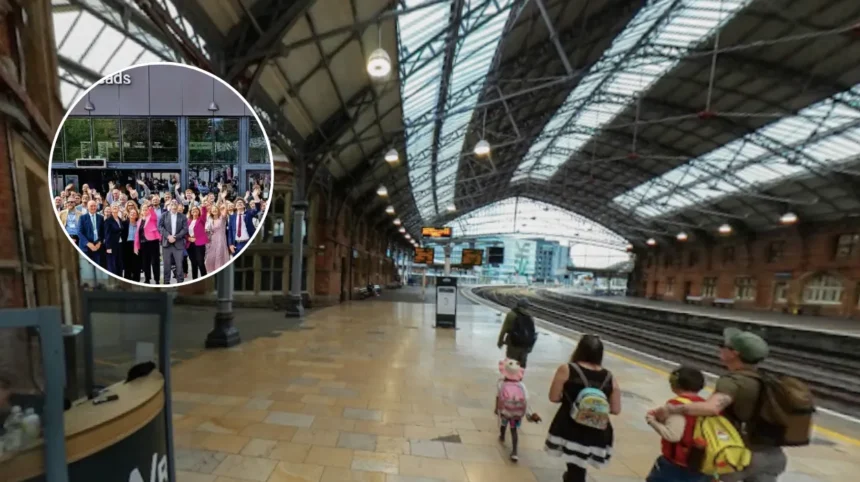
A series of opening ceremonies brought together regional leaders, university officials, and project stakeholders on the afternoon of September 8, 2026, with the station entrance welcoming the public at 4 pm. As reported by Tristan Cork of the Bristol Post, West of England metro mayor Helen Godwin handled ribbon-cutting duties alongside leaders from Network Rail, Bristol City Council, and the Bristol Temple Quarter project company.
As reported by Tristan Cork of the Bristol Post, Prof Evelyn Welch, the Vice-Chancellor and President of the University of Bristol, stated that:
“This is not just an important day for the University of Bristol, this is an important day for the city of Bristol.”
Prof Welch further stated that:
“We are delighted to open the doors to the Sloane Robinson Building as we mark our 150th anniversary and look towards the future. TQEC represents the next chapter in the transformation of Bristol and the West of England into a globally competitive innovation region, and a flagship example of how devolution can drive growth, inclusion and long-term prosperity.”
She also noted that:
“Later this week we also open our first international campus in Mumbai,” adding that: “At such an important time for the University, we are pleased to develop strong partnerships across the globe which will have meaningful impact, reaching learners and collaborators internationally.”
What Does the New Station Entrance Mean for Regional Regeneration?
As outlined by Tristan Cork of the Bristol Post, the new entrance opens up the eastern side of Temple Meads station by breaking through the end wall of the underground subway providing access to each platform.
This development is anticipated to accelerate ambitious plans to regenerate surrounding areas. Future proposals include constructing a multi-storey car park on the south side of the station off Bath Road and establishing a bus hub to the north at Temple Friars. In the interim, local bus routes are being re-routed around the east of Temple Meads and up Avon Street ahead of its reopening the following week. Furthermore, the campus serves as the catalyst for the broader Temple Quarter regeneration, which will transform industrial sites along both sides of the Feeder Canal and St Philips Marsh with new residential accommodations and commercial spaces.
Explore more Bristol Council News:
Bristol Council Rolls Out New Bins And Bags In Bristol 2026
Bristol City Leap Targets Carbon Gains in Bristol 2026
Background of the Particular Development
The opening of the Temple Quarter Enterprise Campus and the new Temple Meads station entrance represents the culmination of a 10-year strategic planning and regeneration initiative in Bristol. For nearly three decades, the derelict Royal Mail sorting office adjacent to Temple Meads acted as a blighted symbol of urban stagnation.
Local and regional authorities, alongside the University of Bristol and Network Rail, recognised the vital need to transform this prime brownfield gateway into a thriving economic and educational hub. By leveraging regional devolution and funding, the project aims to bridge historical industrial decay with modern, knowledge-based economic growth across the West of England.
How This Development Can Affect the Local Audience
For Bristol residents, local business owners, students, and daily commuters, the opening of the Temple Quarter Enterprise Campus and the eastern station entrance will significantly reshape daily transit and economic landscapes. Commuters can expect altered bus routes and improved station accessibility from the eastern side, though temporary traffic disruptions may persist as surrounding road networks adjust.
Over the coming years, the influx of thousands of students and staff is projected to increase foot traffic and commercial demand for local businesses in the city centre and St Philips Marsh. However, it may also place additional pressure on regional housing markets and local public transport infrastructure, making coordinated municipal management essential for sustainable long-term community benefits.