Key Points
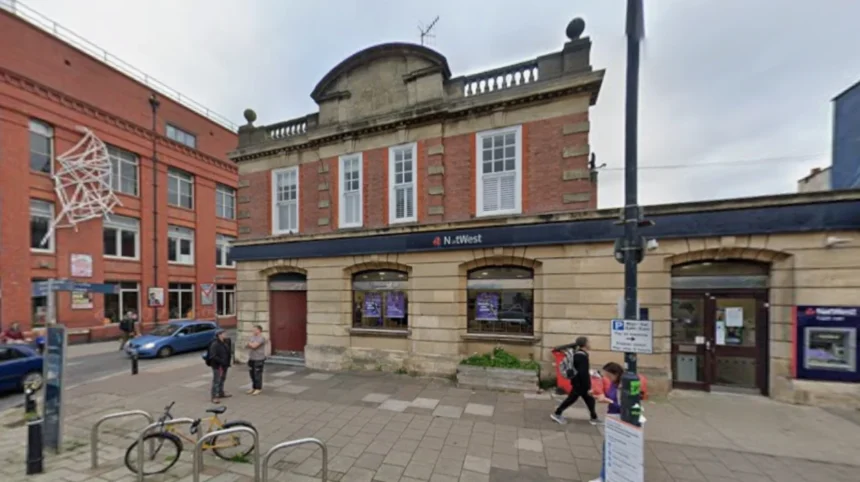
- Closing of the branch: The NatWest bank branch based on North Street, Southville, south Bristol, has been closed permanently.
- Work of removal: As stated by Martin Booth, the editor of Bristol24/7, workers were observed removing signs from the exterior of the building and covering cash machines in front of the building and Raleigh Road on Tuesday.
- Alternative facility: Notices in the window advise the remaining customers about alternative NatWest bank branches at Broadmead or another banking center situated in Keynsham.
- Rationale of the company: While making a statement on the announcement of this closure in June, the chief executive of retail banking at NatWest, Solange Chamberlain, has stated that they will be investing to give customers “a seamless mix of ways to bank with us.”
- Decline in banking sector: This closure will mean that there are very limited physical banking options left in the south of Bristol, with only the TSB based on East Street, Bedminster and Lloyds based on Wells Road, Knowle; however, contributions from readers of the area inform us that Knowle’s Lloyds bank branch is also closing in 14 October 2026.
South Bristol (Bristol Express News) September 15, 2026 — Physical high street banking in south Bristol has suffered another major blow following the permanent closure of the NatWest branch on North Street.
As detailed by editor Martin Booth of Bristol24/7, commercial contractors were dispatched to the site on Tuesday to dismantle exterior branding, strip away corporate logos, and secure the property by boarding up automated teller machines situated both at the front of the building and along Raleigh Road. Informational notices have been left in the windows to redirect displaced account holders toward the nearest remaining physical NatWest branch in Broadmead or a shared banking hub operating in Keynsham.
The shuttering of the North Street site highlights a rapid acceleration in the decline of physical financial infrastructure across the southern quarters of the city. According to reporting by Bristol24/7, the latest closure leaves residents with a severely diminished network of high street options. Only two prominent mainstream providers—TSB on East Street in Bedminster and Lloyds on Wells Road in Knowle—remain standing in the wider area, though local community members have pointed out that the remaining Lloyds branch faces its own scheduled closure on 14 October 2026.
When the financial institution initially announced the withdrawal from Southville back in June, senior management defended the strategy. As reported by Bristol24/7, NatWest’s chief executive of retail banking, Solange Chamberlain, stated that the company intended to invest resources into alternative channels “to offer customers a seamless mix of ways to bank with us”. However, local reaction highlights growing concern over how dwindling physical access impacts everyday consumers, businesses, and elderly residents who rely on face-to-face services.
Explore more Local Southville News:
Tobacco Factory market threat in Southville, Bristol 2026
Missing 15-Year-Old Girl Skye Travelled to Bristol 2026
Background of the particular development
The permanent loss of the North Street NatWest branch forms part of a broader nationwide trend involving the steady withdrawal of traditional high street banking services across the United Kingdom. Over the past decade, major retail banking groups have rapidly accelerated branch rationalisation programmes, shifting focus heavily toward digital applications, telephone banking, and online portals to reduce operational overheads.
In urban neighbourhoods like Southville and Bedminster in south Bristol, this structural shift has transformed commercial thoroughfares. High street locations that once housed bustling financial institutions are increasingly repurposed into hospitality venues, independent retail outlets, or residential developments. Local campaign groups and community stakeholders have frequently raised concerns that these continuous withdrawals disproportionately affect vulnerable demographics, including elderly residents, disabled individuals, and cash-reliant small businesses who face substantial travel barriers to reach remaining urban centres or shared banking hubs.
How this development can affect local residents and businesses
The ongoing reduction of physical banking infrastructure directly impacts south Bristol residents, small business owners, and local shoppers who depend on face-to-face financial services. With the removal of the North Street facility, local traders lose a convenient local deposit point for daily takings, forcing them to travel further afield or pay higher handling fees to manage cash revenue.
Furthermore, elderly or digitally excluded residents face increased social isolation and administrative exclusion as local branches vanish, compelling them to make lengthy journeys to Broadmead or outside the city boundary into Keynsham for routine banking tasks. As remaining nearby options—such as the Lloyds branch on Wells Road—face their own imminent closure timelines, south Bristol risks becoming an effective banking desert, compounding the challenges faced by local commercial districts striving to maintain vibrant, accessible high streets.