Key Points
- Bristol has become the first city in Britain to ban ads for “fast fashion,” along with other high carbon goods such as air travel and cruise liners, on council-owned premises.
- The ban was driven by the Green Party-controlled council, with deputy leader Heather Mack saying to The Telegraph’s Blaise Cloran that this decision is in line with the sustainable goals of the city.
- Conservative councillor John Goulandris, who voted against the bans alone among all councillors, has said the ban is just “woke virtue signaling” that was carried out without consulting anyone in the public.
- These bans are estimated to cost the council about £80,000 annually in terms of advertising income, receiving backlash from independent business leaders claiming the council is focusing on the wrong things like advertising bans instead of other concerns like business taxes and parking fees.
- Similar bans are being adopted across Britain now, with over 20 British councils imposing restrictions on polluting product ads, while activist groups such as Adfree Cities call for banning all forms of public advertisements.
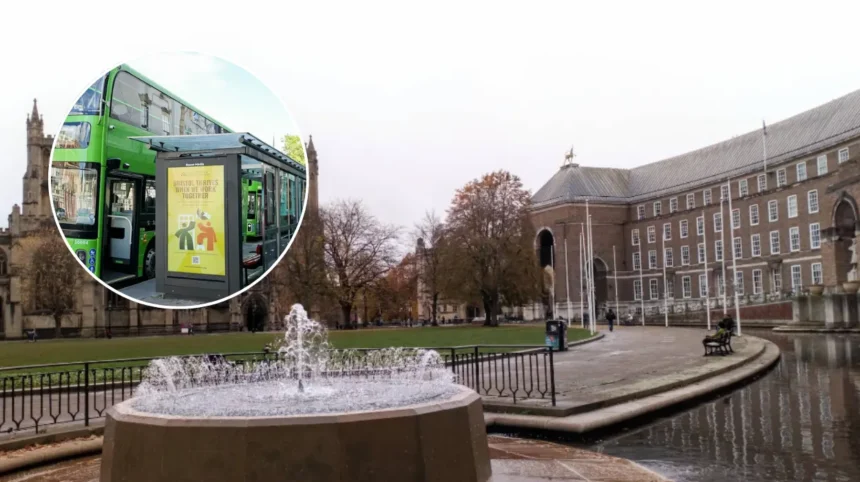
Bristol (Bristol Express News) September 18, 2026 – It is a drizzly afternoon in Bristol’s city centre, where commuters sheltering at bus stops are greeted by moving display boards advertising banking apps, energy deals, and iPhones. Yet, a major policy shift is underway that will fundamentally alter what residents see in public spaces. As reported by Blaise Cloran of The Telegraph, Bristol has officially become the first British city to ban the advertising of “fast fashion” on council-owned property, alongside a broader crackdown on high-carbon products such as flights and cruises.
- Key Points
- Why Has Bristol City Council Implemented the Ban on Fast Fashion and High-Carbon Adverts?
- What Are the Criticisms and Concerns Raised by Local Residents and Councillors?
- How Will Local Businesses and Independent Retailers Be Affected?
- Are Other UK Councils Following Bristol’s Lead on Advertising Restrictions?
- Background of the Particular Development
- How will this development affect Bristol residents?
Why Has Bristol City Council Implemented the Ban on Fast Fashion and High-Carbon Adverts?
The newly introduced measures target campaigns centred on mass markdowns, limited-time offers, offer codes, influencer promotions, limited-time collections or “drops”, and mass sales—including traditional winter shopping events like Black Friday. According to the reporting by Blaise Cloran of The Telegraph, Heather Mack, the deputy leader of Bristol City Council, defended the policy as a necessary step to meet the city’s climate objectives.
As stated by Heather Mack to The Telegraph,
“It is not in line with our sustainability commitments to be actively promoting things that do not fit into those. That includes adverts for flights and high-carbon holidays, for cars, and fossil fuels in general.”
Instead of commercial advertisements, affected bus stops and billboards will display council-backed messaging featuring slogans such as “Bristol thrives when we work together”.
What Are the Criticisms and Concerns Raised by Local Residents and Councillors?
The policy has provoked a sharp backlash from various community members and political figures. Local resident Annmarie Mason, 74, voiced her dismay to The Telegraph, arguing that the council is overreaching. As noted in the reporting by Blaise Cloran, Mason stated, “You shouldn’t ban something just because you [the Green Party] disagree with it. It’s not against the law to go on holiday… It is acting like we can’t make our own minds up.”
Political opposition was equally fierce. John Goulandris, a Conservative councillor for Stoke Bishop and the sole vote against the measures, criticised the initiative in his interview with The Telegraph. As reported by Blaise Cloran, Goulandris described the policy as “woke virtue signalling” and remarked, “I thought it was surreal; people do have to make their own choices in life… It is frightening, actually, the products and services are perfectly legal.” Furthermore, Goulandris highlighted a lack of clarity within the regulations, pointing out that council officials could not precisely define what constitutes “fast fashion” or where the line should be drawn regarding specific retailers.
How Will Local Businesses and Independent Retailers Be Affected?
Council officers have acknowledged that the ban could result in an estimated loss of £80,000 per year in advertising revenue. While the local authority maintains that the policy will benefit smaller, independent Bristol businesses by preventing multinational corporations from dominating public advertising spaces, local business leaders remain sceptical.
As reported by Blaise Cloran of The Telegraph, Brendan Murphy, co-founder of the Barbi association representing Greater Bristol’s independent hospitality and retail sectors, dismissed the measures. Murphy stated to The Telegraph that the ban is little more than a “PR exercise rather than making a real difference,” adding that the council fails to properly consult local enterprises or address more critical burdens such as steep parking fees and business rates. This sentiment was echoed by Ian Beattie, a former cosmetics advertising professional, who warned against cutting off potential revenue streams for high-street businesses already facing a challenging economic climate.
Are Other UK Councils Following Bristol’s Lead on Advertising Restrictions?
Bristol’s policy is part of a broader national trend towards restricting public advertisements for polluting and unhealthy goods. More than 20 British councils currently enforce various curbs on advertising for high-carbon products. These include regions like Sheffield and Hackney in London, where local leadership has pledged to target meat and dairy products next.
While Bristol councillors are similarly exploring ways to restrict advertisements for unsustainable foods, defining these categories remains a significant hurdle. Meanwhile, grassroots organisations such as Adblock—a volunteer group operating under the Adfree Cities network—are pushing for an even more radical approach. Robbie Gillett, co-director at Adfree Cities, told The Telegraph that his network ultimately desires the complete removal of all public advertising sites from cities to reduce commercial saturation.
Explore more Bristol Council News:
Bristol Council Admits Losing Park Encampment Battle, Bishopsworth 2026
Bristol Housing Crisis Worsens As Temporary Accommodation Surges In Bristol City Council 2026
Background of the Particular Development
The implementation of Bristol’s advertising ban is rooted in the city’s long-standing history of aggressive climate policymaking. In 2018, Bristol made national history by becoming the first local authority in the United Kingdom to declare a climate emergency, pledging to achieve carbon neutrality across the entire city by 2030. Over the subsequent years, the political landscape shifted significantly, culminating in the Green Party becoming the largest political bloc on Bristol City Council in 2024—the same year Carla Denyer was elected as the Green MP for Bristol Central.
These local ambitions align with an escalating national movement among urban authorities aiming to use municipal powers—such as the control of bus shelters, billboards, and council-owned land—to discourage consumption habits linked to greenhouse gas emissions. Following prior nationwide restrictions on tobacco and local junk food advertising bans enacted in Bristol in 2021, this latest policy represents an escalation into lifestyle and fashion sectors, setting a precedent for other councils seeking proactive environmental interventions.
How will this development affect Bristol residents?
The advertising crackdown is poised to create a polarized economic and social environment within Bristol. For local consumers and residents, public spaces will feature a noticeable reduction in commercial promotions, replaced instead by civic and environmental messaging from the local authority. While supporters of the Green Party view this as a progressive measure to combat climate change, everyday shoppers may experience a more restricted retail awareness environment, particularly regarding seasonal sales, discounts, and high-street fashion brands.
For local businesses and independent high-street retailers, the policy introduces complex financial and operational challenges. Although major multinational fast-fashion brands will bear the immediate brunt of the billboard exclusion, independent retailers operating in a struggling economic climate may find themselves navigating an increasingly hostile commercial landscape where municipal authorities dictate permissible marketing channels.
Furthermore, with council officers conceding an expected loss of £80,000 annually in advertising revenue, the local authority may face budgetary pressures that could indirectly impact public services or local business support initiatives. Ultimately, Bristol’s pioneering stance risks alienating small business owners who feel sidelined by puritanical policymaking, potentially accelerating footfall declines in the city centre if broader economic hurdles like parking costs and business rates remain unaddressed.