Key Points
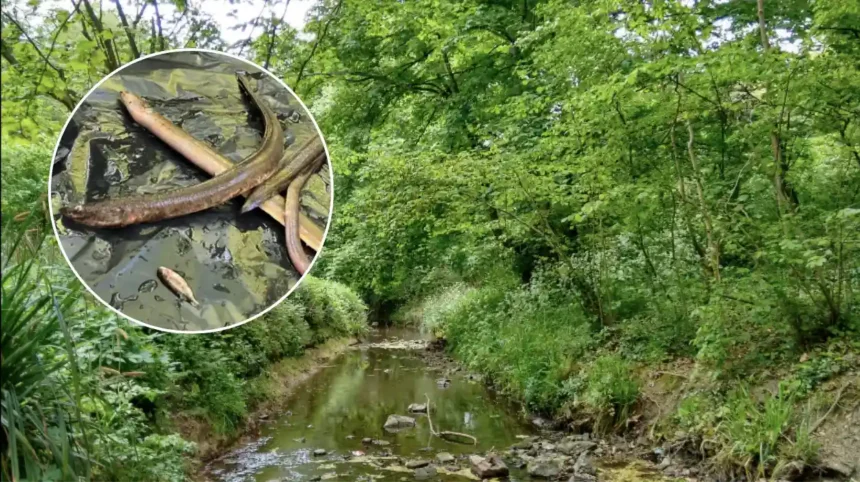
- Chemical Pollution: The Environment Agency (EA) confirmed that water containing chemicals from firewater run-off had entered the Brislington Brook after a fire at an industrial estate on 1 September, where dead fish and critically endangered European eels have been discovered.
- Critically Endangered Species Killed: There were about 50 dead European eels, which is an animal that migrates thousands of miles from the Sargasso Sea, in addition to other fish species.
- Community Calls for Action: Friends of Brislington Brook (FOBB) local conservation group headed by its acting chair, Jackie Friel, has demanded an investigation into the landowner and a fire impact report from the local fire service.
- Ecosystem Destruction: According to representatives of FOBB, all surviving animals have abandoned the adjacent woodlands since the environment has become “bereft of life.”
- Fire Service Statement: Avon Fire and Rescue Service said that no firefighting foam was used in addition to taking all the necessary precautions and measures to prevent any run-off following EA guidelines.
- Environmentally Complex Case: The EA said that the killing of eels must have occurred due to pollution level changes and many chemicals in combination.
Bristol (Bristol Express News) October 14, 2026 – A major chemical pollution incident originating from a nearby industrial estate fire has devastated local wildlife in Brislington Brook, Bristol. Environmental regulators have confirmed the presence of hazardous firewater runoff downstream, where dozens of critically endangered European eels and fish were found dead. Local conservationists are demanding immediate accountability and thorough investigation into containment measures and site management.
- Key Points
- What Caused the Devastating Chemical Runoff in Brislington Brook?
- Why Are Local Conservationists Calling for Full Accountability?
- How Has the Pollution Incident Impacted the Local Ecosystem and Woodland?
- How Did Emergency Services and Regulatory Bodies Respond to the Incident?
- Background to the Particular Development
- How This Development Can Affect the Particular Audience
What Caused the Devastating Chemical Runoff in Brislington Brook?
As reported by Joe Skirkowski and Scott Ellis of the BBC, toxic chemicals carried by firewater runoff entered Brislington Brook in Bristol and migrated downstream following a fire at a neighbouring industrial estate on 1 September. The incident resulted in significant wildlife mortality, with dead fish and critically endangered European eels discovered in the waterway shortly after the blaze was extinguished.
The Environment Agency (EA) conducted extensive sampling along the affected stretch of the brook. As reported by Joe Skirkowski and Scott Ellis of the BBC, an EA spokesperson confirmed that “chemicals from the firewater runoff entered the brook and spread downstream.” While the regulatory body did not directly attribute the immediate death of the aquatic life solely to a single source, chemical analysis verified that toxic runoff infiltrated the aquatic ecosystem during and after the emergency response.
European eels (Anguilla anguilla) are classified as critically endangered on the IUCN Red List. These remarkable creatures undertake an extraordinary migration spanning thousands of miles from their spawning grounds in the Sargasso Sea to mature in the freshwater rivers and streams of Europe. As reported by Joe Skirkowski and Scott Ellis of the BBC, approximately 50 dead European eels were retrieved from Brislington Brook in the aftermath of the contamination event.
Why Are Local Conservationists Calling for Full Accountability?
The severe environmental impact has sparked strong reactions from community volunteers dedicated to preserving the local natural habitat. As reported by Joe Skirkowski and Scott Ellis of the BBC, Jackie Friel, acting chair of the conservation group Friends of Brislington Brook (FOBB), expressed profound distress over the loss and demanded a rigorous investigation into all responsible parties.
Speaking to the BBC reporters, Jackie Friel stated that “somebody is culpable, we need to have accountability.” Friel emphasised that accountability must extend across both the emergency response operations and the private property management of the facility where the hazardous materials were held.
As reported by Joe Skirkowski and Scott Ellis of the BBC, Friel asserted:
“The fire service need to produce a fire impact report to show what measures they took to protect the environment.”
Furthermore, Friel highlighted the responsibility of the disused industrial unit’s management, stating that the owner of the disused factory unit where the chemicals were stored also needed to be held to account for allowing hazardous materials to present a risk to the surrounding environment.
Friel urged regulatory authorities to expand the scope of their inquiries, adding as reported by Joe Skirkowski and Scott Ellis of the BBC:
“[The EA] need to do more of an investigation to find out what happened the day the fire took place and speak to the fire service about their containment procedures.”
How Has the Pollution Incident Impacted the Local Ecosystem and Woodland?
The destruction caused by the toxic runoff extends beyond the aquatic organisms residing directly in the brook’s waters. According to local observers, the surrounding terrestrial and avian fauna have completely deserted the area following the chemical event.
As reported by Joe Skirkowski and Scott Ellis of the BBC, Jackie Friel described the emotional toll of discovering the dead marine life, remarking that it was “tragic to see” and adding:
“We were all so upset. We had such a flourishing community of eels here and now they are all dead.”
The broader ecological disruption has transformed the surrounding woodland area. As reported by Joe Skirkowski and Scott Ellis of the BBC, Friel noted:
“It’s not only the aquatic creatures. Since they died all the other animals have fled. Now the woods are bereft of life, the place is eerily quiet, there are no birds singing, there is no evidence of any wildlife here at all.”
Despite the severe loss, members of Friends of Brislington Brook have expressed a firm commitment to long-term restoration. As reported by Joe Skirkowski and Scott Ellis of the BBC, the group stated that they intend to work collaboratively with relevant environmental bodies to eventually reintroduce European eels to the brook once the water quality and surrounding habitat are declared fully restored and safe.
How Did Emergency Services and Regulatory Bodies Respond to the Incident?
In response to inquiries regarding containment measures deployed during the incident, emergency service representatives highlighted their adherence to established environmental protection protocols.
As reported by Joe Skirkowski and Scott Ellis of the BBC, a spokesperson for Avon Fire and Rescue Service stated that reducing the impact of contaminants on the local environment remains “extremely important” to the organization. The fire service spokesperson explained:
“We work closely with the Environment Agency, seeking and following their advice to ensure the most appropriate environmental protection measures are in place.”
Addressing specific tactical actions taken during the emergency, the spokesperson for Avon Fire and Rescue Service added as reported by Joe Skirkowski and Scott Ellis of the BBC:
“In line with their guidance, we took steps to prevent contaminants from spreading by blocking drains, containing runoff where possible, and limiting any potential impact on local waterways and surrounding areas.”
The fire service spokesperson also addressed public speculation regarding chemical firefighting agents used at the site. As reported by Joe Skirkowski and Scott Ellis of the BBC, the spokesperson clarified:
“At the time we were aware of references to firefighting foam in nearby waterways. However, no firefighting foam was used during our response to this incident.”
For their part, environmental inspectors noted the technical complexity involved in assessing firewater incidents of this scale. As reported by Joe Skirkowski and Scott Ellis of the BBC, an Environment Agency spokesperson explained that firewater incidents are “complex” and frequently involve “multiple pollutants.”
Elaborating on the initial scientific findings, the EA spokesperson stated as reported by Joe Skirkowski and Scott Ellis of the BBC:
“Our assessment indicates the eel deaths may have resulted from a combination of factors, including multiple chemicals acting together and the levels of pollution changing throughout the incident.”
Explore more Brislington News:
Historic Bristol Blue Glass Relaunches in Brislington 2026
Suspected Deliberate Fire Breaks Out Near Commercial Property in Brislington 2026
Background to the Particular Development
Firewater runoff represents one of the most acute environmental hazards associated with industrial fires. When emergency services deploy large volumes of water to suppress structural blazes at commercial or industrial sites, the resulting runoff frequently mixes with stored raw materials, industrial solvents, combustion by-products, and toxic chemicals. If secondary containment structures—such as bunded areas, shut-off valves, or temporary interceptor bladders—are absent, damaged, or overwhelmed, contaminated liquid enters municipal storm drains or adjacent watercourses.
Brislington Brook is a tributary stream located in South East Bristol, flowing through urban areas and local green corridors before joining the River Avon. Historically, small urban streams across the United Kingdom have faced recurring pressures from industrial discharge, urban surface runoff, and legacy land contamination. In recent years, community-led conservation movements, such as Friends of Brislington Brook, have undertaken extensive habitat management, debris removal, and water quality monitoring to revive these localized blue-green spaces.
The European eel (Anguilla anguilla) is a catadromous fish species whose population across Europe has suffered declines exceeding 90% since the late 1970s due to factors including habitat loss, migratory barriers, overfishing, climate shifts, and chemical pollution. Because eels reside in stream sediments and feed on benthic organisms, they are particularly vulnerable to bioaccumulating persistent chemicals and experiencing acute mortality during sudden toxic discharge events in urban waterways.
How This Development Can Affect the Particular Audience
This environmental development carries significant implications for three primary audiences: local residents and conservation groups, industrial site operators, and regional emergency planning authorities.
Impact on Local Communities and Conservation Volunteers
For local residents and environmental volunteers in South East Bristol, this incident will likely trigger heightened public scrutiny of nearby industrial operations and demand greater transparency regarding environmental safety protocols. The loss of an entire local population of a critically endangered species severely disrupts years of community-led restoration work. In the immediate future, local groups are expected to increase pressure on municipal leaders to install real-time water quality monitoring equipment, demand formal environmental impact audits for disused industrial facilities, and organize coordinated remediation frameworks prior to any reintroduction efforts.
Impact on Industrial Property Owners and Local Businesses
For owners of industrial units, commercial warehouses, and disused manufacturing facilities across the region, this event signals stricter regulatory oversight and potential civil or statutory liabilities. Property owners who store hazardous substances—or leave disused premises unmonitored—may face enhanced legal requirements regarding chemical storage compliance, mandatory secondary containment installations, and site security. Insurance underwriters are also likely to re-evaluate environmental liability cover for commercial properties situated near natural watercourses, raising operational costs for businesses that fail to demonstrate robust containment planning.
Impact on Emergency Services and Environmental Regulators
For emergency services such as Avon Fire and Rescue Service and regulatory bodies like the Environment Agency, this development will likely prompt a joint review of emergency tactical response frameworks for urban industrial fires. The incident highlights the complex operational challenge of balancing rapid fire suppression with environmental containment. Future incident response strategies will probably feature earlier deployment of drain-blocking technology, expanded use of containment booms, mandatory post-incident environmental reporting, and closer inter-agency coordination during active firefighting operations near fragile river catchments.