Key Points
- Access emergency level crisis: According to Lucy Hunt, engagement director at Bristol Old Vic, the access problem for live theater and creative arts for children, especially those who come from poor backgrounds, is an emergency issue.
- School tour program: Live performances are being taken directly to the halls of 19 secondary schools in Bristol, and the cost of transport and money issues are solved.
- Audiences’ age groups: The Theatre in Education show is performed for Year 7 and Year 8 students.
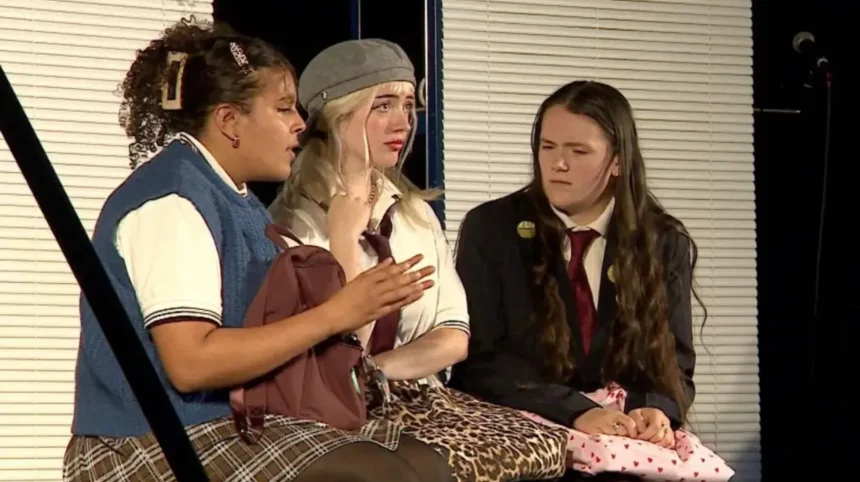
- Commissions: Students are watching one of the two new 30-minute commissions: A Brit?ish Museum, written by Muneera Pilgrim, and directed by Lisa Gregan, and Dead Air by Sam Parker, directed by Rikki Henry.
- Emerging talent program: The productions are being staged by MIB260 Company members who belong to the Made in Bristol scheme for 18 to 25-year-olds.
- High Demand vs Financial Constraints: A study conducted by Arts Council found that 74% of children consider creativity important while 87% wanted to engage in more creative activities, but over 50% said lower costs were key to increased engagement.
- Immediate feedback from pupils and educators: Students such as Mikel, Beatriz, Elizabeth Yeboah, Bethany Davis-Croshaw, and Louis Le of City Academy spoke about how the experience helped them gain confidence, empathy, and social awareness.
- Career transferable skills: Rebecca Pearce, Drama Teacher at City Academy, emphasized that secondary drama taught students skills that were essential for future career in various fields such as law, journalism, politics, and lecturing.
Bristol (Bristol Express News) October 19, 2026 – Arts industry leaders and local educators have issued a stark warning that children across Bristol are systematically missing out on opportunities to experience live theatre due to prohibitive venue pricing, transport costs, and severe school budget constraints. In response to what venue directors describe as an “emergency” in creative access for young people, Bristol Old Vic has launched a landmark Theatre in Education touring initiative, taking live, professionally staged plays directly into secondary school halls across the city free of charge.
- Key Points
- Why Is Bristol Old Vic Taking Live Theatre Directly Into School Halls?
- What Does National Data Reveal About Youth Demand For Creative Arts?
- How Are Bristol Students Responding To In-School Performances?
- How Does In-School Theatre Complement Secondary School Curriculums?
- Background To Bristol Old Vic’s Outreach Strategy
- How This Development Will Affect Key Audiences
Why Is Bristol Old Vic Taking Live Theatre Directly Into School Halls?
As reported by Alastair McKee and Christopher Mace of BBC News, alongside reporting from Jamie Grierson of The Guardian, the central team at Bristol Old Vic believes that young people from less affluent demographic backgrounds face severe structural barriers to attending traditional theatre performances.
Lucy Hunt, engagement director at Bristol Old Vic, explained the motivation driving the city-centre venue’s outbound outreach project:
“We are really trying to take theatre to everyone across the city and across the kind of barriers that people might face.”
Hunt acknowledged that working-class families across the region are increasingly struggling to afford ticket prices and cultural outings, while local secondary schools themselves face mounting operational pressures that make external educational trips almost impossible.
What Does National Data Reveal About Youth Demand For Creative Arts?
The physical expansion into local classrooms coincides with national research commissioned by Arts Council England, which highlights a sharp disconnect between young people’s creative aspirations and their practical access to live arts.
The Arts Council survey findings revealed that:
- 74% of children surveyed stated that creativity was important to their daily lives.
- 87% expressed a desire to take part in more creative activities than they currently do.
- Over 50% of respondents stated that making events more affordable was the primary factor required to increase their participation.
Hunt noted that pupils often fail to engage with drama modules at school simply because they are not exposed to live theatre outside the educational setting. She noted:
“It tends to be middle-class young people, or schools that are really proactive in bringing students to performances.”
How Are Bristol Students Responding To In-School Performances?
The Theatre in Education project encompasses 19 secondary schools across Bristol—including City Academy Bristol, Fairfield High School, Nailsea School, Abbeywood Community School, St Mary Redcliffe and Temple, St Bede’s Catholic College, and Oasis Academy John Williams—targeting Year 7 and Year 8 pupils.
Among the works featured in the tour is A Brit?ish Museum, written by Muneera Pilgrim and directed by Lisa Gregan. The 30-minute play explores contemporary British identity, cultural assumptions, and personal relationships through a cast aged 18 to 25 from Bristol Old Vic’s Made in Bristol (MIB260) training programme. A second production, Dead Air, authored by Sam Parker and directed by Rikki Henry, explores youth governance and peer solidarity through a story centered on a guerrilla radio station.
At City Academy Bristol, pupils attended a live performance before engaging in a direct Q&A session with playwright Muneera Pilgrim.
As reported by Alastair McKee and Christopher Mace of BBC News, Mikel, a Year 8 pupil at City Academy, shared his feedback after watching the performance:
“It was really fun. It was more than I expected. Being on stage gives you confidence because being in front of so many people makes people nervous. I think it gives you other skills in life.”
Beatriz, another pupil at City Academy, noted:
“People are different, they have different personalities and friendships can break sometimes, but can come back. [Taking part in and watching theatre means] people can see and experience new things.”
As reported by Jamie Grierson of The Guardian, 12-year-old pupil Elizabeth Yeboah reflected on the themes presented in A Brit?ish Museum:
“It was really good. I like the fact they brought up racism. A lot of kids go through that.”
13-year-old Bethany Davis-Croshaw added:
“I thought it was amazing. The stage setup was so cool.”
When 12-year-old Louis Le asked Pilgrim about the creative inspiration behind her play, Pilgrim stated:
“I’m inspired by stories that are not heard. How do we make sure our stories come out?”
Speaking on the broader educational influence of theatre, Pilgrim emphasized:
“They learn to have empathy, they learn confidence, they learn communication. It just gives them a wider view of the world, which they may not be able to experience in the other.”
Explore more City Centre News
Global Engineering Firm Reaffirms Commitment With Third Bristol Site 2026
Leonardo Hotels Buys Bristol City Centre Hotel in £11.5m Deal
How Does In-School Theatre Complement Secondary School Curriculums?
Beyond offering students exposure to live performance, the Bristol Old Vic project was designed to integrate directly with secondary school drama departments.
Rebecca Pearce, a drama teacher at City Academy, outlined the broader career benefits associated with practical drama education:
“I think drama gives students the opportunity to go into so many different careers, with transferable skills, whether it’s being a lawyer or a politician, a lecturer or a journalist. I think it’s those skills that people don’t always recognise that drama offers for students.”
Background To Bristol Old Vic’s Outreach Strategy
| Strategic Pillar | Implementation Detail | Target Demographic |
| Direct School Access | Staging free 30-minute plays inside school halls across 19 institutions. | Key Stage 3 pupils (Years 7 & 8). |
| Emerging Talent Pipeline | Production delivery managed by MIB260 training cohort. | Young actors & theatre makers aged 18–25. |
| Curriculum Integration | Post-show workshops and Q&A sessions with playwrights. | Secondary school drama departments. |
The decision by Bristol Old Vic to decentralize its operations and deliver productions directly into state secondary schools marks a significant operational pivot in regional arts administration. Over the past decade, regional UK theatres have faced compounding financial challenges: local authority funding cuts, rising operational overheads, and severe reductions in secondary arts education funding.
Arts education in British state schools has experienced a prolonged decline in taking trips to cultural institutions due to rising transport hiring fees and administrative liabilities. Concurrently, public sector survey data from Arts Council England indicates that household discretionary spend on cultural events has diminished across lower-income families.
By restructuring the Made in Bristol training programme into MIB260, Bristol Old Vic created a dual-purpose framework. The scheme offers early-career actors aged 18 to 25 real-world touring experience, while providing local state schools with free, high-caliber theatrical productions that fulfill key curriculum requirements without placing financial burdens on school budgets or families.
How This Development Will Affect Key Audiences
1. State Secondary School Students
Taking professional theatre directly into classrooms will lower geographic and socioeconomic entry barriers for working-class students. Exposure to plays like A Brit?ish Museum and Dead Air is likely to improve creative engagement, build personal confidence, and foster crucial soft skills like public speaking, empathy, and critical analysis. Long-term tracking may show higher uptake in GCSE and A-Level drama enrolment among participating schools.
2. Regional Cultural Institutions & UK Theatres
Bristol Old Vic’s in-school delivery model provides a scalable blueprint for venue engagement across the UK. As traditional box-office models struggle to engage younger, diverse audiences, rival regional venues are likely to adopt similar touring models to meet outreach targets, qualify for Arts Council grants, and build future audiences.
3. Early-Career Creative Professionals
For cast members in the 18-to-25 age range, the initiative provides paid, professional tour experience across varied educational environments. This model helps diversify the talent pipeline in British theatre, ensuring emerging writers, directors, and performers gain practical experience early in their careers.