Key Points
- Bristol Airport has made a massive announcement about the expansion program worth £500 million that aims to extend Bristol Airport long hauls to destinations in North America and the Middle East.
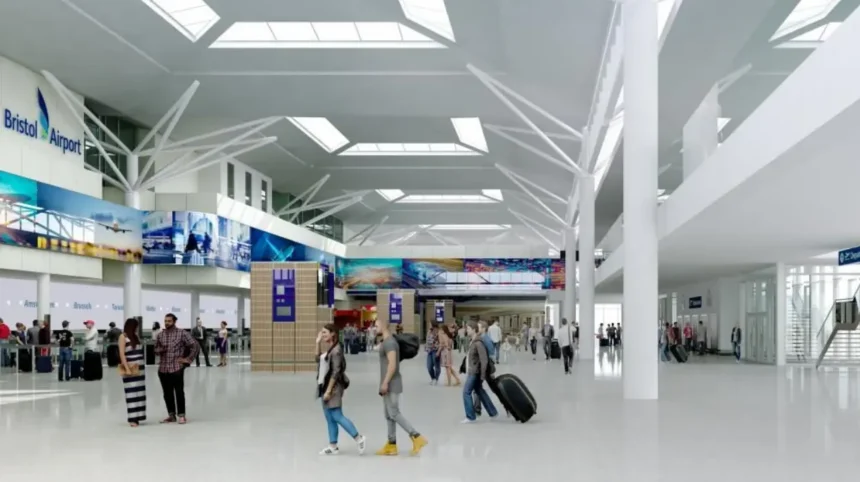
- The development program involves a larger terminal that will offer more space, increased number of retail stores, and a variety of food and beverage outlets.
- In the development plan, there is an increase in the immigration hall size, increased baggage handling facilities, and travelators that will facilitate faster transit of the passengers.
- The runway and taxiway development program together with changes in the approach lights will be able to handle larger aircraft that can make direct international connections.
- The plan expects to provide around 1,000 job opportunities locally while the development will offer employment to 36,000 people in the southwest of England and South Wales.
- Other infrastructure development includes upgrading of the A38 highway, installation of a bus lane for connecting both sides of the airport, and new hangar for aircraft maintenance.
Bristol (Bristol Express News) October 21, 2026 – Bristol Airport has issued a critical update concerning its transformative £500 million investment blueprint, designed to revolutionise international travel and connectivity for the southwest of England and South Wales. As detailed by travel industry publications and regional news sources, the sweeping proposals are structured to elevate the airport’s operational capacity and accommodate direct long-haul flights to major global destinations, including North America and the Middle East.
The comprehensive development strategy addresses multiple facets of airport infrastructure and passenger experience. According to announcements covered by trade and regional media, the project incorporates a significantly enlarged terminal building equipped with more space, an extensive selection of shops, diverse dining options, a bigger immigration hall, and modernised baggage handling facilities. Furthermore, the blueprint addresses internal transit convenience by introducing travelators and enabling passengers to walk directly to and from aircraft stands without relying entirely on buses.
How Will Runway and Technical Improvements Support Long-Haul Flights?
To facilitate direct connections to world cities outside Europe, the £500 million project necessitates crucial airfield modifications. As reported in sector updates, the development framework features vital runway and taxiway improvements alongside strategic changes to approach lighting systems. These technical enhancements are specifically engineered to safely handle larger wide-body aircraft capable of operating intercontinental routes.
In addition to passenger aircraft capabilities, the proposals outline the construction of a dedicated maintenance hangar. Industry analysts note that this high-skill facility will prevent locally based aircraft from needing to fly elsewhere for routine maintenance, thereby cementing the airport’s status as a comprehensive regional aviation hub.
What Economic and Employment Benefits Are Projected for the Region?
The financial scale of the initiative is matched by its anticipated socio-economic footprint across local communities. According to planning documents and statements highlighted by trade journalists, the expansion initiative is projected to generate roughly 1,000 new on-site local jobs directly within the terminal and associated operations.
Beyond direct employment on the campus, the broader economic ramifications are substantial. As reported across regional reporting channels, the development is expected to support an estimated 36,000 jobs within the wider supply chain across the southwest and South Wales, yielding significant regional economic advantages. To ensure local populations benefit from these opportunities, the airport’s framework incorporates collaborative partnerships with local colleges to deliver targeted skills training, employment support, and dedicated apprenticeship programmes.
Explore more Local Bristol News
Bristol Lamp Post Flags Drop to 371 After Council Removals 2026
Lawrence Weston Fish Bar Closes: Bristol Chippy Shuts Doors in 2026
How Will Ground Transport and Infrastructure Be Upgraded?
Accommodating higher passenger volumes necessitates a parallel transformation of regional ground transportation networks. The proposals outline a significant increase in the proportion of travellers arriving via public transport, complemented by the delivery of additional on-site car parking spaces.
Road network modifications form another cornerstone of the project. As detailed in the planning disclosures, highway improvements along the A38 trunk road are coupled with plans for a dedicated new bus lane. This intervention is intended to secure reliable journey times and smoother transit connectivity between the airport’s northern and southern perimeters. Additionally, an expanded car hire facility is slated for development to accommodate the anticipated influx of inbound international tourists and business travellers.
Background of the Particular Development
The £500 million expansion initiative builds upon a prolonged strategic trajectory for Bristol Airport as the primary international gateway for Southwest England. Following previous regulatory milestones—such as the Planning Inspectorate’s 2022 decision allowing capacity increases from 10 million to 12 million passengers per annum—the airport has experienced robust post-pandemic traffic rebounds, handling a record-breaking volume of travellers. Successive public consultations held through recent years, including engagement rounds covering master planning and runway approach lighting modifications, demonstrated substantial regional dialogue involving thousands of local stakeholders. These foundational steps cultivated the comprehensive long-term framework necessary to transition the regional airfield into a globally connected facility capable of servicing long-haul markets.
This multi-faceted £500 million infrastructure development is poised to substantially reshape regional travel dynamics for residents, local businesses, and inbound tourists across the southwest of England and South Wales. By introducing direct long-haul routes to North America and the Middle East, local holidaymakers and corporate travellers will increasingly bypass the necessity of commuting via congested London airports, saving considerable travel time and transit expenses. For the regional business and tourism sectors, improved direct global connectivity will streamline international trade, attract a higher volume of inbound overseas visitors, and stimulate regional competitiveness. Simultaneously, the concurrent local employment opportunities, supply chain expansion, and educational partnerships will fortify the regional labour market, though local communities will likely monitor the corresponding ground transport and A38 highway modifications closely to manage local traffic implications.