Key Points
- A young girl aged 12 with LMNA congenital muscular dystrophy known as Carmela Chillery-Watson, received her own fashion billboard in Bristol in a surprise.
- The surprise was organized by the Bristol Fashion Show, which is an all-volunteer collective that seeks to boost the representation of people who have been ignored by the fashion industry.
- Carmela has worked with the Bristol Fashion Show from when she was 5 years old and became the youngest recipient of the MBE in December.
- The organizers Butzi Schlaadt and Charly Evans asked all designers taking part in the upcoming fashion show on 1 November to design clothes for disabled models with invisible or visible disability.
- The funds generated from the show go to support Cure4Carmela and Muscular Dystrophy UK.
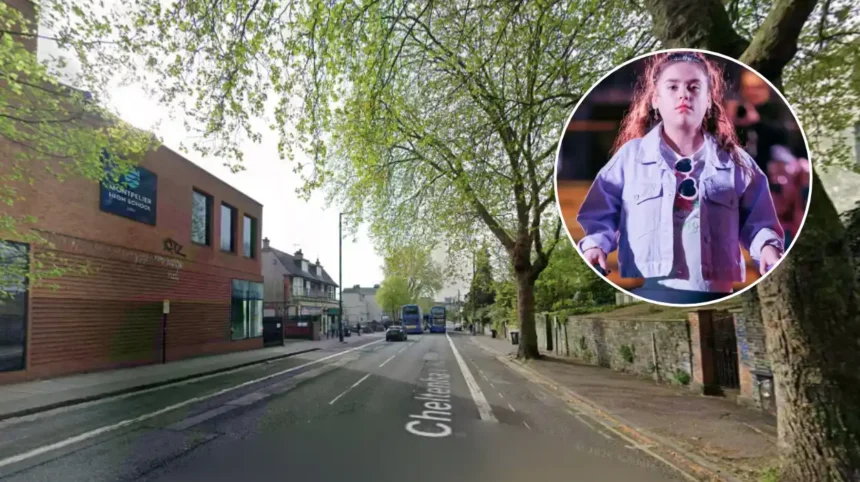
Bristol (Bristol Express News) October 22, 2026 – A 12-year-old disability activist from Wiltshire has been honored with her own massive billboard in Bristol after championing greater representation for individuals with physical challenges within the fashion industry. Carmela Chillery-Watson, who navigates life with a progressive muscle-wasting condition, experienced the emotional surprise alongside her family on Cheltenham Road.
Why Was Carmela Chillery-Watson Surprised With a Billboard in Bristol?
As reported by journalists Cheryl Dennis and Kirsten Robertson of the BBC, Carmela Chillery-Watson was taken by complete surprise when she turned a corner at the Arches on Cheltenham Road and encountered her own image displayed prominently on a billboard for the very first time. The initiative was spearheaded by the Bristol Fashion Show, a volunteer-led collective of South West artists and designers dedicated to building a platform for underrepresented communities in fashion.
Reflecting on the emotional moment, Carmela stated that she had “no clue what was going to happen, it was a bit of a mystery coming here” and added that she had “never been on a billboard before, so that’s amazing.” Having lived in Dorset and Wiltshire, she emphasized the importance of ensuring that people “with all abilities to be able to do fashion” and expressed her strong desire to see future catwalk shows incorporate individuals from disabled backgrounds. She noted:
“Wheelchairs, walkers, walking sticks… I really hope in the future it will become more normalised.”
How Did Carmela’s Modeling Journey Begin?
Carmela’s journey with the collective began when she was just five years old, during which time she participated in multiple catwalks. However, her mother, Lucy Chillery-Watson, revealed the initial hurdles they faced when attempting to enter the commercial modeling space.
As detailed by BBC journalists Cheryl Dennis and Kirsten Robertson, Lucy Chillery-Watson explained:
“Growing up, Carmela loved to dress up and we signed her up with some modelling agencies aged five but she just wasn’t getting any jobs after a few years.”
Lucy recalled that Carmela eventually turned around and asked her directly:
“Am I ugly? Do they not want me to model for them?”
Driven by her daughter’s question, Lucy took matters into her own hands and successfully discovered the Bristol Fashion Show, which welcomed Carmela with open arms. Beyond her work on the catwalk, Carmela has raised thousands of pounds for Muscular Dataophy UK and Julia’s House Hospice, frequently completing demanding fundraisers while dressed in superhero costumes. In recognition of her extraordinary efforts, she became the youngest person ever to receive an MBE in December, meeting Prince William at Windsor Castle. Expressing her profound emotion, Lucy stated that there were “no words” to express her pride for her daughter.
Explore more Local Bristol News:
Bristol City Council Refuses St Joseph Care Home Student Conversion Plans Bristol 2026
San Carlo Bristol Celebrates 30th Birthday With 1996 Menu in Bristol 2026
What Changes Are Organisers Making for the Bristol Fashion Show?
The creators behind the inclusive fashion event have doubled down on their commitment to diversity, factoring in age, background, and disability. Butzi Schlaadt, who founded the show in 2012, vividly remembers when Carmela first joined them.
As shared by BBC reporters Cheryl Dennis and Kirsten Robertson, Butzi Schlaadt recalled:
“Her mum rang me six or seven years ago and said it was her [Carmela’s] dream to model, and I said, ‘of course she can model’. She’s been with us ever since, she’s incredible.”
Looking ahead to the upcoming event scheduled for 1 November, co-organiser Charly Evans noted that she spoke with Carmela regarding her aspirations for representation. Charly Evans stated that many individuals suffering from visible and hidden disabilities felt entirely unrepresented, leading the team to make it their mission to enact change. According to Charly Evans:
“We have given all our designers the challenge this year to design an outfit for someone with a disability, visible or invisible, and they are working with the models directly.”
The event will continue to raise vital funds for Cure4Carmela, the family’s fundraising initiative supporting Muscular Dystrophy UK.
Background of the Particular Development
The movement for disability representation in mainstream fashion has gained significant momentum over recent years, shifting away from exclusive traditional standards toward universal design and adaptive clothing. Grassroots organizations and regional collectives, such as the Bristol Fashion Show founded in 2012, have often served as pioneers in bridging the gap between high-fashion platforms and disabled individuals. Young campaigners like Carmela Chillery-Watson, through persistent fundraising, high-profile recognitions like her MBE, and direct public advocacy, have amplified awareness around progressive medical conditions such as LMNA congenital muscular dystrophy, driving community-led initiatives to challenge industry norms.
This inspiring development is expected to significantly influence local and regional attitudes toward disability inclusion, particularly within the South West’s creative and commercial sectors. By highlighting the lived experiences of young campaigners like Carmela Chillery-Watson, the initiative encourages local designers, mainstream retailers, and media platforms to adopt more accessible practices and feature diverse models in everyday advertising. For the local community and individuals living with visible or invisible disabilities, this increased visibility fosters greater self-esteem, normalizes the use of mobility aids on fashion platforms, and accelerates the cultural shift toward true inclusivity in public spaces.