Key Points
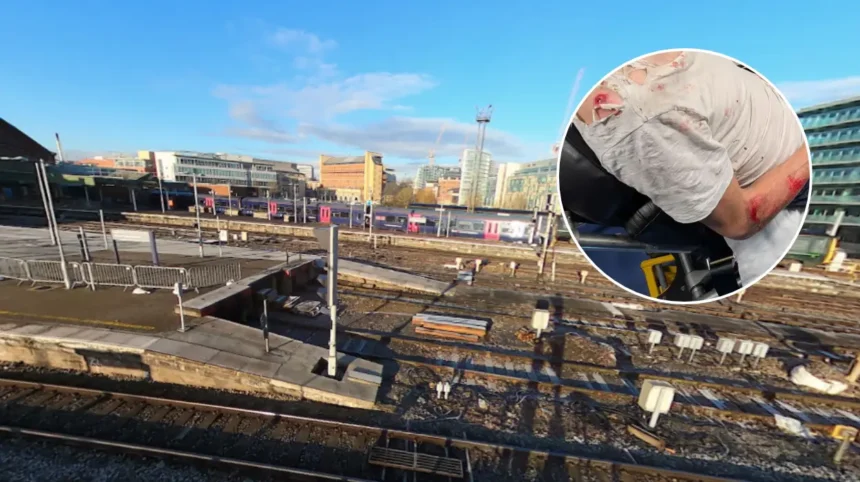
- Incident Description: In an underpass near Temple Meads on Cattle Market Road in Bristol, a man in his 30s called James fell off his electric bicycle when he was approached by another rider who was riding towards him from behind at approximately 11:50 am on September 25, 2026.
- Injury/Damage Information: James had a cut injury to his elbow, abrasions to his arm and back, tendinitis injuries, and cracks to his helmet and will need to be rehabilitated for two to four weeks.
- Safety Issues: James described Bristol as a “lawless city,” arguing that cycle paths such as the underpass and the Bristol and Bath Railway Path (BBRP) are hazardous due to inadequate safety measures.
- Infrastructure Requests: The survivor asked the concerned agencies to set up CCTV cameras on both sides of the underpass and commended the plans of the South Gloucestershire Council to place 20 more cameras along the BBRP between Staple Hill and Bitton Station.
- Council and Police Response: According to Councillor Ed Plowden, the installation of additional cameras is not required because there is no substantial proof that CCTV alone prevents crimes. Acting Neighbourhood Inspector Shaf Zahoor confirmed that the number of Avon성과 Somerset Police patrol uniforms has been enhanced.
- Increase in Crime Statistics: Based on an FOI request to BristolLive, there was a considerable increase in recorded crimes on the Bristol and Bath Railway Path where there were at least 83 offenses reported between January 2024 and August 25, 2026.
Bristol, UK (Bristol Express News) October 28, 2026 — A keen cyclist has branded Bristol a “lawless city” and called for urgent safety interventions after he was violently knocked from his bicycle by an e-bike rider in a local underpass, leaving him needing hospital treatment and weeks of physical rehabilitation.
- Key Points
- How did the collision unfold in the Temple Meads underpass?
- Why are Bristol cycle paths described as dangerous?
- What do crime statistics reveal about the Bristol and Bath Railway Path?
- How have local authorities and police responded to the safety demands?
- Background of the particular development
How did the collision unfold in the Temple Meads underpass?
As reported by Alex Driscoll of Bristol Live, the incident occurred along Cattle Market Road near Temple Meads around 11.50am on September 25, 2026. James, a cyclist in his 30s whose full name was not disclosed, was riding through the underpass when an e-bike rider approached him silently from behind and knocked him off his machine in broad daylight.
As reported by Alex Driscoll of Bristol Live, James stated that he “could have quite easily been killed had it not been for my helmet, or could have faced brain damage at the very least.” The impact left his bicycle helmet with a three-inch crack. A female pedestrian walking towards him at the time stepped in to call an ambulance. James subsequently spent the rest of his day in Accident and Emergency (A&E) with his shoulder “in a bad way.” He suffered a deep cut on his elbow, severe grazing on his arm and back, and tendon damage from hitting the ground hard. Furthermore, the incident disrupted his professional life, forcing him to halt his regular commute to Chippenham for multiple weeks.
Why are Bristol cycle paths described as dangerous?
As reported by Alex Driscoll of Bristol Live, James described the underpass as “really good, couldn’t be better with the space,” but warned that it remains “an accident waiting to happen with bikes.” Expressing severe safety concerns, James noted, “I wouldn’t feel safe walking alone at night in the underpass” and argued that installing CCTV on both sides should be treated as the “bare minimum.”
Beyond the Cattle Market Road underpass, James sharply criticized the safety of the Bristol and Bath Railway Path (BBRP), a heavily utilized active travel route connecting Old Market to Bath. He maintained that the route is “totally unsafe” and “dangerous by itself,” while asserting that local councillors must allocate more financial resources to tackle low-level criminality. “Bristol is a lawless city, it feels like people can get away with anything,” James told Bristol Live, adding that everyday low-level offences severely impact local residents’ lives.
What do crime statistics reveal about the Bristol and Bath Railway Path?
As reported by Alex Driscoll of Bristol Live, safety anxieties surrounding local cycle paths are underscored by escalating crime data. A Freedom of Information (FOI) request executed by BristolLive revealed that reported offences along the BBRP have shot up dramatically over the preceding three years. Between the start of 2024 and August 25, 2026, at least 83 offences were formally logged with police along the route.
Several high-profile violent incidents occurred in close succession late in the summer of 2026. On August 11, a man in his 30s suffered potentially life-threatening injuries during an attack near Bitton at approximately 8:00 pm, prompting police to arrest two teenage boys who were later released on strict bail conditions barring them from the railway path alongside an overnight curfew. Just a day later, a teenager was accosted and robbed of his bicycle by a gang near the old Mangotsfield Station, sustaining minor physical injuries. Additionally, on September 18, three unknown men targeted a man in his 50s riding a mobility scooter near Warmley between 2:45 pm and 3:00 pm in an incident classified by police as a hate crime. The victim sustained minor injuries before the perpetrators fled into nearby woodland close to the Warmley Tea Rooms.
Explore more Local Bristol News:
Clifton College Sports Ground Hosts International Bristol Kickboxing Open 2026
Knowle Library Faces Year Closure Amid Bristol Redevelopment 2026
How have local authorities and police responded to the safety demands?
As reported by Alex Driscoll of Bristol Live, Councillor Ed Plowden, Chair of the Transport and Connectivity Committee at Bristol City Council, responded to public safety demands by stating that the local authority currently holds no plans to install additional cameras. Councillor Ed Plowden explained that there is “currently no evidence that the installation of CCTV alone would effectively address instances of dangerous behaviour or criminality.”
As reported by Alex Driscoll of Bristol Live, Councillor Ed Plowden stated:
“Enforcement of dangerous or unlawful behaviour on cycle paths remains a matter for the police. While CCTV can support evidence gathering, provide reassurance and act as a deterrent in some circumstances, it is not a panacea and is generally most effective as part of a wider package of measures.”
He added that the council remains in constant communication with Avon and Somerset Police regarding hotspots, anti-social behaviour, and crime data. Furthermore, in collaboration with the Walk Wheel Cycle Trust, the council implemented route enhancements to improve sightlines and eliminate blind spots.
Meanwhile, responding to the specific collision, Acting Neighbourhood Inspector Shaf Zahoor told BristolLive:
“I hope the injured man fully recovers. It’s fortunate that he was not more seriously hurt as a result of this reckless and unacceptable behaviour. We understand the concern this will cause to members of the public who cycle through the area.”
Inspector Shaf Zahoor confirmed that Avon and Somerset Police initiated additional uniformed patrols along the affected corridor as operational capacity permits.
In a parallel development, South Gloucestershire Council advanced plans to introduce up to 20 new CCTV cameras along the BBRP between Staple Hill and Bitton Station. A spokesperson for the Walk Wheel Cycle Trust stated:
“We take safety on the National Cycle Network seriously and work closely with local authorities and other community groups to improve routes to make them easier for everyone to walk, wheel or cycle and to help people feel safer.”
Background of the particular development
The rising security concerns surrounding Bristol’s active travel infrastructure reflect a broader tension between the city’s push for sustainable, green transportation and the practical challenges of policing expansive, semi-isolated networks. Over recent years, Bristol City Council and neighboring authorities heavily promoted walking, wheeling, and cycling networks—such as the regional cycle paths and urban underpasses—to cut carbon emissions and ease congestion. However, these corridors, including the historically repurposed Bristol and Bath Railway Path and urban connections near major transit hubs like Temple Meads, often lack comprehensive lighting, active surveillance, and continuous police presence.
This structural vulnerability has coincided with documented spikes in low-level criminality, anti-social behaviour, and opportunistic robberies. While municipal bodies emphasize that closed-circuit television is not an isolated cure for complex societal and behavioral issues, victims and local cycling advocates argue that minimal infrastructural accountability leaves commuters exposed to reckless riding, assaults, and theft. The recent collision on Cattle Market Road and the accumulation of reported violent offences have thus catalyzed public debate over accountability, municipal funding priorities, and the division of responsibility between local government transport committees and regional police forces.
This heightened public scrutiny and pressure from community advocates are likely to accelerate a re-evaluation of security resource allocation across Bristol’s cycling networks over the coming months. For local commuters, pedestrians, and cyclists who rely on routes like the Bristol and Bath Railway Path and urban underpasses, these developments suggest a transitional phase of heightened police visibility, evidenced by Avon and Somerset Police’s current deployment of additional uniformed patrols. However, because Bristol City Council has explicitly ruled out installing standalone cameras without comprehensive evidence of efficacy, friction between local cyclists demanding immediate physical deterrents and municipal planners favoring holistic infrastructure upgrades will likely persist.
For the particular audience of regular cyclists and vulnerable path users, the ongoing discourse signals a mixed outlook: while localized measures—such as South Gloucestershire Council’s planned installation of 20 cameras between Staple Hill and Bitton—offer tangible improvements, overall safety will likely depend heavily on sustained police enforcement and community-led reporting mechanisms to curb anti-lawlessness and protect active commuters.