Key Points
- Opening Date Finalised: The very first train serving passengers at the Bristol Brabazon Station will arrive at 07:10 on Monday, 23 November 2026.
- Revival of the Rail Line: The opening ceremony will witness the reintroduction of passenger services on the freight-only rail line known as the Henbury Line, after 62 years.
- Frequency and Route of Service: The Great Western Railway will provide an hourly train connection between Bristol Temple Meads and Bristol Brabazon via Lawrence Hill, Stapleton Road, Ashley Down, and Filton Abbey Wood.
- Phased Opening of the Station: The station will be opened initially as a staffless station with two platforms and the main station building along with the future Aviva Arena.
- Future Infrastructure Development Plans: Another station at Henbury is planned to open in 2028.
Filton, South Gloucestershire Bristol (Bristol Express News) November 7, 2026 — Regional transport authorities and rail operators have confirmed that the new Bristol Brabazon Station will open to the public on Monday, 23 November 2026, with an inaugural passenger service departing at 07:10. The development restores passenger services to the Henbury Line for the first time in 62 years, connecting the growing Brabazon residential development and the forthcoming Aviva Arena directly to central Bristol via an hourly Great Western Railway link.
- Key Points
- When will the new Bristol Brabazon railway station open to passengers?
- What train services and routes will serve Bristol Brabazon station?
- How will Bristol Brabazon station be built and operated?
- What did regional leaders and transport operators say about the station opening?
- Background of the Henbury Line and Brabazon Development
- How This Development Will Affect Local Residents, Commuters, and the Regional Economy
When will the new Bristol Brabazon railway station open to passengers?
As reported by BBC News, transport officials have scheduled the official launch of Bristol Brabazon Station for Monday, 23 November 2026. The initial passenger departure is set for 07:10, signaling the formal resumption of passenger operations along the Henbury Line.
The station occupies a location near the site of the former North Filton Station. Historically, passenger services along the route ceased in 1964, after which the line was restricted exclusively to rail freight traffic. The opening on 23 November 2026 represents the culmination of regional infrastructure investment designed to integrate modern transport links into northern Bristol’s expanding urban footprint.
What train services and routes will serve Bristol Brabazon station?
According to reporting by BBC News, the station will be served by an hourly train service connecting Bristol Temple Meads to Bristol Brabazon.
The route stops at several key regional interchanges, including:
- Bristol Temple Meads
- Lawrence Hill
- Stapleton Road
- Ashley Down
- Filton Abbey Wood
- Bristol Brabazon
The service structure is designed to connect residents of the newly established Brabazon neighborhood with established employment and education hubs across South Gloucestershire and Bristol.
How will Bristol Brabazon station be built and operated?
As detailed by BBC News, the physical deployment of Bristol Brabazon Station will take place in two distinct phases:
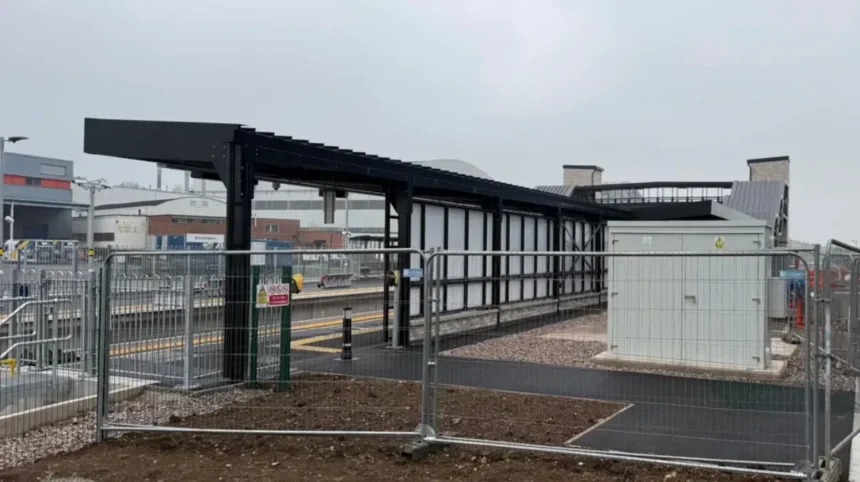
- Initial Operational Phase: The station will feature two fully operational platforms and operate as an unstaffed facility to accommodate early daily passenger flows.
- Secondary Expansion Phase: The main station building and associated customer facilities will be brought into full service to coincide with the official opening of the planned Aviva Arena.
Additional network enhancements are slated for the surrounding rail corridor, including a planned station at Henbury, which remains on schedule to open in 2028.
What did regional leaders and transport operators say about the station opening?
As reported by BBC News, Helen Godwin, the Mayor of the West of England—who oversees transport strategy across Bristol, South Gloucestershire, and Bath and North East Somerset—described the announcement as a key operational milestone for the area. Mayor Godwin stated that:
“For the first time in more than 60 years, passengers will be able to travel on the Henbury Line, making it easier for people to get to work, education and leisure opportunities – with more work planned to enhance the station before the Aviva Arena opens.”
In the same report by BBC News, Mark Hopwood, Managing Director of Great Western Railway, emphasized the broader macroeconomic impact of rail infrastructure on regional development. Mr Hopwood stated:
“Stations are catalysts for new homes, jobs and investment. Bristol Brabazon will connect the growing Brabazon community and in time the new Aviva Arena to Bristol and beyond.”
Mr Hopwood added:
“With work continuing to reopen Portishead and Pill, this is about more than track and trains. It’s about unlocking access to jobs, education and opportunity, and giving a real boost to the wider regional economy.”
Background of the Henbury Line and Brabazon Development
The Henbury Line was originally opened in the late 19th and early 20th centuries to facilitate both goods movement and passenger transit through northern Bristol and South Gloucestershire. Following the post-war restructuring of the British railway network—commonly known as the Beeching Cuts in the 1960s—regular passenger services along the circuit were withdrawn in 1964. The line was retained solely to serve freight traffic, including fuel and industrial transport supporting regional logistics hubs.
In recent years, the West of England Combined Authority (WECA), alongside Network Rail and Great Western Railway, prioritized the passenger restoration of the Henbury Line under regional transit expansion strategies, including MetroWest. The redevelopment of the former Filton Airfield into the new Brabazon township—a major urban regeneration project comprising thousands of new homes, commercial spaces, and the proposed Aviva Arena on the historic Brabazon Hangar site—created the demand for direct passenger rail access. Bristol Brabazon Station serves as the primary transport node for this enterprise, providing sustainable transit options to offset road congestion across the northern fringe of the Bristol conurbation.
How This Development Will Affect Local Residents, Commuters, and the Regional Economy
The introduction of passenger rail services at Bristol Brabazon Station is expected to produce structural impacts across several demographic and commercial sectors in South Gloucestershire and the wider Bristol region:
1. Local Residents of Brabazon and Filton
Residents moving into the Brabazon housing development will gain direct, high-frequency access to central Bristol within a short transit window. By providing an immediate alternative to private vehicle ownership, the service will likely reduce localized traffic bottlenecks along the A38 corridor and Cribbs Causeway routes. However, early commuters may experience minor operational adjustments during the initial unstaffed phase prior to the completion of full station amenities.
2. Eventgoers and Venue Operations
Once the Aviva Arena is operational, the station will serve as a primary transit funnel for high-volume arena crowds. The direct link to Bristol Temple Meads allows regional visitors to access national rail connections without relying on car parking or shuttle buses, mitigating severe traffic congestion during major sports and entertainment events.
3. Regional Commuters and Businesses
The inclusion of intermediate stops at Filton Abbey Wood, Ashley Down, Stapleton Road, and Lawrence Hill enhances cross-city connectivity for workers accessing major employment sites, such as the Ministry of Defence complex at Abbey Wood and nearby aerospace facilities. Over the longer term, the ongoing rollout of MetroWest phases—including the Henbury opening in 2028 and potential restorations to Portishead and Pill—is expected to drive commercial investment, increase local property values, and improve overall labor mobility across the West of England.