Bristol city centre has a dense café scene spanning the Old City, Broad Street, St Nicholas Market, Harbourside, Wapping Wharf, College Green, Stokes Croft and nearby Clifton. The area combines independent coffee shops, specialist roasters, bakery cafés, cultural-venue cafés and waterside spaces.
- What makes Bristol city centre a good area for cafés?
- Which cafés near Bristol Old City are worth visiting?
- Which cafés are best for speciality coffee in Bristol city centre?
- Which cafés near Bristol Harbourside have waterfront settings?
- Where can visitors find café and bakery combinations near the centre?
- Which Bristol cafés are convenient for breakfast and brunch?
- Which cafés near Bristol city centre are suitable for working or studying?
- Which cafés are close to Bristol’s main attractions?
- Which Bristol cafés are best for combining coffee with independent shopping?
- How should visitors choose a café near Bristol city centre?
- What should visitors know before visiting Bristol city-centre cafés?
- Why does Bristol’s café culture remain important to the city centre?
The city centre is also an important employment and visitor hub. Bristol City Council’s 2025–2035 Economic Strategy records 30,940 city-centre residents, 143,300 employees and 4,945 business units, making cafés part of a much wider daily economy of work, tourism, shopping and leisure.
For visitors, the main café areas are easy to combine with sightseeing. St Nicholas Market sits in the Old City, the Harbourside contains cultural venues and waterfront attractions, while Wapping Wharf provides independent food and drink businesses close to the Floating Harbour.
What makes Bristol city centre a good area for cafés?
Bristol city centre offers a concentrated café network covering speciality coffee, bakeries, brunch, light meals, takeaway food and waterfront refreshments. Key areas include Broad Street, Small Street, Harbourside, Wapping Wharf, College Green and Stokes Croft, all within practical walking distances.
The concentration reflects Bristol’s commercial and cultural geography. The central area contains shopping streets, historic markets, offices, attractions, theatres, galleries and transport connections. VisitBristol identifies the City Centre and Harbourside as major visitor areas with cafés, restaurants, independent traders and attractions.
Bristol also has a long coffee-house tradition. Historical records document coffee houses operating in the city from at least the 17th century. By the 18th century, coffee houses around the Tolzey and Exchange served merchants, professionals and other customers.
The modern café sector has a different structure. Independent operators, coffee roasters, bakery businesses and cultural organisations now form an important part of the city’s food-and-drink offer.
Which cafés near Bristol Old City are worth visiting?
Bristol Old City contains several established cafés within streets surrounding Broad Street, Small Street, Corn Street and St Nicholas Market. Full Court Press and Small St Espresso provide specialist coffee, while nearby market venues add food and independent shopping.
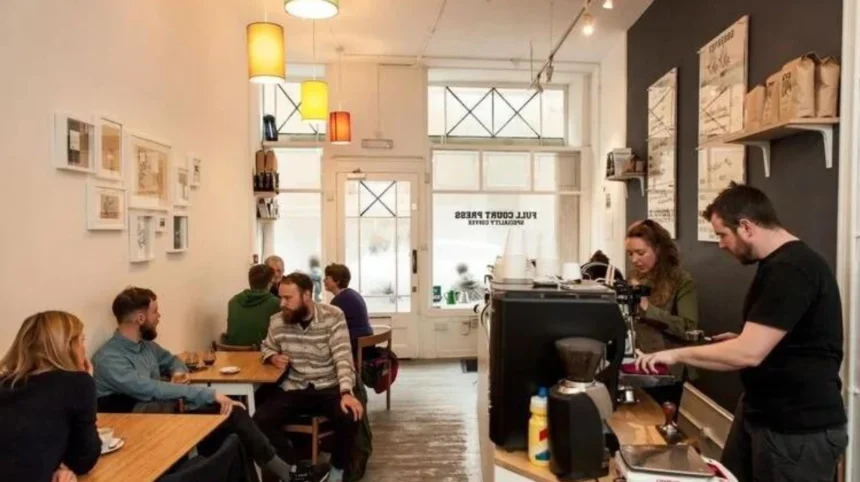
Full Court Press is located at 59 Broad Street and has operated as a speciality coffee shop since 2013. Its coffee programme includes changing speciality coffees, guest roasters and Bristol-roasted selections. The café also serves tea, hot chocolate and locally made soft drinks.
Full Court Press defines speciality coffee around exceptional quality, origin, flavour and the production chain. Its location makes it practical for visitors exploring Corn Street, St Nicholas Market and the Old City.
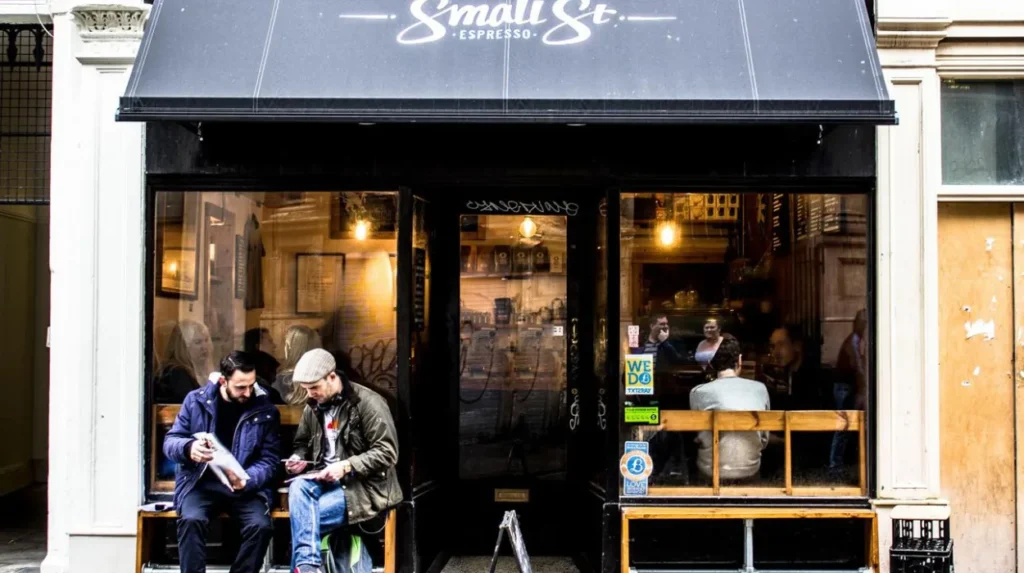
Small St Espresso has served espresso and filter coffee in Bristol’s Old City since 2012. The café uses Clifton Coffee as its house roast and also works with guest roasters from Bristol and elsewhere in the UK. Its food offer includes Bristol-made breads, cakes and pastries.
St Nicholas Market provides another café-and-food option in the same district. Established in 1743, it is Bristol’s oldest market and occupies the historic Exchange building. The market operates Monday to Saturday, with food vendors and other independent traders.
Which cafés are best for speciality coffee in Bristol city centre?
Speciality coffee cafés focus on bean origin, roasting, brewing method and flavour. Bristol city centre has established specialist operators including Full Court Press and Small St Espresso, while Society Café provides additional central locations on Baldwin Street and the Harbourside.
Speciality coffee is a defined part of Bristol’s contemporary café identity. VisitBristol specifically identifies Full Court Press, Small St Espresso and other independent operators among places associated with speciality coffee.
Full Court Press operates from Broad Street and also maintains a separate roastery coffee bar on Oxford Street. Its central shop changes its coffee selection and works with guest roasters.
Small St Espresso has a more compact Old City setting. Its menu centres on espresso, filter coffee, cakes and sandwiches, making it suitable for visitors combining coffee with a short city-centre stop.
Society Café – Baldwin Street is another central option. Society Café lists its Bristol locations on Baldwin Street and at the Harbourside, alongside sites in Bath, Cardiff, Cheltenham and Oxford.
These cafés illustrate the different mechanisms behind Bristol’s speciality coffee scene. Roasters source green coffee, roasting determines the development of flavour, and brewing methods such as espresso and filter extraction produce different characteristics.
Which cafés near Bristol Harbourside have waterfront settings?
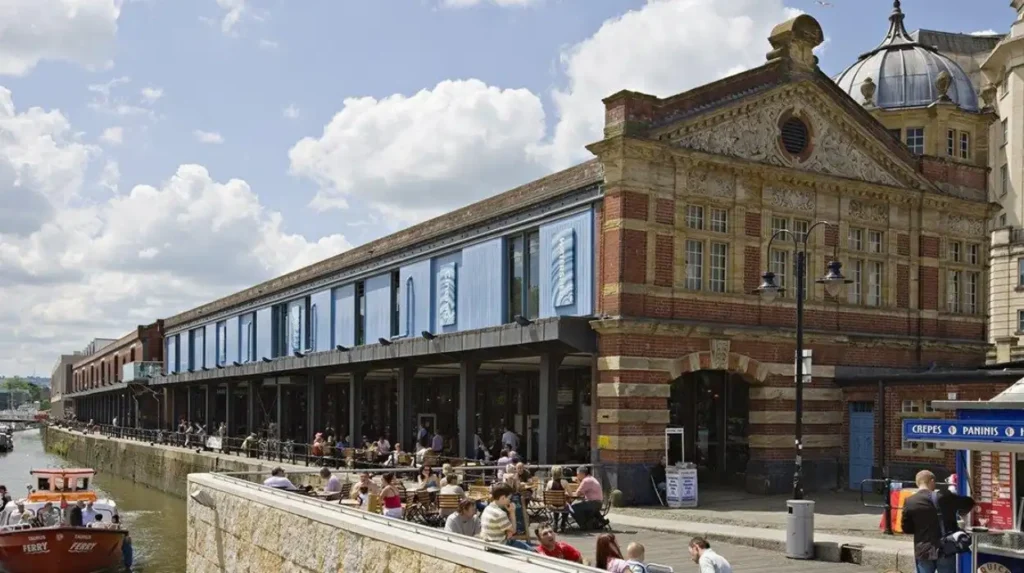
Bristol Harbourside has several café and café-bar options beside the Floating Harbour. Watershed, Arnolfini Café Bar, Society Café, No.1 Harbourside and Mud Dock provide food and drinks close to museums, galleries, cinemas, walking routes and waterfront attractions.
Bristol Harbourside developed from the city’s historic port and Floating Harbour. The Floating Harbour opened in 1809 after 80 acres of tidal river were impounded, creating permanent water space for ships. The former commercial harbour has since become a major leisure, cultural and residential district.
Watershed Café & Bar overlooks the Harbourside and operates seven days a week. It serves coffee, tea, light bites and main meals, with vegan and vegetarian dishes, a children’s menu and free Wi-Fi.
Watershed is also a major cultural venue. Its café therefore works well as part of a wider visit involving cinema, waterfront walking or nearby attractions.
Arnolfini Café Bar occupies the Arnolfini arts centre on Narrow Quay. Its current café-bar partnership involves Wiper and True and FED, with coffee from Yallah, pastries, toasties, salads and cakes during the day.
Arnolfini’s waterfront location connects café use with contemporary art, exhibitions, bookshop visits and Harbourside walking. The venue is positioned between the Harbourside and Prince Street.
VisitBristol also identifies No.1 Harbourside and Mud Dock among the city’s waterside places to eat and drink.
Where can visitors find café and bakery combinations near the centre?
Bakery cafés combine coffee with freshly prepared bread, pastries, cakes, sandwiches and other baked goods. Bristol’s central options include Pinkmans at Bristol Cathedral, Pinkmans in Stokes Croft and Mokoko at Wapping Wharf, providing different locations around the central visitor area.
Pinkmans Café + Bakery – Bristol Cathedral operates inside Bristol Cathedral. Its menu includes freshly made focaccia sandwiches, toasties, seasonal salads and sweet treats. The café is accessible through the Cathedral’s Garden entrance.
The location is particularly relevant to visitors exploring College Green, Bristol Cathedral and the central cultural district. The café operates daily from 8:30am to 4pm according to its current published information.
Pinkmans Café + Bakery – Stokes Croft provides another central branch. It serves coffee, brunch, lunch, focaccia sandwiches, toasties, salads and sweet treats.
Stokes Croft sits between Gloucester Road and the city centre and is known for independent businesses and street art. The University of Bristol describes the area as a countercultural hub with community initiatives and changing public art.
Mokoko Coffee & Bakery operates at Wapping Wharf. It specialises in single-estate coffees, high-grade teas and bakery products prepared from scratch in an open-plan bakery.
Wapping Wharf is a major independent food-and-drink destination close to the water. VisitBristol describes the area as containing independent cafés, restaurants, shops and bars within a short distance of the waterfront.
Which Bristol cafés are convenient for breakfast and brunch?
Breakfast and brunch cafés near Bristol city centre combine coffee with morning meals, sandwiches, toasties, pastries and cooked or prepared dishes. Pinkmans, Watershed, Mokoko and other central cafés provide options across the Old City, Harbourside and Wapping Wharf.
Breakfast demand connects directly with Bristol’s visitor economy. Travellers often begin city sightseeing with coffee and food before walking between attractions. Residents and office workers also use central cafés for morning meetings and work breaks.
Pinkmans Stokes Croft offers brunch alongside coffee, sandwiches and bakery products. Its central location connects the café with Stokes Croft, Gloucester Road and the northern side of the city centre.
Mokoko at Wapping Wharf provides bakery products made from scratch and serves coffee and high-grade teas. Its waterfront location makes it practical for a breakfast stop before exploring the Harbourside.
Watershed provides a broader café-bar format. Its menu extends beyond coffee and cake to light bites and main meals, with vegetarian, vegan and children’s options.
Which cafés near Bristol city centre are suitable for working or studying?
Cafés with reliable seating, food, drinks and internet access support short periods of remote work and study. Watershed explicitly provides free Wi-Fi, while larger café formats and central locations provide practical alternatives for visitors between meetings and sightseeing.
Remote working has become relevant to Bristol’s café economy because the city centre contains a large concentration of employment. Bristol City Council records 143,300 employees working in the city centre across 4,945 business units.
Watershed explicitly lists free Wi-Fi among its café facilities. Its Harbourside position and long opening schedule also support longer daytime visits.
Other cafés serve a different purpose. Full Court Press focuses strongly on coffee quality and offers a compact central location on Broad Street. Small St Espresso operates from a smaller Old City premises with a focused coffee-and-food menu.
Visitors planning to work should check current seating policies, power availability and peak-time conditions directly with individual cafés. Café opening hours and operating arrangements change more frequently than the historic locations themselves.
Which cafés are close to Bristol’s main attractions?
Several central Bristol cafés sit beside major visitor attractions, allowing coffee stops to fit naturally into sightseeing routes. Watershed serves the Harbourside, Pinkmans serves Bristol Cathedral, Mokoko serves Wapping Wharf and Old City cafés sit near St Nicholas Market.
The Harbourside contains attractions including SS Great Britain, We The Curious, Bristol Aquarium, Arnolfini, Spike Island, Watershed and M Shed. This concentration creates a strong connection between café visits and cultural tourism.
A Harbourside café therefore fits naturally into a museum or gallery itinerary. Watershed and Arnolfini provide particularly direct combinations because both operate cultural venues with café facilities.
Bristol Cathedral sits beside College Green, where Pinkmans operates a café. The location combines food with one of the city’s major historic religious buildings.
St Nicholas Market provides another strong combination. The market occupies the Old City and contains independent traders and food outlets. Nearby Small Street Espresso and Full Court Press extend the café choices beyond the market itself.
Which Bristol cafés are best for combining coffee with independent shopping?
Independent shopping and café culture overlap strongly around St Nicholas Market, Christmas Steps, Wapping Wharf and Stokes Croft. These areas combine cafés with independent retailers, food traders, galleries, markets and creative businesses within compact walking districts.
St Nicholas Market is central to Bristol’s independent retail identity. It includes the Glass Arcade and regular specialist markets, including street food, Bristol Indies and Saturday flea-market activity.
Christmas Steps provides another historic café district. VisitBristol describes its 17th-century setting as a concentration of independent art galleries, shops and cafés. Ahh Toots is specifically identified as a café for sweet treats in the area.
Wapping Wharf uses converted shipping containers and other independent spaces close to the harbour. Its businesses include Mokoko and a wide range of food and drink operators.
Stokes Croft provides a different independent environment. Its businesses sit alongside street art and community projects, creating a clear connection between cafés, creative activity and local culture.
How should visitors choose a café near Bristol city centre?
Visitors can choose cafés according to location, coffee style, food requirements, waterfront access, sightseeing plans and available facilities. Old City suits speciality coffee, Harbourside suits waterfront stops, Wapping Wharf suits bakery cafés, and Stokes Croft suits independent food and culture.
Location is the first practical factor. Visitors staying around Broadmead and the Old City have direct access to Broad Street, Small Street and St Nicholas Market. Harbourside visitors have Watershed, Arnolfini and Society Café within the waterfront district.
Food requirements form the second factor. Watershed publishes vegan and vegetarian choices and a children’s menu. Bakery cafés such as Pinkmans and Mokoko provide sandwiches, pastries, salads and sweet products.
Coffee preference is another distinction. Full Court Press and Small St Espresso place specialist coffee at the centre of their offer. Full Court Press also explains its focus on origin, flavour and brewing.
Sightseeing routes provide the final consideration. A visitor heading toward Bristol Cathedral can use Pinkmans, while a Harbourside itinerary connects naturally with Watershed or Arnolfini. Wapping Wharf provides a café stop alongside waterfront attractions and independent food businesses.
Explore More Area Guide
Best Cafés With Wi-Fi in Bristol for Work and Study
Best Outdoor Cafés in Bristol: Terraces, Parks & Waterfronts
What should visitors know before visiting Bristol city-centre cafés?
Visitors should check current opening hours, menus, seating arrangements and accessibility before travelling because café operations change. Official café websites provide the most current information, while VisitBristol provides broader city-centre, food, market and visitor-planning information.
Opening hours differ substantially. Full Court Press currently operates seven days, with different weekday and weekend schedules. Small St Espresso currently operates Monday to Friday and closes at weekends and bank holidays.
Watershed operates seven days and publishes separate opening times for the café and food service. Its building is accessible, and the organisation provides accessibility information for customers and audiences.
Mokoko publishes separate weekday and weekend hours, while Pinkmans branches also use different schedules. This makes checking the specific branch important when planning an early breakfast or late afternoon stop.
Visitors should also distinguish between a café, café-bar and bakery café. A specialist coffee shop generally prioritises coffee preparation, while a cultural-venue café can combine food with exhibitions, cinema or events. A bakery café combines drinks with fresh baked products.
Why does Bristol’s café culture remain important to the city centre?
Bristol’s café culture connects historic coffee-house traditions with a modern independent food economy. Today’s cafés support tourism, employment, cultural venues, shopping districts and neighbourhood identity, while specialist roasters and independent operators give central Bristol a distinctive food-and-drink structure.
Bristol’s coffee-house history reaches back several centuries. Historical records identify coffee houses in Bristol during the 17th century, with the number of coffee houses expanding during the 18th century. These establishments operated as places for commerce, information exchange and social interaction.
The historical setting also requires context. Bristol’s port economy was closely connected to international trade, including commodities such as sugar and coffee and the city’s involvement in transatlantic slavery. Historical records show that Bristol coffee houses were part of this wider commercial environment.
The modern café economy operates within a very different social and regulatory framework. Contemporary businesses emphasise speciality coffee, local suppliers, bakery production, cultural programming, accessibility and independent retail.
Bristol City Council’s current economic strategy identifies the city centre as a central location for employment, retail, leisure, culture and the visitor economy. Its 2021 figures record 30,940 residents and 143,300 employees in the city centre.
This combination gives cafés an enduring practical role. They serve residents, workers, students and visitors while linking major attractions with streets, markets and neighbourhoods.
Bristol’s wider population is also significant. The city’s mid-2025 population estimate is 495,300, while 68,800 students were registered at the city’s two main universities in 2024/25.
The result is a diverse customer base for central cafés. Visitors seek breakfast and sightseeing stops. Workers use cafés for meetings and breaks. Students use them for study and social activity. Residents use them as everyday food and coffee venues.
For visitors looking for cafés near Bristol city centre, the geography is therefore straightforward. Old City and Broad Street provide specialist coffee, St Nicholas Market provides independent food and retail, Harbourside provides waterfront cafés and cultural venues, Wapping Wharf provides independent bakery and coffee businesses, and Stokes Croft extends the café experience toward Bristol’s creative districts.
What are the best cafés near Bristol city centre?
Some established options include Full Court Press on Broad Street, Small St Espresso in the Old City, Watershed Café & Bar on the Harbourside, Pinkmans at Bristol Cathedral and Mokoko Coffee & Bakery at Wapping Wharf. Each has a different location and café format.