Bristol’s City Centre stands as the vibrant pulse of one of England’s most dynamic cities, blending historic charm with modern energy. This evergreen exploration uncovers its rich layers, from medieval origins to contemporary allure, offering locals and visitors alike a deep dive into what makes this area enduringly captivating.
- The Historical Foundations of Bristol City Centre
- Evolution Through the Industrial Age
- Mid-20th Century Transformations
- Key Landmarks Shaping the City Centre Skyline
- Architectural Marvels in the Vicinity
- Cultural Significance and Vibrant Scene
- Economic Role Past and Present
- Modern Developments and Urban Renewal
- Transportation Evolution and Accessibility
- Green Spaces Amid Urban Density
- Nightlife and Entertainment Hotspot
- Shopping and Culinary Delights
- Events and Festivals Legacy
- Why City Centre Endures for Bristolians
- Visitor Tips for an Authentic Experience
- Future Prospects and Preservation Efforts
- The Enduring Allure of Bristol’s Core
The Historical Foundations of Bristol City Centre
The story of Bristol City Centre begins centuries ago, rooted in its strategic position along the River Avon and River Frome. In the 12th century, Bristol emerged as a key port town, incorporated in 1155, with its medieval core centered north of Bristol Bridge, where the High Cross marked the bustling intersection of Corn Street and High Street. This area thrived on trade, its quaysides teeming with merchants shipping wine, wool, and spices across the Atlantic and beyond.
By the 1240s, the channel known as St Augustine’s Reach was dug to expand the docks, transforming the landscape into the heart of Bristol’s maritime commerce. Ships grew larger over time, leading to expansions like the Floating Harbour in 1809, though the northern wharves gradually faded in importance as newer docks at Avonmouth took precedence. The Centre, as we know it today, owes its form to these early engineering feats, where the River Frome was progressively covered to create usable land. This culverting process not only reshaped the topography but also laid the groundwork for the public spaces that define the area now.
Evolution Through the Industrial Age
As Bristol industrialized in the 19th century, City Centre adapted to the demands of progress. The Drawbridge at St Augustine’s Reach gave way to the elegant St Augustine’s Bridge in 1892, coinciding with the infilling of northern docks to form Magpie Park. Named after the local newspaper The Bristol Magpie, whose offices flanked Colston Avenue, this northern end became a green oasis amid urban growth. That same year, the Bristol Industrial and Fine Arts Exhibition drew half a million visitors to Magpie Park, raising funds for charity and showcasing the city’s innovative spirit.
The early 20th century brought trams and buses, with The Centre serving as a chaotic transport hub. Writer J.B. Priestley captured the scene in 1933, likening it to a place where trams and coastal steamers risked collision—a vivid testament to its frenetic energy. By 1913, ten bus routes converged here, and trams persisted until 1941, their departure marking the end of an era. These developments mirrored Bristol’s shift from a port-dominated economy to a more connected urban center.
Mid-20th Century Transformations
World War II and its aftermath accelerated change in Bristol City Centre. Construction of the Inner Circuit Road began in 1938, covering more of the River Frome between St Augustine’s Bridge and Broad Quay, even as war loomed. This created an elongated roundabout, initially used as a car park, while the former Tramways Centre island lingered as a relic. Post-war reconstruction prioritized vehicles, but by the 1990s, a public consultation signaled a pivot toward pedestrian-friendly design. Options like the “Dock Option” to reopen the harbor or the “Promenade Option” with fountains and sails aimed to evoke Bristol’s nautical heritage while taming traffic.
These efforts rebalanced the space, decommissioning parts of the western Inner Circuit Road to favor walkers, cyclists, and public transport. Today, this evolution reflects a broader narrative of adaptation, turning industrial relics into communal assets that honor the past without being shackled to it. The Centre’s management by Bristol City Council ensures ongoing maintenance, preserving its role as a unifying public square.
Key Landmarks Shaping the City Centre Skyline
At the northern tip, Magpie Park offers a serene contrast to the surrounding bustle, its lawns and paths inviting reflection on Bristol’s dockland days. Flanked by Colston Avenue, it remains a nod to Victorian ingenuity. Further south, The Centre opens into a vast paved expanse, bounded by St Augustine’s Parade, Broad Quay, and St Augustine’s Reach—now part of the Floating Harbour. The 2016 extension of Baldwin Street bisects this area, blending old and new seamlessly.
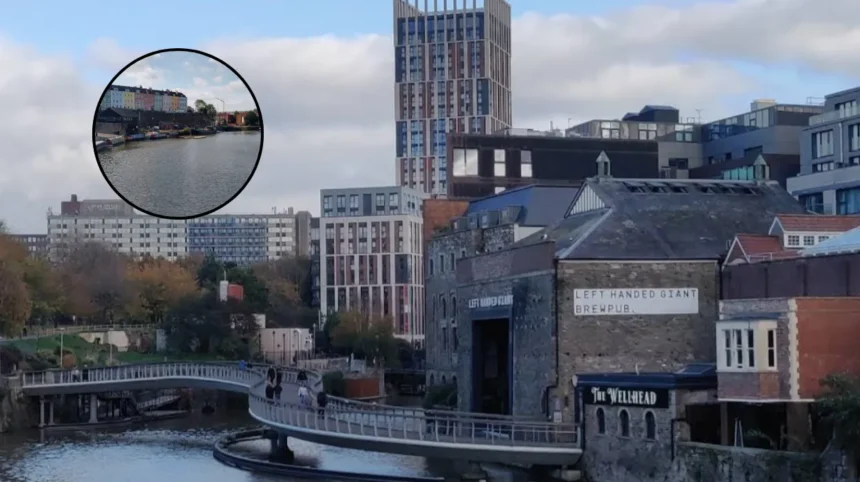
St Augustine’s Bridge itself stands as an architectural gem, its stone arches a reminder of 19th-century craftsmanship. Nearby, the harbour’s waters host houseboats and tour vessels, echoing the maritime legacy that built Bristol’s fortune. These landmarks aren’t mere static features; they pulse with life, from street performers to market stalls, forming the geographic and emotional heart of the city.
Architectural Marvels in the Vicinity
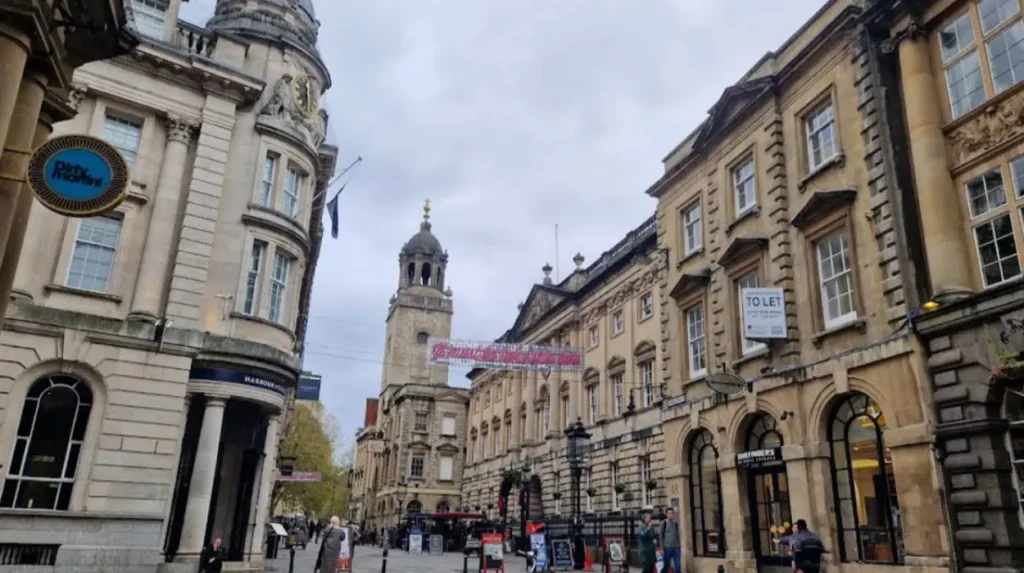
Bristol City Centre boasts an eclectic mix of architecture, from Georgian terraces to postmodern statements. While The Centre emphasizes open space, adjacent areas feature gems like the Bristol Old Vic, the oldest continuously operating theatre in the English-speaking world, with its neoclassical facade dating to 1766. Corn Street’s historic buildings, including the Exchange, house nail-embedded “snobs” from medieval times—protruding iron markers where merchants paid debts.
Modern additions, such as the swooping curves of the nearby Watershed media center, complement these classics, illustrating Bristol’s forward-thinking ethos. The harbour’s cranes and warehouses, repurposed into cafes and galleries, exemplify adaptive reuse, ensuring architectural heritage thrives amid contemporary needs. This blend creates a visually rich tapestry that rewards exploration on foot.
Cultural Significance and Vibrant Scene
City Centre Bristol has long been a cultural crucible. Medieval markets at the High Cross evolved into today’s street food scenes and festivals, drawing crowds year-round. The area hosted pivotal events like the 1893 exhibition, fostering community spirit that persists in modern gatherings. Its role as a transport nexus historically facilitated cultural exchange, from sailors’ tales to artistic movements.
Today, it embodies Bristol’s creative edge—street art by Banksy alumni adorns walls, live music spills from pubs, and the Bristol International Balloon Fiesta’s legacy inspires hot air balloon murals. This cultural vibrancy positions City Centre as more than a transit point; it’s a living canvas where history informs the present.
Economic Role Past and Present
Economically, Bristol City Centre anchored the city’s prosperity through trade. The docks at St Augustine’s Reach handled transatlantic voyages, fueling wealth that funded grand buildings. As shipping relocated, the area pivoted to retail and services, with Broad Quay hosting offices and hotels. Today, it supports tourism, tech startups, and hospitality, contributing to Bristol’s status as a economic powerhouse in the West Country.
Independent shops, markets like St Nicholas Market nearby, and pop-up events sustain local commerce, resisting chain dominance. This resilience underscores its evergreen appeal as a commercial hub, adapting to digital ages while rooted in mercantile traditions.
Modern Developments and Urban Renewal
Recent decades have seen thoughtful renewal in Bristol City Centre. The 2016 Baldwin Street extension improved connectivity, while pedestrian prioritization reduced car dominance. Public art installations, water features, and green spaces enhance usability, aligning with sustainable urbanism trends. Bristol City Council’s initiatives promote cycling lanes and low-emission zones, future-proofing the area.
Projects like the reinstatement of water elements nod to the buried Frome, reconnecting residents with their watery heritage. These changes ensure City Centre remains relevant, balancing density with livability in a growing metropolis.
Transportation Evolution and Accessibility
From trams to today’s buses and ferries, transportation defines City Centre Bristol. The Inner Circuit Road once prioritized cars, but now buses, cycles, and the Bristol Ferry provide efficient links. Nearby Temple Meads station connects to national rails, while Park and Ride schemes ease access.
This multimodal approach minimizes congestion, making the centre welcoming for all. Future plans emphasize electric vehicles and expanded pedestrian zones, cementing its role as a model for sustainable mobility.
Green Spaces Amid Urban Density
Despite its centrality, City Centre offers pockets of nature. Magpie Park provides respite with its lawns, ideal for picnics or quiet moments. The harbour edge invites waterside strolls, where wildlife thrives alongside human activity. These spaces counter urban intensity, promoting mental well-being.
Bristol’s “green capital” status amplifies this, with tree plantings and biodiversity projects enhancing the centre’s appeal. Such integration proves cities can harmonize nature and development enduringly.
Nightlife and Entertainment Hotspot
As dusk falls, City Centre transforms into a nightlife haven. Bars along the harbour, live venues like the Fleece, and restaurants offer diverse experiences. The area’s lighting accentuates architecture, creating magical evenings. Safety measures and late-night transport ensure enjoyment without hassle.
This nocturnal energy stems from historical taverns that served sailors, evolving into today’s eclectic scene—a testament to Bristol’s inclusive spirit.
Shopping and Culinary Delights
Retail therapy flourishes here, from high-street chains on Broad Quay to boutique finds in nearby lanes. St Augustine’s Parade hosts markets with artisanal goods, emphasizing local produce. Culinary options span global cuisines, with harbour-view eateries specializing in seafood—a nod to maritime roots.
Food festivals and pop-ups keep offerings fresh, making City Centre a gastronome’s paradise. This variety ensures repeat visits, fueling the local economy.
Events and Festivals Legacy
City Centre has hosted countless events, from Victorian exhibitions to modern pride marches. The harbour hosts boat shows and music festivals, leveraging its open spaces. These gatherings foster community, drawing global attention.
Their timeless format—celebrating culture, innovation, and unity—guarantees ongoing relevance.
Why City Centre Endures for Bristolians
For locals, City Centre is more than geography; it’s identity. Its evolution mirrors personal stories—of grandparents recalling trams, parents enjoying markets, children discovering history. This intergenerational continuity builds pride.
Accessibility from surrounding neighborhoods reinforces its centrality, serving as a neutral ground for social bonds. In an ever-changing world, its stability offers comfort.
Visitor Tips for an Authentic Experience
Explore on foot, starting at Magpie Park and winding to the harbour. Time visits for markets or sunsets over the water. Use public transport to immerse fully, avoiding parking woes. Layer clothing for variable weather, and carry cash for street vendors.
Engage locals for hidden gems; their insights enrich the journey beyond guidebooks.
Future Prospects and Preservation Efforts
Bristol City Council champions preservation, with plans for enhanced public realms and flood-resilient designs given the site’s watery past. Community input shapes these, ensuring inclusivity. Tech integrations like smart lighting promise efficiency without eroding charm.
This proactive stance positions City Centre as a blueprint for resilient urban centers worldwide.
The Enduring Allure of Bristol’s Core
Bristol City Centre encapsulates the city’s soul—resilient, multifaceted, inviting. Its journey from docklands to pedestrian paradise illustrates adaptive excellence. Whether strolling historic paths or savoring modern vibes, it offers timeless discoveries. For Bristolians and beyond, it remains an eternal heartbeat.