Key Points
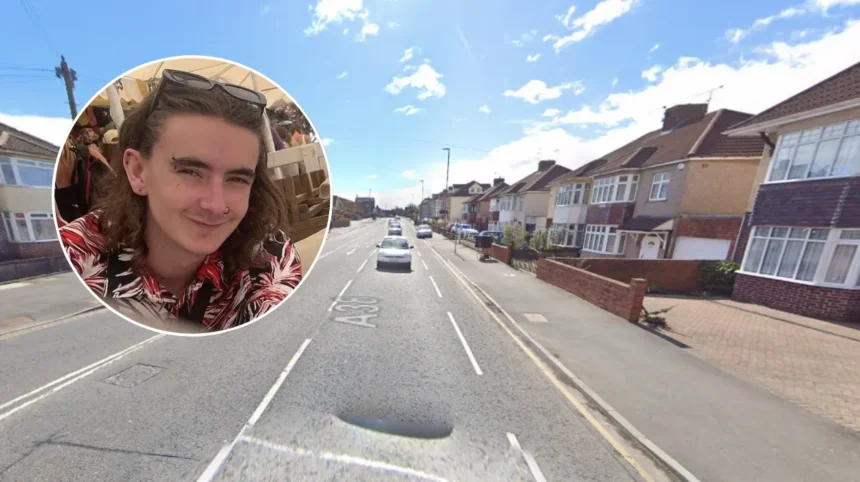
- Murder Trial Begins: 23-year-old Zack Coughlan is standing trial for the murder of his housemate, Jamie Collins, aged 21 years old, in Filton, South Gloucestershire.
- Manslaughter Plea in Case of Murder: He pleads not guilty to murder but admits to manslaughter, citing loss of self-control due to fear for his safety as the reason.
- The Alleged Assault Details: The prosecution contends that Coughlan ambushed Collins in the garden on April 8 and attacked him by stabbing 30 knife cuts, which the court referred to as a “cold-blooded execution.”
- Coughlan’s Voice During the Emergency Call Replayed Before Jury: A tape of Coughlan’s sobs during the emergency call eight hours later after the incident was replayed in court, where he had said he just discovered the body.
- Allegations of Murder Made in Advance by Prosecutor: Adam Vaitilingam KC, the prosecutor, alleges that Coughlan premeditated a hoax claim of copper thieves wearing masks five days before to make up an excuse.
- Evidence Produced by Prosecutors: The evidence included blood from Coughlan’s DNA in Jamie Collins’ bicycle, and mobile phone tracking data was consistent with CCTV data.
Filton, South Gloucestershire (Bristol Express News) October 13, 2026 — As reported by Tom Bevan, SWNS, and Shannon Brown of Bristol Live, Zack Coughlan, a 23-year-old robotics student, has gone on trial accused of the murder of his housemate, Jamie Collins, 21, following an attack in the garden of their shared property on 8 April.
- Key Points
- What Evidentiary Details Were Presented Regarding the Emergency Call?
- What Transpired Upon the Arrival of Law Enforcement at the Scene?
- How Did the Prosecution Characterise Coughlan’s Actions Before and After the Incident?
- What Arguments Were Raised by the Defence and Prosecution Regarding Motive and Intent?
- Background of the Development
- Potential Effects on the Academic and Local Community
Opening the prosecution case at court, Adam Vaitilingam KC stated that Coughlan ambushed Collins as he returned home from the University of the West of England (UWE) Bristol shortly before 6:00 pm. As detailed by Bevan, SWNS, and Brown of Bristol Live, Vaitilingam KC informed the jury that Collins sustained 30 knife wounds during the assault and was left dying in an alleyway, after which Coughlan fled the scene on the victim’s bicycle. While Coughlan has admitted to manslaughter, he maintains his innocence regarding the charge of murder.
What Evidentiary Details Were Presented Regarding the Emergency Call?
As reported by Tom Bevan, SWNS, and Shannon Brown of Bristol Live, audio recordings of the emergency call placed by Coughlan at approximately 2:00 am—eight hours after the incident—were played directly to the jury. During the call, Coughlan was heard weeping while informing the emergency operator, “My friend’s been stabbed.” When prompted for details regarding Collins’ condition, Coughlan remarked that the victim was “not breathing” and that his “body was hard.”
According to the reporting by Bevan, SWNS, and Brown of Bristol Live, the recording captured the operator providing CPR instructions and asking Coughlan to maintain a rhythm. Coughlan confirmed he was following the guidance and provided directions for arriving officers to locate the body behind the garden. When asked by the operator who was responsible for the act, Coughlan replied, “I don’t know,” while continuing to cry throughout the duration of the conversation.
What Transpired Upon the Arrival of Law Enforcement at the Scene?
As detailed by Tom Bevan, SWNS, and Shannon Brown of Bristol Live, body-worn camera audio captured the initial arrival of police officers in the alleyway where Coughlan was standing. Officers directed Coughlan to “sit on the floor,” to which Coughlan responded that he had only come outside because “I just saw the gate was open…”
As reported by Bevan, SWNS, and Brown of Bristol Live, an officer at the scene radioed dispatch, stating: “We’ve got a male, multiple stab wounds, catastrophic bleed, but I believe ambulance are on the way.” Coughlan told attending officers that he had “got no idea” where the perpetrator was located and subsequently drew their attention to nearby security cameras. When questioned by police about when he had entered the garden, Coughlan answered: “I was just going to brush my teeth and, I put the dishwasher on… I just saw the gate was open…”
How Did the Prosecution Characterise Coughlan’s Actions Before and After the Incident?
As reported by Tom Bevan, SWNS, and Shannon Brown of Bristol Live, prosecutor Adam Vaitilingam KC told the court that Coughlan spent the hours following the killing attempting to conceal evidence. The prosecution alleged that after leaving the scene on Collins’ bike, Coughlan discarded bloodstained clothing into a pond and abandoned the bicycle before returning to the shared home at approximately 9:00 pm.
According to the account by Bevan, SWNS, and Brown of Bristol Live, Vaitilingam KC stated that Coughlan then prepared a pizza, engaged in online gaming with friends, and monitored a CCTV application on his mobile phone prior to dialing 999. Furthermore, the court heard that five days before the attack, Coughlan had placed an initial phone call to the police reporting “hooligans with the masks in full black outfits” attempting to steal copper, whom he claimed to have confronted. Vaitilingam KC argued that this prior call was a deliberate attempt to establish a cover narrative, noting that Coughlan later donned a similar outfit consisting of a mask, gloves, and black clothing to execute the attack.
What Arguments Were Raised by the Defence and Prosecution Regarding Motive and Intent?
As detailed by Tom Bevan, SWNS, and Shannon Brown of Bristol Live, the court heard that Coughlan and Collins were both in their final year studying robotics together at UWE Bristol, residing in a house owned by Coughlan. Prior financial disagreements concerning rent charges had reportedly been resolved, and mutual acquaintances were unaware of any lingering animosity between the two men.
As reported by Bevan, SWNS, and Brown of Bristol Live, Coughlan’s defence contends that he “lost control of himself” due to fear for his personal safety caused by statements made by Collins, rendering him “unable to stop himself from killing him.” Rejecting this claim, Vaitilingam KC told the jury: “This was a carefully planned and cold-blooded execution. Someone who has lost control doesn’t plan ahead in the way that he did.” The prosecution pointed to forensic evidence, including Coughlan’s blood found on the victim’s bicycle and CCTV footage aligned with mobile location data, as proof of deliberate intent. Coughlan, residing in Filton, denies the murder charge, and the trial remains ongoing.
Explore more Filton Stabbing & Knife Crime News:
UWE Student Zack Coughlan On Trial For Housemate Murder In Filton 2026
South Bristol Councillor Slams Terrifying Balaclava Gangs and Knife Crime, Bristol 2026
Background of the Development
This legal proceeding follows an investigation initiated by Avon and Somerset Constabulary on 9 April, following the discovery of Jamie Collins’ body in Filton, South Gloucestershire. Collins and Coughlan were academic peers enrolled in the final year of the undergraduate robotics programme at the University of the West of England (UWE Bristol). The property where the incident occurred served as shared accommodation owned by Coughlan, who let rooms to fellow students. The trial, presided over at court, represents the culmination of multi-month forensic investigations encompassing digital telemetry, CCTV analysis, and DNA tracing collected from the surrounding area.
Potential Effects on the Academic and Local Community
This ongoing trial and its eventual verdict stand to impact several distinct groups:
- The Student Community at UWE Bristol: For university students—particularly those within the robotics department and shared student accommodations—the detailed proceedings of a violent crime involving peer housemates may heightened concerns over personal safety, tenant-landlord relations, and residential mental health support. Educational institutions often review housing frameworks and welfare monitoring mechanisms following high-profile incidents within student housing.
- Local Residents in Filton and South Gloucestershire: The disclosure of details regarding alleged pre-planned actions and false crime reports in residential neighborhoods can temporarily diminish perceptions of community safety. Increased police activity and media scrutiny typically prompt local law enforcement to offer extra community engagement and reassurance patrols.
- The Judicial and Legal System: The jury’s evaluation of the “loss of control” defence in contrast to prosecution arguments detailing post-event composure (such as gaming and routine household chores) will serve as a point of observation for legal practitioners tracking how behavioural evidence post-offence influences intent determination in homicide cases.