Key Points
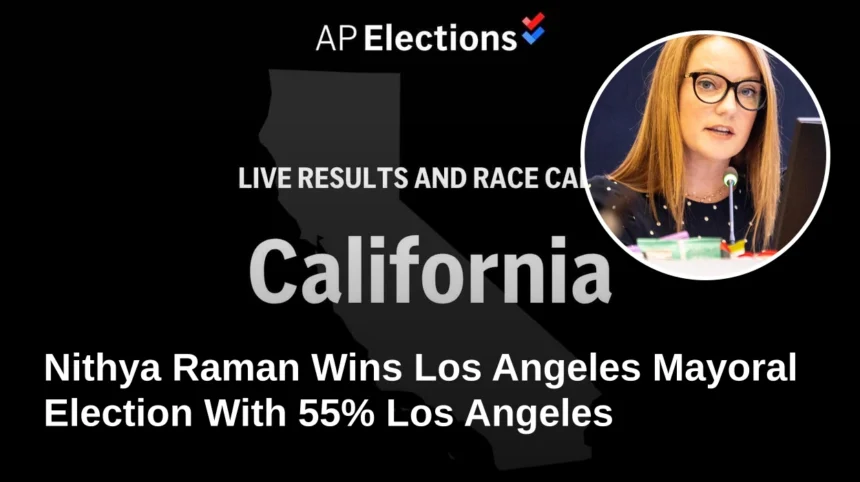
- Nithya Raman defeated incumbent Los Angeles Mayor Karen Bass in the 3 November 2026 general election.
- Raman held about 54.9% of the vote with 99% of ballots counted, according to the Daily Trojan’s report citing Associated Press results.
- Karen Bass conceded on 5 November after Raman established a lead of nearly 10 percentage points.
- The Los Angeles County Registrar-Recorder/County Clerk reported 3,176,649 ballots counted in its 13 November update.
- Raman is scheduled to begin her mayoral term on 14 December 2026.
Los Angeles (Associated Press) November 18, 2026 — Nithya Raman has defeated incumbent Mayor Karen Bass in Los Angeles’ 2026 mayoral election, according to election results reported by the Associated Press and cited by the Daily Trojan. Raman, a Los Angeles City Council member representing District 4, held approximately 54.9% of the vote with 99% of ballots counted, while Bass had about 45%.
Bass conceded on 5 November after Raman’s lead reached nearly 10 percentage points, according to reporting summarised by Predictable. The result makes Bass the first sitting Los Angeles mayor to lose to a challenger since Jim Hahn was defeated by Antonio Villaraigosa in 2005, according to Yahoo News’ account of the result.
How did Nithya Raman win the Los Angeles mayoral election?
Raman campaigned as an anti-establishment reformer and received support from organised labour, City Controller Kenneth Mejia and Los Angeles County Supervisor Lindsey Horvath, according to WorldAttention’s report. The publication also reported that hedge-fund manager Aaron Sosnick provided $8 million in support during the campaign.
The Associated Press results cited by the Daily Trojan showed Raman winning District 9 with 57.6% of the vote to Bass’ 42.4%, based on data from the civic nonprofit Vibrant LA. Raman’s victory makes her the city’s first Asian American mayor, according to the Christian Science Monitor.
What is the latest official count?
Los Angeles County Registrar-Recorder/County Clerk Dean C. Logan announced on 13 November that 21,171 additional ballots had been processed and counted, bringing the countywide total to 3,176,649 ballots and reported voter turnout to 53.76%.
The county said results would continue to change during the official canvass as eligible ballots were processed. The Daily Trojan reported that final results were expected on 27 November, while Raman’s inauguration is scheduled for 14 December under the Los Angeles Charter and Administrative Code.
What challenges will the incoming administration face?
Background
Raman’s victory follows a closely watched contest against Bass, who had served as the incumbent mayor. WorldAttention reported that Raman narrowly edged entrepreneur Adam Pratt in the June primary to reach the general election, while Bass led the primary field with 34%.
The Christian Science Monitor said Raman would take office while Los Angeles faced continuing challenges involving homelessness, public safety and city administration. The Center Square reported that Raman had appealed for unity after the election but would face scrutiny from both the political left and right over those policy areas, as well as fiscal and regulatory questions.
The Los Angeles County Registrar-Recorder/County Clerk cautioned that ballot totals could change throughout the canvass. Raman’s transition therefore remained subject to the completion and certification of the official count.
What could the result mean for the 2026 election audience?
For people following Los Angeles, CA Mayor Nonpartisan Runoff Election Election Live Results 2026, the result indicates that Raman had secured a clear lead while the official canvass continued. Further updates could affect the final margin but were unlikely to alter the reported outcome unless later-counted ballots materially changed the standings.
Raman’s administration is likely to draw close attention from voters seeking information about homelessness, public safety, housing, city finances and implementation of campaign commitments. The audience should rely on county election updates for the certified totals and distinguish those figures from media projections and unofficial interim counts.