Key Points
- Bristol City Council has issued urgent precautionary safety advice urging members of the public not to feed wild birds around the Floating Harbour following unconfirmed reports of avian botulism.
- The local advisory comes after multiple sightings of sick and dead birds around the docks in recent months, alongside similar suspected outbreaks at St George Park in Bristol, as well as locations in Bath and Bradford-on-Avon.
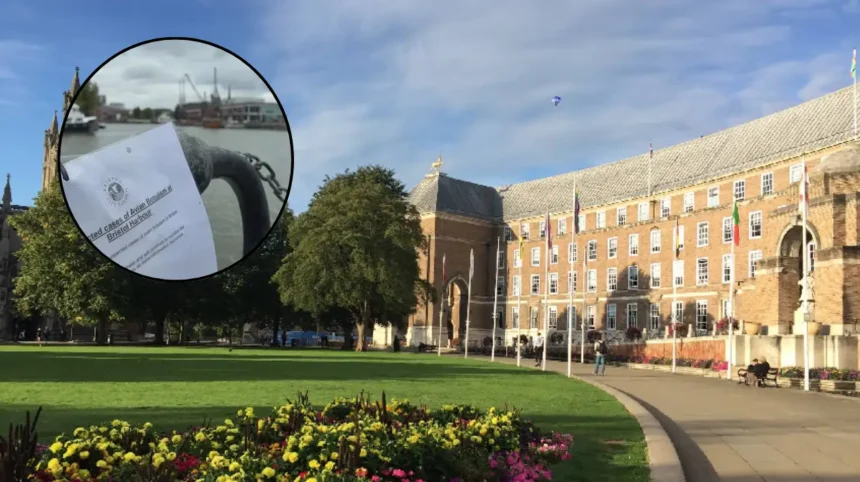
- Specialist council officers and harbour authorities have deployed search operations across the water to identify and safely remove affected wildlife, while warning posters have been displayed around the harbourside.
- Official confirmation of the disease remains pending as tissue and biological samples undergo laboratory testing by the Department for Environment, Food and Rural Affairs (DEFRA).
- Harbour Master David Lockwood has advised the public against touching dead or injured animals, entering harbour waters, or letting dogs roam off-lead near the edge of the docks.
BRISTOL (Bristol Express News) September 4, 2026 — Public health and harbour authorities have issued precautionary safety guidance across the Bristol Harbourside following unconfirmed reports of a potential avian botulism outbreak triggered by the discovery of sick and dead wild birds along the docks.
As reported by Martin Booth of Bristol24/7, Harbour Master David Lockwood confirmed that harbour officers began immediate search operations to locate and isolate dead and distressed wildlife as soon as potential cases were brought to their attention. Warning notices and educational posters have been displayed across prominent locations surrounding the Floating Harbour to advise visitors, dog owners, and local residents of precautionary steps while environmental inquiries continue.
In a public briefing detailed by ITV News West Country, Harbour Master David Lockwood stated:
“Do not touch any dead animal, and do not let your dogs near the dead animal, please report it to the council and we have specialist staff who can deal with it – do not try and remove animals yourself.”
He clarified that there is currently no formal confirmation of an active outbreak inside Bristol Harbour, as local authorities await definitive laboratory results from the Department for Environment, Food and Rural Affairs (DEFRA).
In his communication to Bristol24/7, Harbour Master David Lockwood noted:
“The Harbour Authority is responding proactively with precautionary measures put in place whilst confirmation from DEFRA remains outstanding. These latest reports follow other cases reported in St George Park, Bath and Bradford-on-Avon. Whilst these reported cases are a cause for us to be alert to potentially infected birds, it is not a cause for any alarm.”
He added that local authorities remain confident that any potential outbreak can be successfully contained through partnership working and public adherence to basic safety measures.
The local authority has placed particular emphasis on stopping all wild bird feeding in and around the harbourside area. As reported by ITV News West Country, Harbour Master David Lockwood reiterated: “We really advise no bird feeding, if you throw food, the birds congregate and that’s how the disease spreads.”
What Health and Safety Directives Have Authorities Issued to the Public?
To minimize risk and halt potential pathogen transmission across urban waterfowl, Bristol City Council and the Harbour Authority have published a set of public guidelines:
- Refrain from feeding wild birds: Throwing bread, scraps, or birdseed causes wild birds to gather in high concentrations, accelerating cross-contamination.
- Do not touch wildlife: Members of the public are instructed not to touch, handle, or attempt to move any sick, injured, or dead birds or fish.
- Keep domestic pets secure: Dog owners must keep dogs strictly on leads when walking near the docks and prevent pets from drinking, swimming, or coming into contact with harbour water or animal carcasses.
- Avoid water contact: Visitors are urged to limit direct physical contact with water around the Floating Harbour.
- Restrictions for anglers: Anglers fishing in designated areas are advised to avoid organic baits, including live bait, meat, or bread.
- Prompt reporting: Any sightings of dead or distressed animals should be reported immediately to Bristol City Council via their dedicated line (0117 922 2000) or through their online portal for safe collection by trained personnel.
What Is Avian Botulism and How Does It Spread?
According to health guidelines published alongside reports by Bristol Live, avian botulism is a paralytic neurological disease caused by the ingestion of neurotoxins produced by the bacterium Clostridium botulinum. The bacterium thrives in warm, anaerobic (oxygen-deprived) environments containing decaying organic vegetation or animal matter, conditions commonly found in stagnant or low-flow water bodies during summer and autumn months.
When waterfowl consume invertebrates, water, or decaying material containing the toxin, the neurotoxin impairs their nervous system, leading to flaccid paralysis.
Affected birds typically show signs of weakness, inability to fly, difficulty keeping their heads upright (a condition often referred to as “limberneck”), and eventual drowning or respiratory failure.
While transmission of avian botulism to humans is exceptionally rare, the toxin presents a severe health threat to domestic pets, particularly dogs that ingest contaminated water, fish, or avian carcasses.
Explore More Bristol Council News
Henbury Family Faces Homelessness Amid Bristol City Council Silence 2026
Key Political Decisions Facing Bristol City Council This Autumn Bristol 2026
Background of Avian Botulism Developments
Avian botulism is a recurring environmental challenge across freshwater lakes, waterways, and urban park ponds throughout the United Kingdom during dry, warm spells. Bacteria spores remain dormant in riverbeds and lake sediments for years without causing harm. However, when water temperatures rise and dissolved oxygen levels drop, bacterial proliferation accelerates within organic matter.
Prior to the reports at Bristol Harbourside, similar suspected clusters were reported in late August 2026 at St George Park in eastern Bristol, where local park lakes experienced water stagnation and wildfowl mortalities as reported by Bristol Live. Nearby regional waterways in Bath and Bradford-on-Avon also monitored comparable wildfowl distress cases during the same summer period.
Municipal bio-hazard protocols dictate that prompt carcass removal is critical to breaking the outbreak cycle, as necrophagous fly larvae (maggots) feeding on infected carcasses concentrate the toxin and perpetuate a deadly cycle when ingested by healthy birds.
Future Impact and Predictions for Local Stakeholders
The ongoing investigation and precautionary measures implemented by Bristol City Council and DEFRA are anticipated to impact several local groups across the Bristol area in the coming weeks:
- Pet Owners and Dog Walkers: Local dog owners using the Harbourside pathways will face ongoing restrictions, requiring pets to remain strictly on leads. Neglecting these warnings risks domestic animals coming into contact with deadly toxins present in water or hidden carcasses along the shoreline.
- Local Businesses and Tourism Operators: Harbourside cafes, outdoor dining venues, and boat tour operators may observe minor shifts in foot traffic or customer behavior due to warning signage. However, as public health authorities have highlighted that avian botulism poses an extremely low risk to human health, commercial activity along the waterfront is expected to remain largely unaffected provided visitors adhere to basic hygiene advice.
- Local Waterfowl and Wildlife Populations: If laboratory testing by DEFRA confirms an outbreak, wildlife rescue organizations and council environmental teams may need to scale up carcass retrieval operations. Swift containment measures will prove critical in preventing high mortality rates among native ducks, gulls, swans, and migratory birds that frequent the Floating Harbour.
- Anglers and Water Sports Enthusiasts: Local fishing enthusiasts will need to adjust their practices by refraining from using organic baits, while rowers, kayakers, and paddleboarders will be required to exercise heightened care to avoid contact with harbour water until DEFRA concludes its diagnostic evaluation.