

Key Points
- Government planning inspector Claire Tregembo has rejected an order to establish four public footpaths across Stoke Lodge playing fields.
- The ruling allows Cotham School to maintain fencing and restrict public access to the Bristol site.
- The inspector found evidence of public use but not uninterrupted use along defined routes during the relevant 20-year period.
- The decision follows an earlier High Court ruling that overturned the playing fields’ Town or Village Green designation.
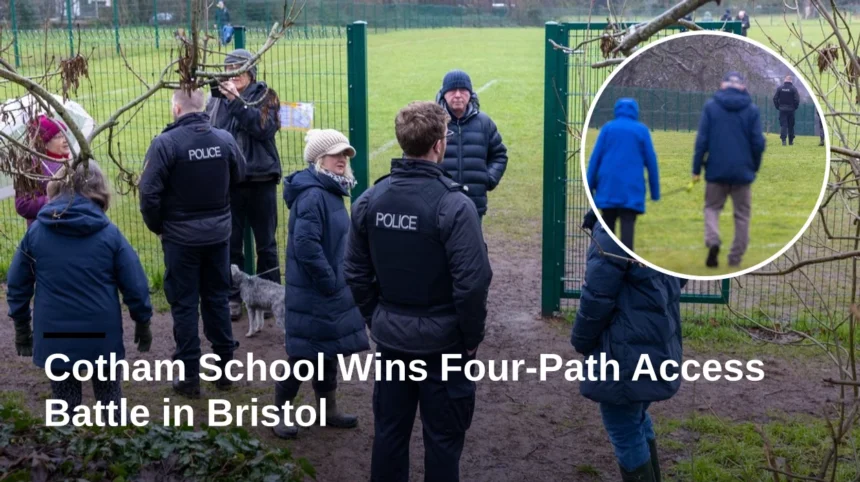
- The dispute has lasted about 15 years and involved police call-outs, damaged fencing and legal challenges.
Inverted pyramid:
Stoke Lodge, Bristol Express News November 26, 2026 – Cotham School has won the latest stage of a 15-year dispute over public access to its playing fields after Government planning inspector Claire Tregembo rejected an order to formalise four public footpaths across the site. The ruling means the school, which leases the fields from Bristol City Council, can legally keep the grounds fenced and gates locked, preventing local residents from claiming public rights of way across them.
Why did the inspector reject the proposed footpaths?
As reported by Bristol Post, the decision followed Cotham School’s appeal against Bristol City Council councillors’ decision to establish four footpaths across the Stoke Lodge playing fields. Residents had argued that the routes had been used for decades.
In her ruling, Claire Tregembo said there was clear evidence that members of the public had walked across the fields. However, she concluded that the evidence did not show uninterrupted public use on defined lines throughout the relevant 20-year period.
“Whilst there is clear evidence of the public walking across SLPF, I do not consider there is sufficient evidence of uninterrupted public use on a defined line during the relevant 20 years,” Claire Tregembo wrote.
The inspector referred to two Bristol Evening Post articles from 1983. They reported that Avon County Council had told local residents they were trespassing if they walked their dogs on the fields. Claire Tregembo said this placed the relevant period for establishing a presumed public right of way between 1963 and 1983.
She concluded that none of the routes had the characteristics of highways and that dedication could not be presumed under section 31 of the Highways Act 1980 or common law.
What does the ruling mean for Cotham School and residents?
The decision means Cotham School can legally fence off the Stoke Lodge playing fields and lock the gates. Local residents do not have established rights to cross the fields using the four routes considered by the inspector.
The school has leased the playing fields from Bristol City Council for about 15 years. Cotham School’s headteacher had argued that the fields could not be used safely for physical education lessons if they were unsecured and open to unrestricted public access.
A new fence was erected before the start of the 2025 school year. The dispute had previously led to police being called to the site, while residents attempted to prevent fencing work in 2020 and fencing was later repeatedly damaged.
How does this decision follow earlier legal disputes?
The footpath ruling follows an earlier legal victory for Cotham School. Bristol City Council councillors had designated the Stoke Lodge playing fields as a Town or Village Green, a status that would have provided local residents with unrestricted access.
In June 2025, that designation was overturned after a High Court judge found there was no legal basis for it. The council later ordered that four public footpaths should be formalised, but Cotham School challenged that decision, leading to the latest inquiry.
What could happen to access and school use next?
The ruling is likely to strengthen Cotham School’s ability to control access to the Stoke Lodge playing fields and use them as secure school facilities. For residents, it removes the latest route towards securing formal public paths across the land after a long-running campaign.
The decision does not alter the wider history of public use recorded at the site, but it confirms that such use did not meet the legal test for establishing the four proposed rights of way. Any further challenge would need to follow the applicable legal process.

