Key Points
- Bristol City Council has opened consultation on a draft Development Framework for Western Harbour.
- Residents, businesses and organisations can respond until January 4, 2027.
- The framework covers possible housing, public spaces, transport improvements and climate resilience measures.
- The Economy and Skills Committee is expected to consider the document in spring 2027.
- Funding, planning permission and developer involvement remain necessary before redevelopment can begin.
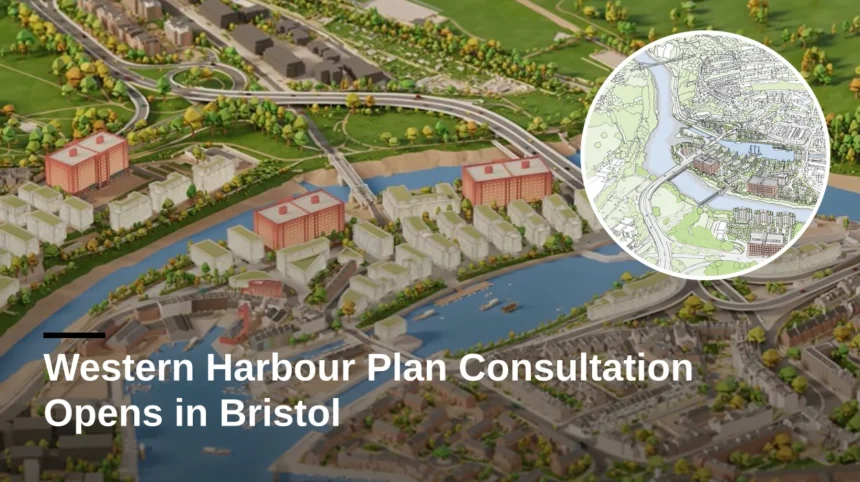
Bristol (Insider Media) November 17, 2026 – Bristol City Council is seeking views on a draft Development Framework intended to guide the future of Western Harbour. The document brings together the area’s vision and a draft masterplan consulted on in 2025, setting out potential changes around Cumberland Basin and the wider harbour area. The consultation is open to residents, businesses, organisations and anyone with an interest in the area until January 4, 2027.
As reported by Insider Media, the framework is intended to guide investment and development while supporting new homes, public spaces, improved transport connectivity and greater climate resilience. The council said previous consultation and public engagement had informed the document.
What does the Western Harbour draft framework propose?
Bristol24-7 reported that the draft framework includes proposals to reconfigure Cumberland Basin Road and create a single spine road. The framework covers an area extending from Hotwells to Greville Smyth Park and could become a material consideration when future planning applications are assessed, if it is endorsed.
The Bristol Post reported that the latest consultation represents the fifth time in nine years that Bristol residents have been asked to comment on ideas for the area. Its report described proposals involving housing, cycle routes, a simplified road network and a possible steam railway, while stressing that delivery remains several years away.
What has Bristol City Council said?
According to Insider Media, Bristol City Council said the framework seeks to reflect priorities shared by communities while responding to the need for new homes and sustainable growth. The council is asking whether the proposed balance is appropriate and whether further matters should be considered before the document is finalised.
Councillor Andrew Brown, chair of the Economy and Skills Committee, said further stages remained before physical redevelopment could take place. These include securing funding for infrastructure and obtaining planning permission, with additional opportunities for the public to review detailed proposals.
What happens after the consultation?
The Economy and Skills Committee is due to consider the Development Framework in spring 2027. If supported, the document could help Bristol City Council seek funding for enabling infrastructure and guide the assessment of future planning applications.
The Western Harbour project is funded through the Investment Fund of the West of England Mayoral Combined Authority. Reports said the council must still secure infrastructure funding and attract a developer before construction timelines can be agreed.
What is the background to the Western Harbour development?
Western Harbour has been subject to several rounds of consultation and public engagement over recent years. The latest framework combines an earlier Western Harbour vision with a draft masterplan that was consulted on in 2025. The area includes the land around Cumberland Basin and stretches towards Hotwells and Greville Smyth Park. The council has said that no physical redevelopment can proceed until funding, planning and delivery arrangements are secured.
How could this affect views on Bristol’s Western Harbour?
The consultation gives residents, businesses and other interested groups an opportunity to comment on a more developed plan rather than only a broad vision. Responses could influence the final framework before it is considered in spring 2027. However, the effect on public views will depend on how the council addresses concerns about transport, infrastructure, housing, climate resilience and the timing of redevelopment.