Key Points:
- Councillor Guy Poultney, who is a vice-chair of planning committee, misses a very important council meeting to express his protest against the development of student flats consisting of 126 beds.
- This scheme is intended for the development of the site that used to be a care home into student housing.
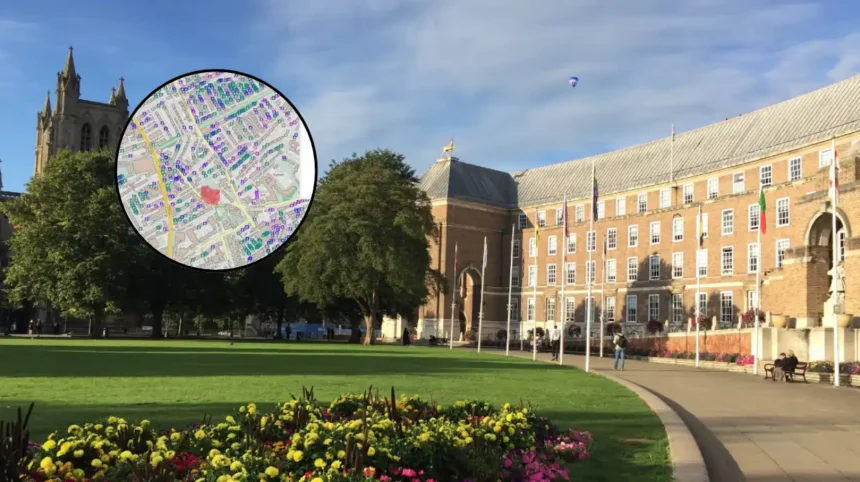
- Councillor Poultney provides a thorough map showing that the number of Houses in Multiple Occupation (HMOs) and student accommodation units around this location is extremely high.
- More than 160 people made objections to this project because of overconcentration of HMOs in the neighbourhood.
- Planners advise the committee to accept this proposal anyway.
Cotham (Bristol Express News) September 3, 2026 – A senior local authority official has staged a formal boycott of a key planning decision evening, taking a dramatic stance against a contested development proposal to transform a former nursing facility into purpose-built student accommodation. Councillor Guy Poultney, who serves as the vice-chair of the planning committee, confirmed he would abstain from attending the deciding meeting on Wednesday evening to signal his opposition to advice recommending the approval of 126 new student bedsits on Cotham Hill.
Why Is a Senior Bristol Councillor Boycotting the Cotham Hill Planning Meeting?
Councillor Guy Poultney has taken the unusual step of boycotting the planning assembly to register a emphatic protest against council planning officers’ formal recommendation to grant permission for the scheme. As the vice-chair of the committee charged with overseeing local developments, Councillor Poultney argued that participating in a panel where officers advise approval despite significant neighbourhood saturation undermines local democratic concerns.
To substantiate his objections, Councillor Poultney compiled and submitted a comprehensive mapping graphic. The visual evidence documents a severe deluge of existing Houses in Multiple Occupation (HMOs) and dedicated student properties tightly packed across the immediate Cotham area. The visual document demonstrates that the proposed site sits at the epicenter of an already densely populated student district, raising questions regarding urban density guidelines and neighborhood equilibrium.
What Are the Key Concerns Raised by Local Residents Regarding the 126-Bed Development?
Alongside the high-profile boycott by Councillor Poultney, the planning application has drawn overwhelming resistance from the surrounding community, accumulating more than 160 formal written objections from local residents. Neighbors and community action groups contend that Cotham has reached a threshold of student housing concentration that threatens the character and sustainability of the residential community.
Objectors point to several critical operational and social issues:
- Overconcentration of Student Accommodation: The surrounding streets already contain an exceptionally high percentage of HMOs, leading to concerns that permanent resident populations are being displaced.
- Loss of Care Infrastructure: Converting a former care home deprives the local area of crucial social care facilities and adult residential infrastructure.
- Strain on Municipal Services: Local residents highlight potential exacerbation of noise disruption, waste management issues, and heightened competition for street parking and public amenities.
Despite these objections, council planning officers have submitted official documentation recommending that committee members grant approval for the project, arguing that the scheme fulfills local housing demand criteria for higher education institutions in Bristol.
Background
The controversy surrounding the Cotham Hill site reflects long-standing urban planning tensions within Bristol, a city housing two major higher education institutions: the University of Bristol and the University of the West of England (UWE). Over the past decade, central and inner-north neighborhoods such as Cotham, Clifton, and Redland have experienced significant demographic shifts due to the rapid expansion of student populations.
The property in question previously functioned as a care facility serving elderly residents before closing its doors. As local councils face dual pressures to provide housing options for expanding university intakes and protect existing community ecosystems, former commercial and municipal sites have increasingly become prime targets for private developers offering purpose-built student accommodation (PBSA). Bristol City Council has previously faced scrutiny regarding its policy approach to HMO density limits, leading to debate over whether formal saturation thresholds should trigger automatic rejections for large-scale student complexes.
Prediction: How Will This Development Affect the Local Community and Housing Market?
If the planning committee follows officer advice and approves the 126-bed scheme despite political boycotts and resident objections, several clear operational and demographic impacts are anticipated for the local population:
- Shift in Local Demographic Balance: A further concentration of student bedsits will likely accelerate the transition of Cotham from a mixed-demographic neighbourhood of long-term family residents and professionals into a predominantly transient student quarter.
- Impact on Local Retail and Economy: Businesses on Cotham Hill and nearby commercial corridors will see increased seasonal footfall, benefiting hospitality, coffee shops, and convenience retail, though potentially altering the diversity of daytime commercial services.
- Escalation of Planning Precedents: Overriding a 160-signature petition and a committee vice-chair’s boycott sets a strong policy precedent within Bristol City Council. This outcome will signal to developers that purpose-built student accommodation projects remain highly viable in residential zones, likely encouraging further conversions of former healthcare and commercial sites across inner-city wards.