Key Points:
- An ancient 166-year-old copper beech tree in Victoria Square, Clifton, is to be felled due to suffering from an age-long fungal infection.
- This ancient tree has gone through several preservation drives in its lifespan, with the first fight to preserve the tree being witnessed way back in the 1920s under the leadership of Bristol’s first woman architect, Eveline Drew Blacker.
- Specialist Static Load Tests carried out externally by consultants in 2017, 2020, 2022, and 2025 proved a gradual loss of stability and root strength of the tree.
- It was confirmed by council specialists that the tree has been attacked by meripilus giganteus fungus that infects the roots, making it more prone to falling.
- Over the past two summers, the tree canopy has shown smaller leaves compared to earlier, indicating ill-health of the tree.
- Council authorities said they will consider replacing the tree in the parks’ management strategy.
Bristol (Bristol Express News) October 20, 2026 – A landmark 166-year-old copper beech tree in Clifton’s Victoria Square, which has survived nearly a century of local preservation efforts and public campaigns, is finally facing felling due to an irreversible fungal infection that has severely compromised its structural stability.
As reported by Tristan Cork, Chief Reporter of Bristol Live, a large copper beech tree that has stood in Victoria Square, Clifton, for approximately 166 years is now scheduled to be cut down. Council chiefs stated that the decision to fell the tree “has not been taken lightly,” adding that cutting it down “will be disappointing to many people.” However, authorities explained that the tree has finally succumbed to a fungus growing around its base for years, leaving experts to conclude that it is no longer stable enough to maintain.
What is the history of the Victoria Square copper beech tree?
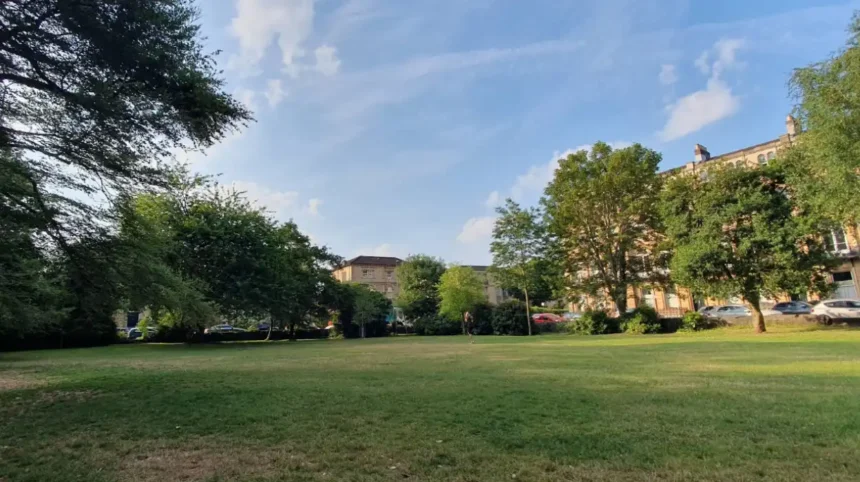
The tree’s history is deeply intertwined with the development of Clifton, a neighborhood known as “Clifton Village” for the past fifty years. As reported by Tristan Cork of Bristol Live, the copper beech was one of several planted when the park was first laid out. The grand Victorian homes lining the square were built between 1837 and 1874, and the central gardens with their diagonal low-walled path were laid out around 1860.
According to guides produced by the Bristol Tree Forum and the Clifton & Hotwells Improvement Society, the copper beech is the last survivor of the original planting along that diagonal path. The local authority first attempted to chop down the tree back in the 1920s. Victoria Square resident and Bristol’s first female architect, Eveline Drew Blacker—who subsequently designed the Cenotaph in The Centre—intervened, saving the tree following a flurry of furious letters to the local council.
Explore more Local Bristol News
Bristol MP Demands £80 Per Person Funding Boost for Bristol 2026
European Hotel Deals Surge: HVS Weekly Transactions Report London 2026
How did the fungal infection destroy the historic tree?
In 2017, Bristol City Council earmarked the tree for removal once more, prompting local residents and the Bristol Tree Forum to launch a campaign urging the council’s trees department to monitor it rather than cut it down immediately. This scrutiny began after a massive tree on the edge of the square collapsed during a mild June storm in 2013, crushing parked cars.
During the 2010s, experts discovered that the copper beech was suffering from an invasion of the meripilus giganteus fungus, which produces large fruiting bodies around the base of the tree in autumn. While the council agreed in 2017 to monitor the situation, conditions have since deteriorated beyond recovery.
As reported by Tristan Cork of Bristol Live, a council tree expert stated:
“The roots of this copper beech tree are infected, which has weakened the roots, increasing the risk of the tree falling over. We need to remove the tree, as it will become more unsafe for the public over time. We have carried out regular assessments to monitor the health of the tree since 2017, when the fungus was first identified.”
The expert added:
“A specialist assessment, known as a Static Load Test, was carried out by external consultants in 2017, 2020, 2022 and in 2025. The test measures how stable the tree is and strength of its root system. Since 2020, tests have shown a gradual decline in the tree’s stability as the fungral infection has spread. Over the last two summers, the tree canopy has produced smaller and fewer leaves, which is also a visible sign of the tree’s poor health.”
Concluding on the future of the green space, the council representative noted, as reported by Tristan Cork of Bristol Live:
“This copper beech tree has been an important feature of Victoria Square for many years. We understand removing it will be disappointing to many people, and this decision has not been taken lightly. We are committed to maintaining and growing the city’s tree population, and we will consider opportunities for replacement planting as part of the ongoing management of the park.”
Background of the particular development
The felling of the Victoria Square copper beech tree marks the end of a nearly century-long conservation saga in Clifton. Planted around 1860 during the initial landscaping of Victoria Square, the tree stood as a sole living witness to the Victorian development of the area. Its preservation became a symbol of community activism in Bristol, beginning with Eveline Drew Blacker’s successful advocacy in the 1920s and renewed by local residents and the Bristol Tree Forum in 2017. The vulnerability of aging urban trees gained heightened administrative attention following a destructive storm in June 2013 that felled another massive tree in the square, prompting municipal authorities to implement rigorous health monitoring, including recurring Static Load Tests that ultimately tracked the fatal progression of meripilus giganteus root rot.
how this development can affect the local community
The removal of the historic copper beech tree will permanently alter the visual landscape and microclimate of Victoria Square, Clifton. For local residents, conservationists, and regular visitors, losing a living monument that has defined the square for 166 years removes a central focal point of community heritage. While Bristol City Council has signaled an intent to explore replacement planting, young saplings will take decades to provide the ecological, aesthetic, and shading benefits of a mature canopy tree. Furthermore, the decision underscores ongoing challenges municipal authorities face in balancing public safety against heritage conservation as urban trees planted during the Victorian era reach the end of their natural lifespans under pressure from climate shifts and aggressive pathogens.