Key Points
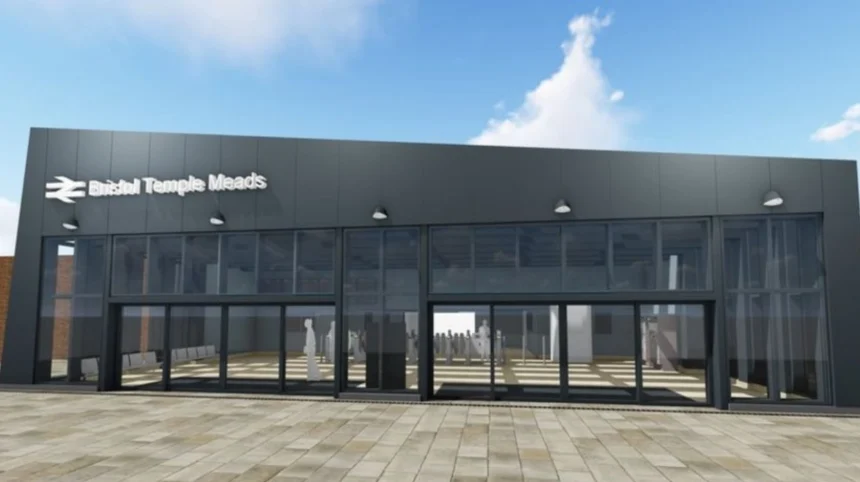
- A new £23 million eastern entrance at Bristol Temple Meads railway station officially opens to passengers on Monday 7 September.
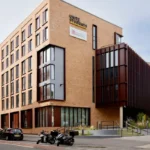
- The structure provides direct access between the station and the University of Bristol’s newly completed Temple Quarter Enterprise Campus.
- Delivered by Network Rail in partnership with the Bristol Temple Quarter partners, the entrance was created by extending the station subway beneath platforms 13 and 15.
- The facility is projected to serve approximately 2.5 million passengers annually by 2030, supporting wider efforts to double overall station capacity.
- Funding was drawn from a £94.7 million government grant allocated to the West of England Mayoral Combined Authority for station accessibility upgrades.
- The development connects nearby business hubs and residential communities in St Philip’s Marsh directly to the regional rail network.
Bristol (Bristol Express News) September 7, 2026 — Bristol Temple Meads railway station’s new £23 million eastern entrance opens to the public for the first time on Monday 7 September, marking a major milestone in the transport hub’s ongoing modernization programme.
- Key Points
- How does the new entrance transform passenger connectivity across Bristol?
- How does the development fit into the wider £500m Temple Quarter enterprise zone?
- What did project leaders and regional representatives state regarding the opening?
- What is the historical background of the Bristol Temple Quarter development?
- How will this development affect passengers, students, and local businesses?
How does the new entrance transform passenger connectivity across Bristol?
The opening of the eastern entrance establishes direct access between Isambard Kingdom Brunel’s historic station and the University of Bristol’s new Temple Quarter Enterprise Campus. Beyond serving the university site, the multi-million-pound infrastructure project improves pedestrian links for residential communities and commercial facilities in St Philip’s Marsh and across the eastern sectors of the city.
The eastern entrance represents the first of three planned new access points designed to enhance movement through Britain’s busiest regional interchange. By 2030, rail operators and transport authorities anticipate that the new entrance will accommodate approximately 2.5 million passengers each year, forming a vital component of a long-term strategic masterplan intended to double total station capacity.
To construct the entrance, engineering teams from Network Rail extended the existing station subway directly beneath platforms 13 and 15. The complex civil engineering operation required structural excavation through historical foundations, alongside major drainage installation and station subterranean reinforcement works. Heavy construction commenced in late 2023, with the primary structural envelope completed in October 2024 prior to internal fitting out.
How does the development fit into the wider £500m Temple Quarter enterprise zone?
The £23 million entrance was delivered as an integral component of the broader £500 million project to establish the University of Bristol’s Temple Quarter Enterprise Campus. The overarching venture stands as one of the largest and most ambitious urban regeneration projects currently being undertaken in the United Kingdom.
The new university facilities will house 4,600 students and 650 academic and support staff, alongside an integrated incubation hub designed for commercial start-ups and research enterprises. The site was originally acquired by the university from Bristol City Council in 2017, leading to the eventual demolition in 2019 of a long-derelict Royal Mail sorting office that had sat vacant since 1997.
Financially, the entrance project was backed by a portion of a £94.7 million central government funding package awarded to the West of England Mayoral Combined Authority. Strategic management of the initiative is driven by the Bristol Temple Quarter LLP partnership, formed in 2024 by Bristol City Council and the Mayoral Combined Authority, working alongside Network Rail, the University of Bristol, and Homes England.
What did project leaders and regional representatives state regarding the opening?
Stakeholders involved in the decade-long planning and delivery of the station upgrade highlighted the economic and structural significance of the new access point.
Marcus Jones, Network Rail’s Great Western route director, emphasized the strategic role of the station within regional infrastructure, stating that
“Bristol Temple Meads has been at the heart of the city since it opened in 1840, and this new entrance ensures it will play an even greater role in its future.”
Jones noted that “by connecting the railway directly to the Temple Quarter Enterprise Campus and one of the UK’s most exciting innovation districts, we’re connecting new jobs, investment and economic growth to the rest of the West and beyond,” concluding that the milestone reflects “more than a decade of collaboration between partners with a shared ambition for Bristol Temple Quarter.”
Helen Godwin, Mayor of the West of England, underlined the capital investment’s role in local transit strategies, noting that
“our investment in the future of Bristol Temple Meads is a crucial step in getting the West moving, building on the extensive roof repairs which were recently completed.”
Godwin added that “with the old sorting office replaced by the Temple Quarter Enterprise Campus and a brand-new entrance for Brunel’s iconic railway station, this gateway to innovation, new homes and new jobs will soon be well and truly open.”
Following the station entrance opening, transport connections adjacent to the site are set to adjust. Bus operator services, including the Service 8 route running between Bristol Temple Meads and Clifton, will commence operations via a newly constructed bus stop on Cattle Market Road, redirecting transit patterns away from the historic Station Approach layout.
What is the historical background of the Bristol Temple Quarter development?
The area surrounding Bristol Temple Meads station has undergone substantial industrial evolution over two centuries. Originally developed as the western terminus for Brunel’s Great Western Railway in 1840, the surrounding land in St Philip’s Marsh and Temple Quarter became densely populated with rail sidings, industrial warehousing, and postal sorting infrastructure throughout the 19th and 20th centuries.
Following the gradual decline of heavy rail freight and manual postal sorting in the late 20th century, key assets fell into disuse. Most prominently, the massive Royal Mail sorting office adjacent to the station platforms was decommissioned in 1997 and remained an eyesore for over two decades.
To address the underutilized industrial footprint, public bodies formed the Bristol Temple Quarter enterprise initiative to remediate brownfield land, modernise transport interchanges, and bring high-value education and technology sectors into the urban core. The purchase of the sorting office site in 2017 and its subsequent demolition in 2019 cleared the path for the joint transport and academic masterplan realized in today’s opening.
How will this development affect passengers, students, and local businesses?
The opening of the £23 million eastern entrance is poised to alter daily transit patterns, local commercial viability, and campus logistics across several distinct stakeholder groups:
- Rail Passengers & Daily Commuters: Passengers arriving from the wider West of England region will experience reduced station congestion. By linking the underground subway directly to Cattle Market Road and the eastern side of the tracks, commuters heading to eastern district employers no longer need to navigate through the main historical concourse or Station Approach, shortening walking times and easing pedestrian traffic bottlenecks during peak commuting hours.
- University Students & Academic Staff: For the incoming 4,600 students and 650 staff members at the Temple Quarter Enterprise Campus, the entrance acts as a direct conduit between regional rail services and university facilities. The seamless link makes commuting from surrounding towns significantly more viable, reducing reliance on private motor vehicles and inner-city road transit.
- Local Businesses & Enterprise Hubs: Small businesses, start-up incubators, and commercial traders in St Philip’s Marsh gain direct footfall from the estimated 2.5 million annual passengers projected to use the entrance by 2030. Improved connectivity lowers logistical barriers for business-to-business engagement within the newly established innovation district.
- Nearby Residential Communities: Residents living in historically isolated neighborhoods east of the main station lines gain direct, safe pedestrian access to the rail network and city center bus connections, integrating eastern Bristol more closely into the wider municipal transit network.