Key Points
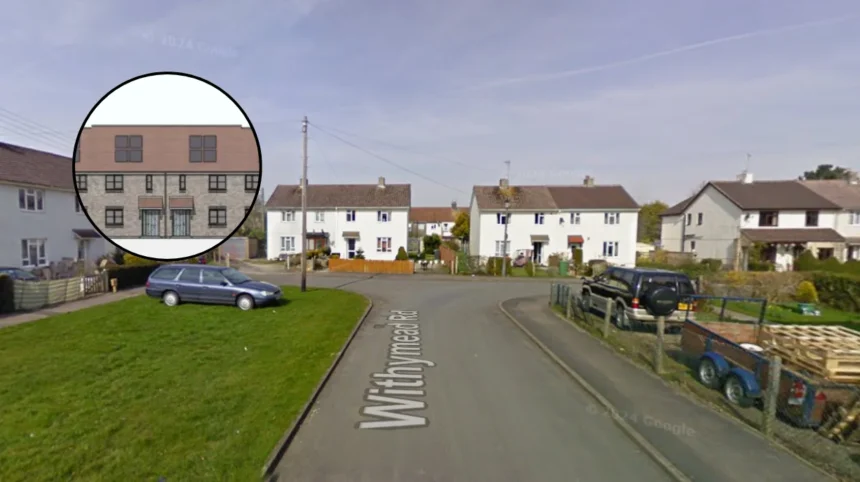
- Two semi-detached Airey houses at 6 and 8 Withymead Road in Marshfield, east of Bristol, are set to be demolished.
- The homes were built in the years after the Second World War and are now around 70 years old.
- South Gloucestershire Council has granted planning permission for the replacement scheme.
- Bromford Flagship LiveWest is behind the project.
- The two homes will be replaced by a terrace of four family houses.
- Two of the new homes will have two bedrooms and two will have three bedrooms.
- All four homes will be let at social rent.
- The new properties are designed to be energy efficient and cheaper to run.
- Features will include private gardens, off-street parking, electric vehicle charging points, air source heat pumps and solar panels.
- Work on site is expected to begin this autumn, with the first residents due to move in during 2027.
Bristol (Bristol Express News) July 25, 2026 – Two post-war homes in the village are set to be demolished and replaced with four new social rent properties after the local planning authority approved the scheme. As reported by the Bristol Post, the pair of semi-detached Airey houses at 6 and 8 Withymead Road were built shortly after the Second World War and have now reached the end of their usable life. The report said the homes have become increasingly expensive to maintain, which has helped drive the case for redevelopment.
Bromford Flagship LiveWest, described in the report as the UK’s largest provider of new affordable homes, will deliver the project.
The scheme will replace the two ageing houses with a terrace of four family homes, designed to meet current housing standards. The overall aim is to provide accommodation that is both more efficient and more suitable for long-term use.
Who reported the story?
As reported by the Bristol Post in its coverage of the scheme, the key facts are that the existing homes are historic post-war properties, the council has approved their demolition, and the replacement homes will be let at social rent.
The article also noted that the houses were originally built using precast concrete panels, a construction method commonly associated with post-war housing supply.
The Bristol Post report added that the replacement homes are intended to be more sustainable and affordable to live in. It said each new property will have its own private garden, off-street parking and electric vehicle charging points.
It also said the homes will include air source heat pumps and solar panels, with the development targeting an EPC B energy rating.
Why are the homes being replaced?
The main reason for the redevelopment is that the two existing houses have reached the end of their life cycle. According to the reporting, maintaining the homes has become increasingly expensive, which makes replacement a more practical option than ongoing repairs.
This is a common issue with older post-war housing, particularly where construction methods and materials are no longer considered efficient or economical to maintain.
The new homes will be built by Gloucester contractor E G Carter & Co, with designs by Quattro Design Architects, according to the information reported.
The redevelopment also forms part of Bromford Flagship LiveWest’s wider regeneration programme, which the report said is intended to replace homes that no longer meet its standards with new properties that are cheaper to run and fit for the future.
What did residents see?
The report said a public drop-in event was held in the village in May 2025, giving residents an opportunity to comment on the plans.
That suggests the scheme has already been through a period of local engagement before planning approval was secured. Such consultations are often used to gather feedback on design, housing mix and neighbourhood impact before redevelopment begins.
The planned scheme keeps the scale relatively modest, replacing two homes with four rather than introducing a much larger block of housing.
That is likely to be important in a village setting such as Marshfield, where the character of the area and the appearance of new development can matter as much as the number of homes provided.
What does social rent mean?
Social rent is a type of affordable housing rent set by a government formula, rather than by market rates. In the report, it was described as usually working out at around half of what the same home would cost privately. That makes it one of the more affordable forms of rented housing available in England.
Because all four new homes will be let at social rent, the scheme is likely to support households that need lower-cost accommodation in the area.
That is especially relevant in villages and smaller settlements where local housing costs can be difficult for working families and other residents on lower incomes.
Background of the development
The two homes on Withymead Road are part of a wider housing story in South Gloucestershire, where older post-war properties are being assessed against modern standards of efficiency and maintenance.
The Airey house type is associated with the post-war period and was often built quickly to help meet urgent housing demand after the war. Over time, however, some of these homes have proved expensive to keep in service.
The redevelopment also fits into a broader push for energy-efficient housing. The replacement homes are planned with features such as solar panels and air source heat pumps, which can reduce running costs and improve performance compared with older buildings.
In the context of current housing policy, that makes the scheme both a renewal project and a social housing intervention.
Prediction for local residents
For local people in Marshfield, the change is likely to mean fewer maintenance problems from the old houses and a supply of newer, more energy-efficient homes.
Families who need social rent accommodation may benefit most, because the new properties are being delivered specifically at below-market rent levels.
The main effect for the wider community may be gradual rather than immediate. If the project stays on schedule, the village should see construction start in autumn and the homes occupied in 2027, which means short-term disruption during the build phase but longer-term gains in housing quality and affordability.