Key Points
- In 2019, Camilla Rigby and Rachel Mostyn founded the Women’s Work Lab (WWL) in Bristol to help solve the problems that mothers encounter when going back to work.
- About 800 women have used the services of this agency to increase confidence, learn new skills, and find work since its establishment.
- WWL offers free classroom-based training, courses, and mentoring programs strictly within school hours in Bristol, Bath, South Gloucestershire, and Somerset.
- As the founders say, many of the mothers who use this service encounter certain difficulties, for example, living in an abusive situation, being a newcomer to the UK, or having special needs.
- The University of the West of England honored their contribution with the award of honorary doctorates of business administration in July.
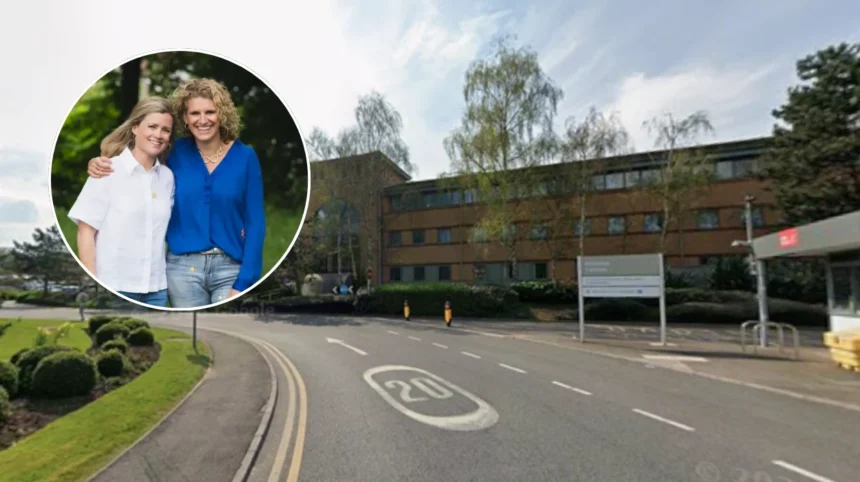
Bristol (Bristol Express News) September 16, 2026 — Camilla Rigby and Rachel Mostyn launched the Women’s Work Lab (WWL) in 2019 after recognizing a significant gap in professional support for mothers attempting to navigate the workforce following childbirth. Since its establishment, the initiative has successfully aided about 800 women in developing vital self-assurance, acquiring practical abilities, and securing meaningful employment opportunities.
Detailing the primary objective of the initiative, Rachel Mostyn stated to BBC Bristol that “the very point of our programmes is to give [help to] mums who haven’t worked for a long time.” Operating across Bristol, Bath, South Gloucestershire, and Somerset, WWL delivers specialized support structured entirely around school hours, offering free classroom places, structured work courses, and professional mentoring.
What Specific Barriers Do These Mothers Face When Re-entering Work?
Expanding on the demographic served by the organization, Rachel Mostyn explained to BBC Bristol that many participants encounter complex personal and social hurdles. As reported by Woodland and Skirkowski, Mostyn highlighted that “lots of the mums we work with have had particular barriers to working.”
Addressing these challenges further, Mostyn told BBC Bristol that participants
“may be survivors of domestic abuse, they may be new to the UK, they may have children with special needs or their own health conditions.”
Emphasizing the core philosophy of the enterprise, she added that
“the whole point of our programmes is to give you the confidence, let you see what an excellent person you are, and what value you can add to a workplace.”
Reflecting on the motivations behind starting the organization, co-founder Camilla Rigby noted to BBC Bristol that she and Mostyn identified a distinct lack of institutional aid. As documented by the BBC Bristol journalists, Rigby observed that
“specialist support tends to stop around [age] 25.” She elaborated on the societal pressures mothers encounter, stating that “beyond that there seems to be this expectation that, ‘well, you’re grown up, so you’ve got it all figured out’ and it’s just not true.”
Describing the psychological impact of parenthood, Rigby told BBC Bristol that
“we, as mums had seen and experienced the huge changes that you go through, your confidence just disappears, almost overnight, especially within a workplace scenario.”
Explore more Local Bristol News:
Bristol Council Admits Losing Park Encampment Battle, Bishopsworth 2026
NatWest Bank Branch Closes Permanently on North Street in Southville 2026
How Does Motherhood Foster Valuable Transferable Workplace Skills?
Highlighting the hidden professional assets developed during parenting, Rachel Mostyn argued that the domestic responsibilities of raising children cultivate crucial commercial competencies. As reported by BBC Bristol, Mostyn stated that mothers possess extensive expertise, noting that “you have got negotiation, you’ve got tenacity, you’ve got conflict management, you’ve got budgeting, you’ve got all of these things.”
Despite possessing these proficiencies, Mostyn pointed out to BBC Bristol that psychological obstacles often persist, noting that “actually the barrier for you might be [that] the shiny offices in town feel like alien places.”
In acknowledgment of their sustained community impact, the University of the West of England presented both Rigby and Mostyn with honorary doctorates in business administration this past July. Discussing the true measure of their enterprise’s achievement, Camilla Rigby told BBC Bristol that “so much of what we aim to do with the programme is help people to realise their own potential.” Emphasizing the organic nature of personal growth, Rigby added that “confidence isn’t about someone telling you to be confident, or telling you how to be confident, it’s something that comes from within, and that for us is always the real success.”
Background of the Particular Development
The establishment and expansion of the Women’s Work Lab arrive against a backdrop of persistent structural barriers affecting mothers and primary caregivers within the British labor market. Career pauses associated with raising children frequently result in lost earnings, diminished career progression, and eroded professional confidence—a phenomenon widely documented by employment researchers and economic analysts.
Traditional employment services often fail to accommodate the rigid time constraints of school-age parenting, leaving long-term unemployed mothers isolated from traditional recruitment pipelines. Regional initiatives like WWL bridge this institutional gap by tailoring professional retraining programs to fit within school hours, thereby addressing both childcare logistics and confidence deficits simultaneously.
This ongoing development and the growing public recognition of organizations like the Women’s Work Lab are likely to encourage regional policymakers and corporate employers to re-evaluate their return-to-work frameworks. For the particular audience of mothers seeking to re-enter employment—particularly those facing socio-economic hurdles or extended career gaps—such initiatives signal a shift toward more empathetic, localized recruitment practices.
If scaled effectively, the integration of school-hour-friendly training and targeted mentoring could reduce local unemployment rates among caregivers, pressure corporate entities to adopt more flexible hiring models, and demonstrate to employers that career-break mothers possess highly transferable organizational and crisis-management skills.