

Key Points:
- The Government of the United Kingdom has declared LGR proceeding in five specific regions following a recently conducted review.
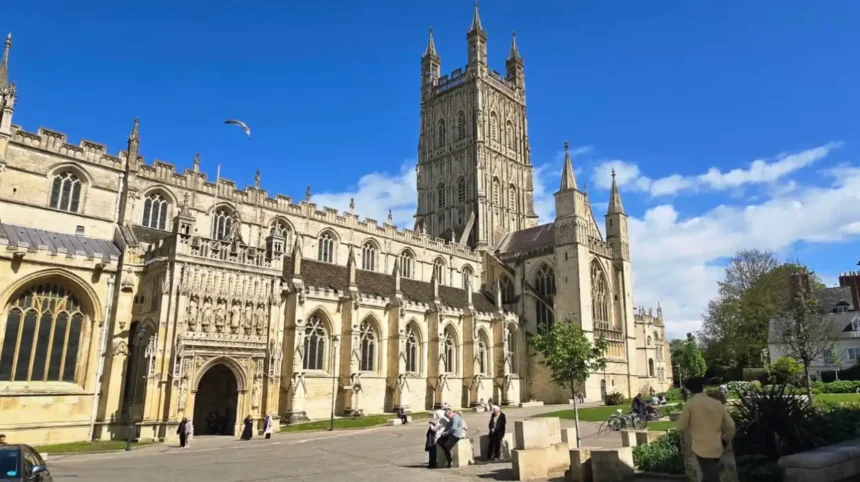
- These five regions which are designated as minded-to proceed are East Sussex and Brighton and Hove, Gloucestershire, Oxfordshire and West Berkshire, Warwickshire, and Worcestershire.
- In the designated regions, local elections will be held according to the present council borders in May 2027.
- Creation of new unitary councils will occur in 2029, while shadow council elections will take place in May 2028.
- £450,000 will be allocated to each of the new unitary authorities for those areas with already decided LGR from a £63 million capacity fund for the cost of transition.
- £500,000 will be given to Cambridgeshire and Peterborough, and West Sussex since their decisions have not been taken yet.
- Minimum three weeks consultation period is open to gather representations from council leaders, Members of Parliament of the area and other interested parties.
Bristol (Bristol Express News) October 29, 2026 – The UK Government has officially advanced its comprehensive review of Local Government Reorganisation (LGR), identifying five regions that will progress toward streamlined structural models. The strategic update, released by the Ministry of Housing, Communities and Local Government, outlines a definitive timeline for structural transformations while opening a consultation window for local authorities and regional stakeholders.
What Are the Five Key Areas Affected by the Latest Reorganisation Plan?
As reported by official government announcements on GOV.UK, the administration has confirmed a “minded-to” decision to move forward with structural changes across five specific county regions.
The targeted areas and their proposed changes include:
- East Sussex and Brighton and Hove: A two-unitary proposal encompassing boundary changes requested by Brighton and Hove City Council, excluding the parish of Falmer.
- Gloucestershire: A single unitary proposal for the county.
- Oxfordshire and West Berkshire: A three-unitary proposal incorporating boundary modifications, which divides the region into a Greater Oxford Council, a North Oxfordshire Council, and a Ridgeway Council combined with West Berkshire.
- Warwickshire: A two-unitary proposal.
- Worcestershire: A two-unitary proposal submitted collectively by Bromsgrove District Council, Malvern Hills District Council, Redditch Borough Council, Worcester City Council, and Wychavon District Council.
How Will the Transition Timetable Impact Local Elections and Councils?
Providing clarity for administrative bodies, the government confirmed that local elections across these regions will proceed as planned in May 2027 using existing council boundaries. Following this, elections for shadow authorities will take place in May 2028, paving the way for the official establishment of new unitary councils in 2029.
As detailed by the Local Government Lawyer, Minister for Local Government, Devolution and Regional Growth Jim McMahon addressed Parliament on Thursday, stating:
“Yesterday’s budget showed that we are committed to giving local leaders, local councils and local communities the tools to shape their own future.”
Minister Jim McMahon added, as noted by the Local Government Lawyer:
“No areas want to see a return to two-tiers once strong unitary councils are in place […] The decisions that we take now will be the building blocks for how this country is governed for generations to come.”
What Financial Support and Safeguards Are Being Provided?
To assist local authorities with the transition, the government announced that areas subject to previous decisions will receive £450,000 for each newly announced unitary authority drawn from a £63 million capacity fund. This funding is designated to cover expenses already incurred during reorganisation preparations.
Additionally, Cambridgeshire and Peterborough, alongside West Sussex, will each receive £500,000 because final decisions in those areas are still pending. The government also addressed public concerns regarding historical designations, explicitly committing to safeguard local city status through all necessary options, including potential new legislation.
Explore more UK News
Beckenham entrepreneur, 27, shortlisted for national Emerging Leader of the Year award
Cancer Patients Eligible for £50,000 Critical Illness Payouts UK 2026
Background
Local Government Reorganisation (LGR) represents a structural shift from traditional two-tier systems—where responsibilities are divided between county councils and district, borough, or city councils—to single-tier unitary authorities. The policy framework aims to eliminate administrative duplication, reduce bureaucratic friction, and generate long-term cost efficiencies. Previous structural reforms successfully transitioned areas such as North Yorkshire, Somerset, and Cumbria into unitary models. The current wave of reorganisation aligns with broader governmental decentralisation efforts and modern devolution white papers intended to transfer significant decision-making powers away from Westminster and back to regional communities.
This structural evolution will directly impact local government officers, community stakeholders, and residents across the five affected counties by fundamentally altering how public services—such as social care, transport, waste management, and planning—are administered. Over the next three years, local leaders must navigate complex administrative unbundling, asset balancing, and shadow authority formations. While proponents argue the transition will streamline public access and reduce long-term structural expenditure, the immediate operational disruption requires meticulous financial and legal oversight. Residents can anticipate altered civic representation models and harmonised service delivery standards once the new unitary bodies officially assume full control in 2029.
