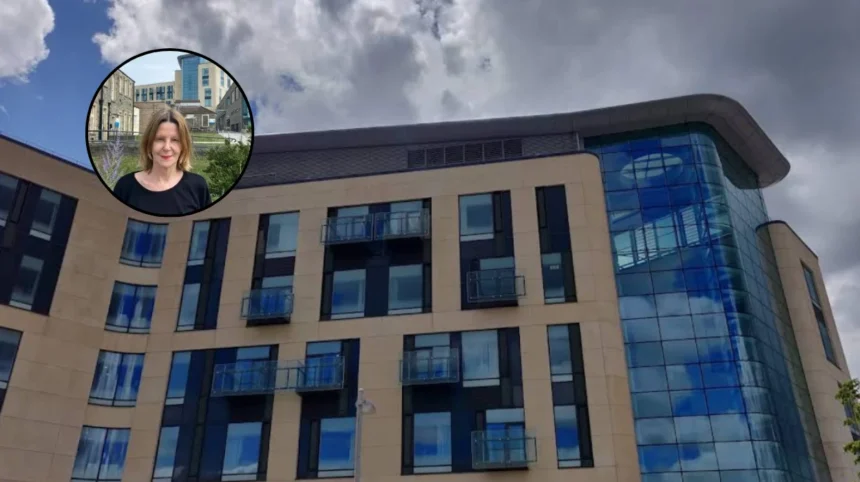
Key Points
- Bristol’s newly merged hospital trust says a single 24-hour emergency department in the city is a possibility within the next decade.
- Maria Kane said emergency care could in future be concentrated at Southmead Hospital.
- The merger combines two major NHS trusts and creates Bristol NHS Foundation Trust, with 28,000 staff and a £2.6bn budget.
- The new trust becomes the UK’s biggest recipient of National Institute for Health and Care Research funding, with almost £3m.
- Existing NHS material says two main hospital sites, Southmead Hospital and the BRI campus, remain fixed points for hospital services for the foreseeable future.
Bristol (Bristol Express News) July 1, 2026 – NHS Foundation Trust may be heading towards a single city centre for emergency care, after its chief executive Maria Kane said one 24-hour A&E in Bristol was “a possibility” within the next ten years. The comments come as the city’s two major hospital trusts complete a merger that has created one of the largest NHS organisations in the country.
What did Maria Kane say?
As reported by the BBC, Maria Kane said there was a possibility that emergency care could be concentrated at Southmead Hospital in the future.
The BBC also reported that she described a single 24-hour emergency department in Bristol within the next decade as a likely development to consider rather than a confirmed plan.
The trust’s merger means the issue of how services are organised across the city is now being discussed in the context of one larger management structure.
Why does the merger matter?
The newly named Bristol NHS Foundation Trust brings together North Bristol NHS Trust and University Hospitals Bristol and Weston NHS Foundation Trust.
According to the trust’s merger update, the organisation has a target date of 1 July 2026 and has already received approval through the relevant national assurance process.
The same update says the merged trust will have 28,000 staff and a £2.6bn budget. It also says the trust has become the UK’s biggest recipient of NIHR funding, with almost £3m.
Is a single A&E confirmed?
No final decision has been announced. NHS information on the merger says the two trust sites, including Southmead Hospital and the BRI campus, are “fixed points” for hospital services, including A&E,
“for the foreseeable future”.
That means the long-term shape of emergency care may still be subject to review, planning and wider service changes rather than an immediate switch to one department.
How could services change?
If emergency care were eventually concentrated at one site, patients could see a different flow of urgent and specialist treatment across Bristol.
A single emergency department could affect how ambulances are directed, where staff are based, and how minor and major emergencies are separated.
However, the trust has not said that any immediate closure or move is planned, and current NHS statements still refer to two main hospital sites operating for the time being.
Explore More Local Bristol News
England Flags Row Returns to Bristol Street 2026
Three Hospital Broadcasters Made Honorary Members – Bristol 2026
What is the background to this development?
The merger follows a longer process of joint working between Bristol’s major hospital trusts, including the creation of Bristol NHS Group and formal steps towards a single organisation.
The trust’s own merger page says approvals have come from NHS England, the Group Board, the Council of Governors and the Minister of State.
Earlier BBC reporting said the combined organisation could improve care for the 15 million people served by the two trusts and make better use of services across Bristol, North Somerset and South Gloucestershire.
What is the likely impact on patients?
For patients, the main effect would depend on whether services are eventually reorganised around one emergency site or kept across two major hospitals.
A single A&E could simplify urgent care pathways, but it could also mean longer journeys for some people depending on where they live in the city and surrounding area. For now, the immediate message is that Bristol’s emergency care structure is under discussion, not that it has already changed.