Key Points
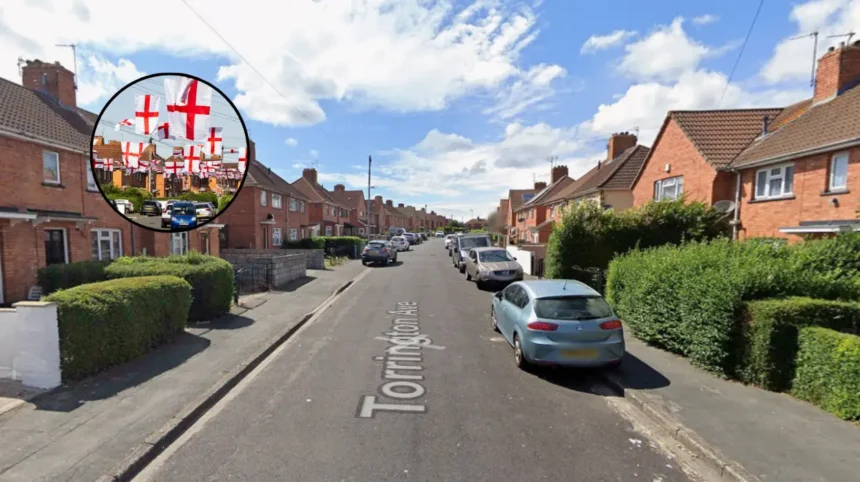
- Residents on Torrington Avenue in Bristol have put England flags back up after the street was told to stop displaying them on public property.
- Bristol City Council leader Tony Dyer said flags must not be flown on lampposts, railings or other public property.
- The council said it is removing flags in “sensitive locations” first and reviewing how to deal with others on council property.
- Local people told LBC the decision was “nonsense” and said they wanted to show support for England during the tournament.
- One resident welcomed the return of the flags as a sign of community unity.
- Former Bristol mayor George Ferguson criticised the display, calling it “chilling” and saying it could intimidate minorities.
- The dispute has become part of a wider debate over national flags, public space and how football support is expressed.
Bristol (Bristol Express News) June 23, 2026 – Residents on Torrington Avenue have restored England flags to lampposts after Bristol City Council told them to remove them from public property ahead of the World Cup. The row has turned a local street display into a wider argument about patriotism, public space and the meaning of the England flag.
As reported by the LBC newsroom, residents were angered after the Green-led council asked the street to stop its long-running tradition of decorating the area with England flags. The street’s response was to put the flags back up, with locals saying they wanted to support the Three Lions and show national pride.
Why did Bristol City Council object?
According to council leader Tony Dyer, people are not allowed to fly flags on lampposts, railings or any other public property. He said the council is removing flags in “sensitive locations” as a priority and will review its wider strategy for removing others on its property.
Dyer said Bristol must remain
“welcoming, respectful and safe for everyone during the tournament.”
That explanation has not satisfied all residents, several of whom told LBC that the ruling felt unreasonable and disconnected from local feeling.
How did residents react?
Local people described the decision as an overreach and said they wanted to keep the street’s football display. One resident told LBC they were pleased to see the flags return, describing the scene as a positive example of a community coming together.
Another local, Jon, said:
“We’re in England, why not support England, you know? Show the passion, like unite the country, you know?”
His comments reflect the view among some residents that the flags are a straightforward expression of sporting support rather than a political statement.
Why is the flag display controversial?
Not everyone sees the display in the same way. Former Bristol mayor George Ferguson said the scene was “chilling” and argued that it was “not true patriotism” but “a deliberate intimidation of minorities.”
He said the national flag has, in some cases, been used under the guise of backing England to spread fear. That criticism places the Bristol dispute within a broader national debate about whether the England flag is being used purely for sport or whether it can carry a wider political message.
What does the wider debate mean?
The Bristol row reflects a long-running tension over how public symbols are used in Britain, especially during major tournaments.
For some people, the England flag is a harmless sign of support for the national team; for others, its public display can feel exclusionary depending on the setting and context.
That divide helps explain why the same street scene can be interpreted very differently by different groups. In this case, one side sees community spirit, while the other sees the risk of intimidation and divisiveness.
Background of the development
The immediate background to the dispute is the build-up to the World Cup and the renewed interest in flying England flags across Bristol.
Torrington Avenue had previously become known for its flags, but the council’s intervention sparked anger among residents who felt their tradition was being challenged.
The issue also sits within a wider national discussion about national identity, public symbols and how sporting support is expressed in shared spaces.
The Bristol case shows how local council rules can collide with popular sentiment when football and flags become closely linked.
Prediction
This development is likely to keep drawing attention in Bristol and could encourage more discussion about where flags can legally be displayed during major sporting events.
For local residents, it may sharpen the divide between those who see the flags as harmless support and those who view them as potentially intimidating.
For councils, the case may lead to closer scrutiny of public-display rules and how they are enforced in sensitive areas. For football supporters, it could influence how openly they decorate streets and public spaces during the tournament, especially where official restrictions are already in place.