Key Points
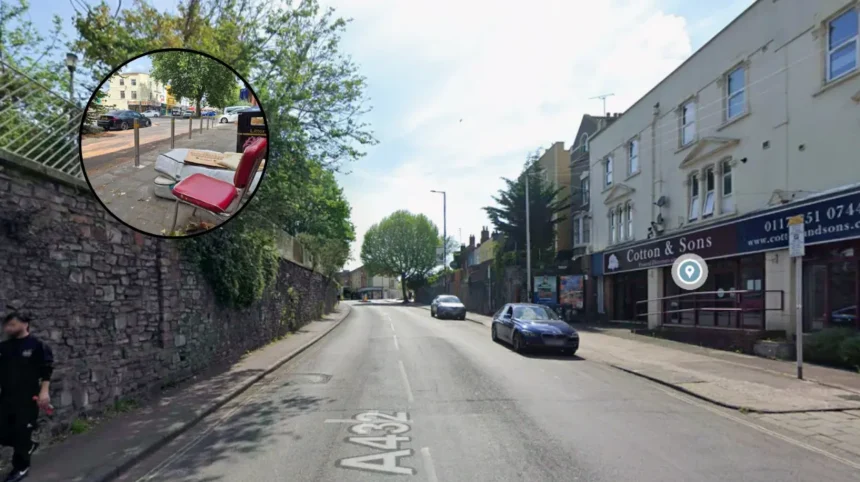
- Councillors have called for action on rubbish along Stapleton Road because it suffers from the most fly-tipping in Bristol.
- The street is described as a long shopping road in east Bristol where piles of rubbish are often seen on pavements.
- Bristol City Council is planning an education campaign to reduce fly-tipping.
- Councillors urged the council to work with local groups and schools rather than rely only on billboards.
- The council is also exploring seagull-resistant sacks because gulls are tearing open bin bags and spreading rubbish.
- Stapleton Road runs through Lawrence Hill, Easton and Eastville, which are among the areas with the highest concern about fly-tipping in the city.
- A councillor task group will soon look at fly-tipping and wider rubbish and bin collection issues.
Bristol (Bristol Express News) August 5, 2026 – Stapleton Road in east Bristol is facing ongoing fly-tipping problems, with councillors saying the street has the highest level of complaints about dumped rubbish in the city. The issue was discussed at the environment policy committee on Thursday, July 30, 2026, after concerns were raised about visible waste and its impact on local residents.
A fridge, washing machine, bin bags and mattresses were reportedly seen dumped along the road on a Tuesday afternoon, highlighting the scale of the problem. Piles of rubbish are frequently left on pavements along the busy shopping street, creating an untidy environment for residents, businesses and visitors.
What did councillors say about the problem?
Green Councillor Shona Jemphrey, who represents Lawrence Hill, said residents around Stapleton Road were becoming increasingly frustrated with the situation.
“Residents are getting extremely fed up.”
She also said people wanted the council’s education campaign to focus on schools, community organisations and faith groups instead of depending mainly on roadside billboards.
“Residents want us to work with schools, community organisations and faith groups rather than just relying on billboards to change behaviour.”
Green Councillor Abi Finch, chair of the environment committee, acknowledged that Stapleton Road, Lawrence Hill and Easton all face a particularly serious fly-tipping problem. She cautioned that the task group’s review would only have limited time to examine the issue because it also needs to consider wider waste and bin collection matters.
What is Bristol City Council planning to do?
Bristol City Council is preparing an education campaign aimed at helping residents understand how to dispose of waste correctly and reduce fly-tipping. Councillors want that campaign delivered directly through local communities instead of relying only on public advertising.
The council is also exploring the introduction of seagull-resistant sacks after repeated problems with gulls tearing open rubbish bags and scattering waste across Stapleton Road.
Alongside the education campaign, a councillor task group will examine fly-tipping alongside broader issues involving rubbish collection and waste management across the city.
How serious is the issue locally?
Stapleton Road passes through the wards of Lawrence Hill, Easton and Eastville. According to Bristol City Council’s quality of life survey, these areas, together with Hartcliffe and Withywood, have the highest levels of concern about fly-tipping in Bristol.
Between 86% and 91% of residents in those wards say fly-tipping is a local problem, compared with the citywide average of 69%.
The figures suggest that while Stapleton Road is one of the city’s worst hotspots, concerns extend across much of east Bristol and reflect wider frustrations over waste management and street cleanliness.
What does this mean for residents?
Residents and businesses along Stapleton Road continue to deal with repeated rubbish dumping, overflowing waste and litter spread by gulls. Many local people want a more practical response that combines education with stronger community involvement.
If the council follows through with its proposed education campaign, improved waste containment and targeted local engagement, conditions could gradually improve. However, councillors have acknowledged that discussions are still at an early stage and the dedicated task group will only spend limited time focusing specifically on fly-tipping.
Explore More Local Bristol News
Bristol Nightlife Restrictions Battle Over City Centre CIA Policy 2026
Bristol Train Disruption: Rail Buses Replace GWR Services August 2026
Background
Fly-tipping has remained a long-standing issue across Bristol, with several neighbourhoods regularly identified as problem areas requiring repeated clean-up operations. East Bristol has consistently reported some of the highest levels of concern about illegal dumping.
The latest discussions form part of wider efforts by Bristol City Council to improve waste management through public education, enforcement and practical measures such as improved rubbish storage.
Prediction
If Bristol City Council combines community education with stronger enforcement and better waste-management measures, Stapleton Road could see gradual improvements in cleanliness over the coming months.
However, if awareness campaigns are not backed by practical action and enforcement, residents may continue experiencing the same recurring fly-tipping problems in one of Bristol’s most persistent rubbish hotspots.