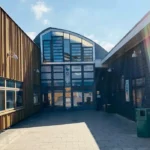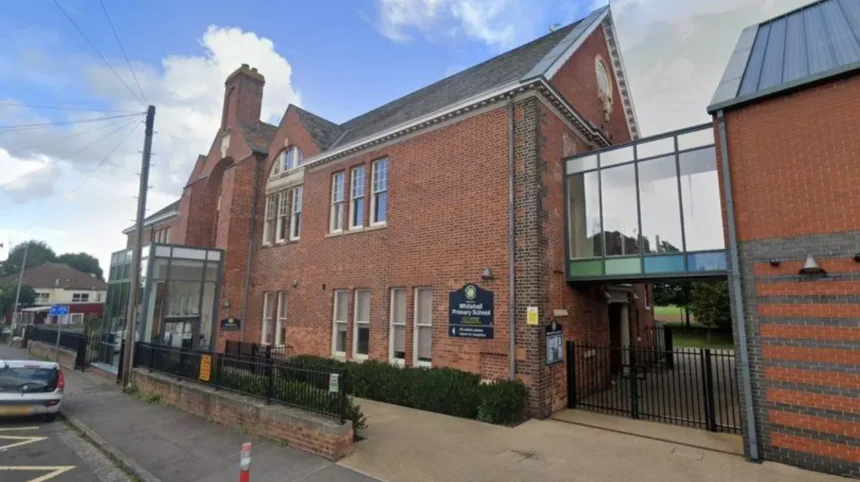
Bristol has a broad primary education sector covering community schools, academies, voluntary controlled schools, church schools and other maintained education settings. Primary education generally covers Reception through Year 6, with children completing Key Stage 2 assessments at the end of Year 6.
- What are primary schools in Bristol?
- How many types of primary schools are available in Bristol?
- How does primary school admission work in Bristol?
- What are catchment areas and admission distances for Bristol primary schools?
- Which factors should families compare when choosing a Bristol primary school?
- Which Bristol primary schools have different admission pressures?
- What academic standards and assessments apply in Bristol primary schools?
- How do Bristol primary schools support pupils beyond academic learning?
- How should families apply for primary schools in Bristol in 2026?
- What is the long-term importance of Bristol primary schools?
For families choosing primary schools in Bristol, the main considerations include school type, admissions criteria, location, previous attainment, curriculum, SEND provision, pastoral support, facilities and travel distance. Bristol City Council publishes information about individual schools, planned admission numbers, applications, admission policies and previous allocation information.
The city contains schools serving different neighbourhoods, including central Bristol, South Bristol, North Bristol, East Bristol and western districts. Admission arrangements vary according to the school’s governance and published policy.
What are primary schools in Bristol?
Primary schools in Bristol provide education from Reception through Key Stage 2, normally serving children aged four to eleven across community, academy, voluntary controlled, church and other school types within the city.
Primary schools form the first main stage of statutory school education in England. Reception is the first year of primary school, followed by Years 1 and 2, Years 3 to 6.
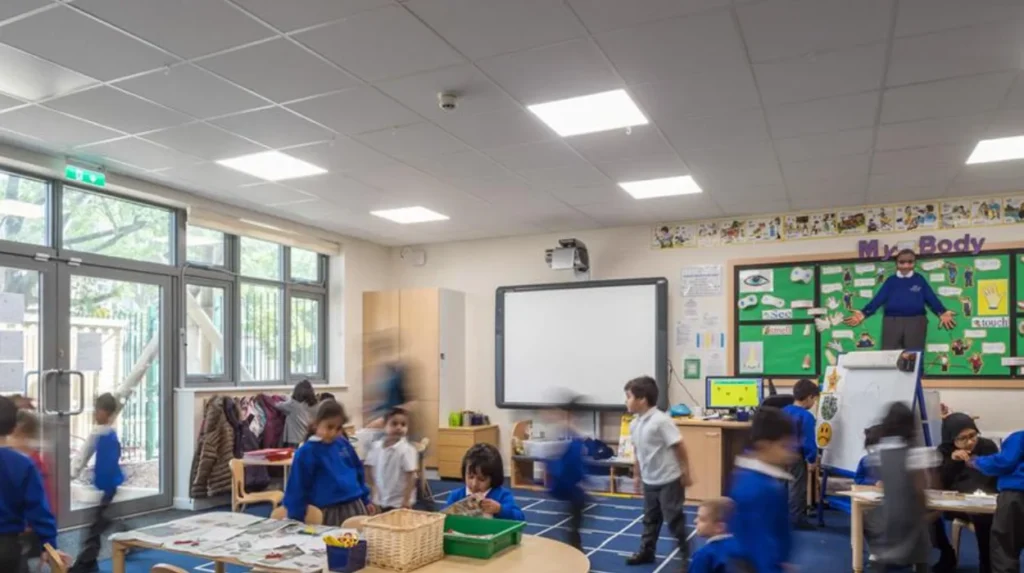
The Early Years Foundation Stage, commonly called EYFS, applies to Reception children. It establishes learning and development requirements covering communication and language, physical development, personal, social and emotional development, literacy, mathematics, understanding the world, and expressive arts and design.
Years 1 and 2 form Key Stage 1. Years 3 to 6 form Key Stage 2. National curriculum requirements apply to maintained schools and provide a framework for subjects including English, mathematics, science, computing, history, geography, art and design, music, physical education and languages.
Bristol’s primary-school landscape includes different governance arrangements. Bristol City Council’s 2026–27 admissions information identifies community schools and voluntary controlled schools alongside academies and other admission authorities. The council’s published list includes schools such as Air Balloon Hill Primary, Ashley Down Primary, Bishop Road Primary, Blaise Primary & Nursery and Southville Primary.
A primary school is therefore not defined only by its location. Its governance, admission authority, age range, curriculum organisation and individual policies also determine how it operates.
How many types of primary schools are available in Bristol?
Bristol has several primary-school structures, including community schools, academies, voluntary controlled schools, voluntary aided schools and faith-based settings, with examples including Bishop Road Primary, Ashton Gate Primary and St Peter’s Church of England Primary.
A community school is maintained by the local authority, which normally acts as the admission authority. Bristol City Council operates coordinated admission arrangements for its community schools.
An academy is publicly funded but operates independently of direct local-authority control. An academy trust is responsible for governance. Academy admission arrangements are published separately where the academy is its own admission authority.
A voluntary controlled school is a maintained school with a religious character where the local authority normally controls admissions. Bristol’s 2026–27 arrangements identify schools including Avonmouth Church of England Primary, Horfield Church of England Primary and St Peter’s Church of England Primary within this category.
Faith schools operate within the wider state-funded education system and can have admission criteria reflecting their religious character. Some schools require additional information through a supplementary information form.
Bristol also has infant and junior school structures. Infant schools generally serve younger primary pupils, while junior schools generally begin at Year 3. The city’s admissions information identifies schools with separate infant and junior phases, including Chester Park Infants and Chester Park Junior.
Some Bristol schools operate across more than one site. Bristol City Council identifies split-site arrangements for schools including Ashton Gate Primary, Cotham Gardens, Holymead Primary, St John’s Church of England VC Primary, St Werburgh’s Primary and Southville Primary for September 2026.
These structures matter because the admission authority determines how applications are processed and which published oversubscription criteria apply.
How does primary school admission work in Bristol?
Primary school admission in Bristol requires families to submit an application through the relevant local authority, rank preferred schools, meet the published deadline and follow each school’s admission criteria, with places allocated according to the applicable coordinated arrangements.
For children starting Reception, Bristol residents normally apply through Bristol City Council. Families living outside Bristol who want a Bristol school generally apply through their home local authority.
For September 2026 Reception admission, Bristol City Council stated that children born between 1 September 2021 and 31 August 2022 were within the normal Reception intake. The application deadline was 15 January 2026. Online applications opened on 12 September 2025.
The admissions process uses a coordinated scheme. Bristol City Council states that its coordinated schemes establish the framework for receiving applications, allocating places, issuing offers and handling appeals.
Parents normally rank preferred schools rather than submitting separate ordinary-round applications to every school. The admission authority then applies the published criteria when demand exceeds available places.
The process becomes particularly important where a school has more applications than its Planned Admission Number, often called the PAN. The PAN represents the number of pupils the school plans to admit into the relevant year group.
For September 2026, Bristol published individual planned admission numbers. Air Balloon Hill Primary had a planned admission number of 90, Ashley Down Primary had 60, Ashton Gate Primary had 90, Ashton Vale Primary had 30 and Avanti Gardens School had 60.
Bristol’s September 2026 offer date was 16 April 2026. Parents receiving offers were required to respond by 30 April 2026. Families without an offer from a preferred school received an alternative place where one was available, with waiting-list and appeal routes available.
The dates demonstrate why families should prepare applications before the statutory deadline.
What are catchment areas and admission distances for Bristol primary schools?
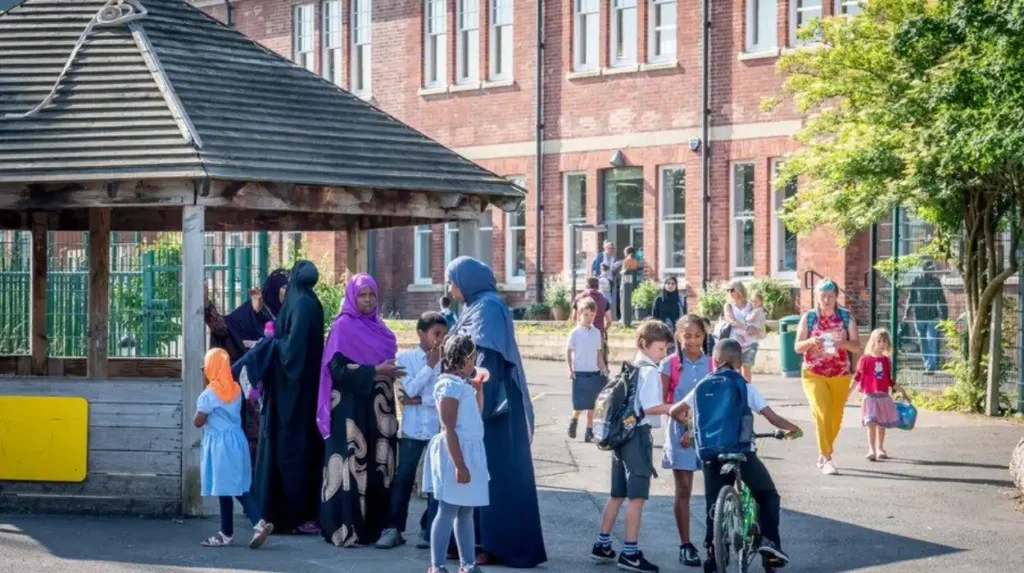
Bristol primary schools use published admission criteria rather than a universal citywide catchment boundary, and distance from home to school is an important criterion for many schools when applications exceed available places.
A catchment area is a defined geographical area associated with a school’s admissions policy. It does not automatically guarantee admission. Admission authorities apply their published criteria in the order specified by their policy.
Some Bristol schools use home-to-school distance as an oversubscription criterion. Distance is calculated according to the school’s published method. The exact method therefore matters when families compare addresses and schools.
Bristol City Council provides school information and previous allocation information to help families understand how places have been allocated. It also provides a map and neighbourhood search facility for locating primary schools by postcode.
Distance can become significant at schools with more applications than places. A family living close to a popular school does not automatically receive a place if another admission criterion ranks higher.
Families should therefore distinguish between proximity, catchment, admission priority and previous allocation distance. These terms describe different parts of the admissions process.
Previous allocation information is useful for understanding historical demand, but it does not guarantee the outcome of a future application. The number of applicants, sibling applications, admission criteria and available places can change between admission years.
Bristol also includes split-site primary schools. For September 2026, the council stated that home-to-school distance for a split-site school is measured from the midpoint between the two sites.
This makes the official admission policy more important than informal descriptions of a neighbourhood catchment.
Which factors should families compare when choosing a Bristol primary school?
Families comparing Bristol primary schools should examine admission arrangements, academic performance, curriculum, SEND provision, pastoral support, school size, facilities, location, travel arrangements, attendance and the school’s most recent inspection information.
Academic performance is one measurable factor. The Department for Education publishes Key Stage 2 attainment statistics covering pupils at the end of Year 6, normally around age 11. The statistics provide results by school, local authority, region and pupil characteristics.
Results should be interpreted in context. A single year’s attainment does not describe the entire educational experience. Cohort size, pupil characteristics, prior attainment and individual circumstances affect published outcomes.
The Ofsted inspection framework provides another source of information. Ofsted, the Office for Standards in Education, Children’s Services and Skills, inspects state-funded schools in England. Families should use the latest official inspection information alongside school-level evidence.
Curriculum is another important comparison. Parents can review how each school teaches English, mathematics, science, reading, computing, humanities, creative subjects and physical education.
SEND provision is particularly important for families whose children have special educational needs or disabilities. Schools publish information about their provision, while Bristol’s local authority provides wider SEND information and support.
School size also differs substantially. Bristol’s published January 2025 figures show different numbers on roll across individual schools. Air Balloon Hill Primary had 766 pupils, Ashley Down Primary had 397, Ashton Gate Primary had 571, Ashton Vale Primary had 162 and Avanti Gardens had 305.
Travel is a practical consideration. A school close to home can reduce daily travel time, while a longer journey affects morning routines, collection arrangements and after-school activities.
Families should also consider before-school provision, after-school clubs, breakfast provision, wraparound care, uniform requirements and communication arrangements. These features vary between schools and are normally described in each school’s published information.
Which Bristol primary schools have different admission pressures?
Admission pressure varies between Bristol primary schools because planned places and application numbers differ, with published figures showing substantially different levels of demand across schools such as Air Balloon Hill, Ashton Gate, Ashley Down and Ashton Vale.
Bristol City Council publishes planned admission numbers alongside historical application information. These figures allow families to compare capacity with demand rather than relying only on reputation.
For September 2026, Air Balloon Hill Primary had 90 planned Reception places and received 202 on-time applications in January 2025 for the relevant published admissions information. Ashley Down Primary had 60 planned places and 163 on-time applications. Ashton Gate Primary had 90 planned places and 229 on-time applications. Ashton Vale Primary had 30 planned places and 27 on-time applications.
These figures show why application demand cannot be assumed to be identical across Bristol.
A school receiving more applications than its planned admission number has greater competition for places. The admission authority then applies its published oversubscription criteria.
Sibling priority is commonly relevant in school admission policies. Other criteria can include looked-after or previously looked-after children, children with exceptional medical or social circumstances, faith-based requirements or distance.
Families should read the exact admission policy for the year of application. Policies change when governance changes or when admission authorities revise arrangements.
Bristol City Council’s 2026–27 arrangements specifically note that its published school list can change if governance changes, such as a school becoming an academy.
The most useful approach is therefore to compare planned places, previous applications, allocation information and current admission criteria together.
What academic standards and assessments apply in Bristol primary schools?
Bristol primary pupils follow England’s national curriculum framework, with statutory assessments including the Reception Baseline Assessment, Year 1 phonics screening check, Year 2 assessment arrangements and national Key Stage 2 tests at the end of Year 6.
The national curriculum establishes expectations for primary education in England. English and mathematics occupy a central position, while science, computing, history, geography, art and design, music, physical education and other subjects form the broader curriculum.
Reception pupils follow the Early Years Foundation Stage framework. The Reception Baseline Assessment provides an initial assessment of children’s early mathematics, literacy, communication and related skills.
The Year 1 phonics screening check assesses children’s decoding of words using phonics. Schools use phonics teaching and assessment to support early reading.
At the end of Key Stage 2, pupils normally take national curriculum tests in English grammar, punctuation and spelling, reading and mathematics. Teacher assessment also contributes to the assessment of writing and other areas.
The Department for Education’s latest revised Key Stage 2 statistics cover the 2024/25 academic year. The publication provides attainment information by pupil characteristics, school characteristics, regions and local authorities.
Bristol families can therefore examine official attainment data when comparing schools. The data should be considered alongside inspection findings, school policies and the context of individual cohorts.
Academic attainment is not the only measure of primary-school quality. Attendance, inclusion, pupil wellbeing, reading culture, curriculum breadth, SEND support and safeguarding are also central parts of school provision.
The national assessment system provides common measures across England. Individual schools then use additional classroom assessments to identify learning needs and plan teaching.
How do Bristol primary schools support pupils beyond academic learning?
Bristol primary schools support children through teaching, safeguarding, pastoral systems, inclusion, physical education, creative subjects, enrichment and family engagement, creating an education experience that extends beyond statutory tests and measured attainment.
Primary education includes substantial learning that is not represented by Key Stage 2 scores.
Safeguarding is a core responsibility. Schools must maintain procedures for protecting children from harm and responding to safeguarding concerns. Designated safeguarding leads coordinate safeguarding practice within schools.
Pastoral support addresses children’s emotional, social and behavioural needs. Individual schools use different structures, including class-based support, pastoral staff, assemblies, wellbeing programmes and relationships with external services.
Inclusion is another central component. Schools identify barriers to learning and provide support according to individual needs. Special educational needs provision operates within the national SEND framework.
Physical education supports physical development and healthy activity. Schools also provide opportunities for sport, games and movement through curriculum lessons and extracurricular activities.
Creative subjects contribute to broad primary education. Art, music, drama, design and other creative activities develop practical and cultural learning.
Reading remains a major primary-school priority. Schools typically develop structured approaches to phonics, vocabulary, comprehension, independent reading and access to books.
Family engagement also forms part of school life. Parents receive information through newsletters, meetings, online platforms, reports and school events. The exact communication system differs between schools.
The quality of these systems is best assessed directly through school policies, published information, inspection evidence and conversations during school visits.
Explore More Area Guide
Bristol Cultural Guide: Street Art, Historic Museums, & Vibrant Performing Arts
Bristol Cultural Guide: Street Art, Historic Museums, & Vibrant Performing Arts
How should families apply for primary schools in Bristol in 2026?
Families applying for September 2026 Reception places needed to submit applications by 15 January 2026, while later applications follow different procedures; families should use official Bristol admissions information and check each school’s current policy before applying.
The September 2026 normal Reception application process opened online on 12 September 2025 and closed on 15 January 2026. Bristol City Council issued normal-round offers on 16 April 2026.
Parents who received offers were required to respond by 30 April 2026. Families could accept the offered place, request a waiting list for a preferred school or pursue an appeal where applicable.
Late applications follow different procedures. Bristol City Council states that late Reception applications after the normal deadline are handled after the first allocation round.
In-year admissions apply when a child needs to move school outside the normal Reception admissions process. This includes applications for Years 1 to 6 and Reception applications made after the relevant point in the academic year.
For in-year applications, the process depends on the school. Some schools participate in Bristol’s coordinated arrangements, while schools that process their own admissions require applications to be made directly to them.
Families moving into Bristol should identify schools near their new address, check available places and establish which authority or school handles the application.
It is also important to understand that nursery attendance does not automatically transfer a child into Reception. Published admission policies require a separate application for Reception.
The most reliable source for current information is Bristol City Council’s primary admissions service and the individual school’s published admission policy. Admission arrangements, school governance and available places change over time.
What is the long-term importance of Bristol primary schools?
Primary schools in Bristol provide the foundation for literacy, numeracy, social development, knowledge, independence and later educational progression, making early school choice, effective teaching, inclusion and consistent attendance important throughout a child’s primary years.
Primary education establishes essential skills that pupils use throughout secondary education and beyond.
Reading is fundamental to accessing the wider curriculum. Strong literacy enables pupils to understand increasingly complex texts, communicate ideas and develop independent learning skills.
Mathematics provides foundations for later study in algebra, geometry, statistics and financial understanding. Primary mathematics develops number sense, calculation, reasoning and problem-solving.
Science introduces children to systematic investigation and knowledge of the natural world. History and geography build understanding of people, places, environments and change over time.
Primary schools also establish routines that influence children’s wider educational experience. Attendance, organisation, collaboration and independent learning become increasingly important as pupils progress through the education system.
Bristol’s primary sector is likely to remain shaped by population patterns, housing development, school capacity, academy governance and local demand. Published admission numbers and application statistics provide measurable evidence of how demand changes.
Digital learning is another continuing feature of primary education. Computing and digital literacy are part of the national curriculum, while schools increasingly use online systems for communication, learning resources and administration.
For families, the strongest long-term decision process combines several evidence sources. These include official admissions data, school policies, attainment information, inspection evidence, SEND information, travel distance and direct visits.
Bristol City Council specifically recommends that families visit preferred schools when researching primary education options. Its school-information service also provides tools for finding schools and reviewing admission information.
The result is a primary education system with significant variation between individual schools. Understanding that variation through official evidence is essential when selecting a Bristol primary school.
What age do children start primary school in Bristol?
Children normally start Reception in Bristol at age four. The Reception year is followed by Years 1 and 2 in Key Stage 1 and Years 3 to 6 in Key Stage 2.