Key Points
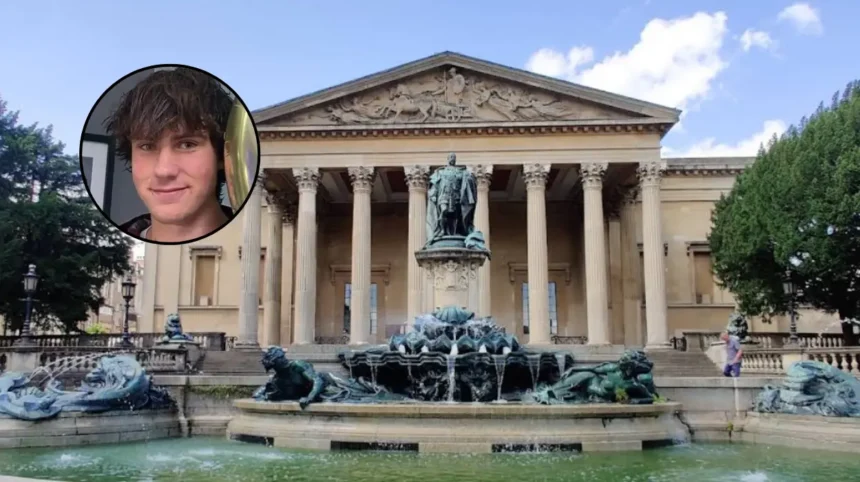
- Discovery in Bucegi Mountains: Local authorities in Romania confirmed that a body believed to be that of missing 18-year-old University of Bristol student George Smyth has been recovered.
- Disappearance Timeline: The geology student, originally from Newport, Shropshire, went missing on 23 November 2025 during a solo hiking expedition.
- Distress Call Details: Smyth contacted local emergency services from the Țigănești area, reporting that he was disoriented, physically exhausted, and suffering from the onset of hypothermia.
- Protracted Search Efforts: Search operations carried out by Salvamont Brașov mountain rescue spanned several months and involved canine units, aerial drones, and search helicopters amidst severe winter weather conditions.
- Family Statement: His family released a statement expressing profound grief, noting that “although this latest news is incredibly painful, the torture of waiting is finally over” as formal repatriation procedures begin.
Bristol (Bristol Express News) August 15, 2026 — Search and rescue operations in the Bucegi Mountain region of Romania have concluded following the discovery of a body believed to be that of missing 18-year-old British university student George Smyth.
As reported by Nadeem Badshah of The Guardian, Avon and Somerset Police confirmed that Romanian authorities notified UK police after locating the body in a remote sector of the mountain range. While formal forensic identification procedures are still underway to establish definitive confirmation, officers have informed the family of the undergraduate geology student, who had been missing since late November 2025.
As documented in official communications from Avon and Somerset Police, the family of Mr Smyth issued a joint statement following the development, stating:
“We are all devastated by George’s death. He was the best of us and is deeply missed by his younger brothers, family and friends. We want to thank Salvamont Mountain Rescue, who have worked tirelessly since November searching for George; despite very difficult and often dangerous conditions. They are an amazing team, and have remained in constant communication, helping us greatly throughout this awful time.”
The family statement further noted:
“We would also like to thank Avon and Somerset Police and University of Bristol, who have gone above and beyond to try and find George, and to support us as a family. Although this latest news is incredibly painful, the torture of waiting is finally over, so we can now focus on bringing George home and saying goodbye.”
What Were the Circumstances Surrounding George Smyth’s Disappearance in Romania?
As reported by ITV News Central, George Smyth, an 18-year-old first-year geology student at the University of Bristol hailing from Newport in Shropshire, travelled independently to Romania to undertake a solo trek through the Carpathians. On 23 November 2025, Mr Smyth embarked on a route originating from Poiana Brașov with the intention of navigating the alpine terrain.
As detailed by Sebastian Marinescu, Director and Coordinator of Salvamont Brașov, Mr Smyth initiated an emergency call for assistance after reaching the Țigănești Valley area. During the communication with mountain rescue dispatchers, Mr Smyth reported that he was disoriented, physically exhausted, and experiencing symptoms of hypothermia amidst rapidly deteriorating weather conditions marked by dense fog, high-velocity winds, and heavy snowfall.
As reported by The Times and reiterated by Global News, rescue teams advised Mr Smyth over the phone to remain on the marked trail toward the Mălăiești Chalet, as GPS coordinates indicated he was moving in that direction. Mr Marinescu explained that remaining in motion on the marked trail was deemed essential to delay severe hypothermia under blizzard conditions. However, emergency ground units dispatched to the area were unable to locate Mr Smyth that evening due to zero visibility and severe avalanche risks. In subsequent days, search teams recovered Mr Smyth’s backpack—containing personal supplies and equipment—near the location from which his emergency call had originated.
How Was the Multi-Month Search Operation Conducted in the Bucegi Mountains?
As reported by the BBC and Global News, the search and rescue campaign mobilized over 20 specialized mountain rescuers from Salvamont Brașov, alongside specialized canine units, thermal-imaging drones, and aerial helicopters. Operations were repeatedly impeded by severe winter weather, thick fog, and deep snowpack across the Țigănești Valley, leading to temporary suspensions of search efforts when avalanche risks reached dangerous levels.
As reported by ITV News Central, Mr Marinescu stated during the initial winter operation:
“There is far too much snow, and the Țigănești Valley covers a very large area with numerous possible scenarios. Once the weather improves, the snow begins to melt, or we obtain new data that could help us locate the missing person, we will certainly resume the search.”
As snow conditions thawed during the summer months, mountain rescue teams resumed targeted sweeps under rock faces, in deep grates, and across high-altitude sector zones. Local authorities ultimately located the body in a hard-to-reach sector of the Bucegi range, leading to the notification of British law enforcement agencies.
Following the formal announcement by police, a spokesperson for the University of Bristol expressed condolences, acknowledging the support provided to the student’s family and university peers throughout the extended waiting period.
Background of the Development
The Bucegi Mountains, located in central Romania as part of the Southern Carpathians, are a prominent destination for international hikers, rising to elevations over 2,500 metres. The region is characterized by steep glacial valleys, sudden weather shifts, and hazardous alpine conditions, particularly during the transition into winter months when heavy blizzards and sub-zero temperatures frequently occur without warning.
When George Smyth went missing in November 2025, search efforts were complicated by extreme winter storms that brought heavy snowfall and intense winds to the Țigănești region. Salvamont Brașov, the primary mountain rescue agency in the area, maintained coordinated efforts with the UK Foreign, Commonwealth & Development Office (FCDO) and Avon and Somerset Police. Over the course of nine months, rescuers conducted periodic sweeps whenever weather windows allowed. The recent summer thaw enabled rescue crews to access previously inaccessible crevices, ledges, and steep rock sectors where the body was ultimately discovered.
Explore More Local Bristol News
New Chaiiwala Cafe Opening on Gloucester Road Bristol 2026
Joe Bryan, Joe Bryan retired, Bristol City FC, Fulham FC, Millwall FC, London 2026
Prediction: Impact on Student Travellers and Mountain Safety Protocols
This development is expected to influence university outdoor societies, solo trekking enthusiasts, and international student travellers in several distinct ways:
- Heightened Safety Mandates for University Societies: Universities and associated student wilderness groups across the UK are likely to review safety guidelines regarding independent international expeditions. Institutional bodies may emphasize mandatory registration of travel itineraries, emergency contact protocols, and satellite tracking devices for students undertaking alpine research or solo treks abroad.
- Increased Emphasis on Personal Locator Beacons (PLBs): The circumstances surrounding the search—where mobile phone signals and GPS coordinates provided initial but limited positioning—will likely drive greater adoption of standalone satellite communication devices and Personal Locator Beacons (PLBs) among solo hikers operating in remote mountain ranges.
- Refinement of Alpine Rescue Coordination: The cross-border collaboration between Romanian emergency services, the Foreign Office, and UK police forces sets a precedent for how prolonged missing-person cases involving British nationals abroad are managed. The case highlights the operational necessity of seasonal search resumptions in high-altitude environments following winter disappearances.