Key Points
- Student Volunteer Joins Voyage: Channon ‘Chan’ Lawrence, a third-year Biochemistry student at the University of Bristol set to graduate later this year, has embarked on a aid voyage to Gaza aboard the civilian vessel The Kate.
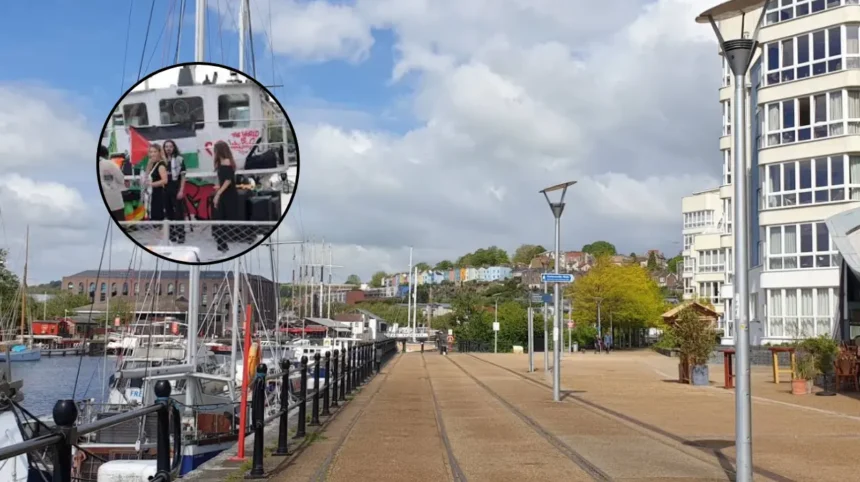
- Departure Location and Distance: The Kate set sail from Hannover Quay in Bristol harbour on Sunday, 16 August 2026, commencing a journey spanning roughly 4,000 nautical miles toward the Gaza Strip.
- Flotilla Framework: The voyage marks the Freedom Flotilla Coalition’s (FFC) second major sea campaign of 2026, following the interception and hijacking of their previous mission by the Israel Defense Forces (IDF) in international waters in May 2026.
- Onboard Crew and Campaign Leadership: Lawrence is joined by a 12-member crew, including Iris Haynei, head of FFC UK, Raid, ambassador for the Samir Foundation, Irish captain Fiacc O Brolchain, and experienced activists from across the UK and Europe.
- Departure Event and Key Figures: A launch and fundraising event on 16 August featured public addresses by Dr Swee Ang, co-founder of Medical Aid for Palestinians (MAP), Welsh nurse Leigh Evans, and former University of Bristol professor Dr David Miller.
- Criticism of Institutional Links: Lawrence voiced strong opposition to the University of Bristol’s financial partnerships with defence firms, highlighting its position as a founding member of the Defence Universities Alliance (DUA) and its direct ties to 116 arms companies.
- Safety Protocols: To avoid potential physical abuse, arbitrary detention, or sexual assault previously reported by activists intercepted by Israeli military forces, Lawrence intends to disembark The Kate before the final leg of its two-to-three-month journey into Gaza.
Bristol (Bristol Express News) August 18, 2026 – A third-year Biochemistry student from the University of Bristol has departed from Bristol harbour aboard the civilian vessel The Kate to participate in an international maritime mission attempting to deliver humanitarian relief and challenge the naval blockade of the Gaza Strip. Channon ‘Chan’ Lawrence, who is set to graduate later this year, joined a crew of veteran international activists as the boat set sail from Hannover Quay on a 4,000-nautical-mile voyage toward the Middle East. The initiative forms part of the Freedom Flotilla Coalition’s (FFC) second major expedition of 2026, launched under the broader Global Sumud Flotilla campaign following the military interception and detention of their earlier vessel fleet by the Israel Defense Forces (IDF) in international waters in May 2026.
- Key Points
- Who is participating in the Freedom Flotilla mission from Bristol harbour?
- Why did Channon Lawrence join ‘The Kate’ Gaza aid voyage?
- What concerns were raised regarding the University of Bristol’s ties to the arms industry?
- How are safety and security risks being handled during the journey?
- Background of the Freedom Flotilla Coalition Development
- Prediction: How This Development May Affect University Students and Local Activist Networks
Who is participating in the Freedom Flotilla mission from Bristol harbour?
As reported by Nyx Osborne Sandford of Epigram, the crew aboard The Kate includes key leadership figures from the UK movement, such as Iris Haynei, head of FFC UK, and Raid, an ambassador for the Samir Foundation, along with local activists from Bristol and across the United Kingdom. Additional reporting by Muslim Network TV notes that the vessel is carrying 12 activists and is skippered by Irish captain Fiacc O Brolchain. O Brolchain previously commanded civilian solidarity vessels and was detained by Israeli forces during a prior blockade-challenging mission, during which he stated that interrogators confiscated his hearing aids.
According to Epigram, the send-off on 16 August was accompanied by a community launch event and fundraising concert at Hannover Quay. The gathering featured speeches from prominent human rights figures, including Dr Swee Ang, an orthopaedic surgeon and co-founder of Medical Aid for Palestinians (MAP), Welsh nurse Leigh Evans, and Dr David Miller, a former University of Bristol professor who was dismissed from the institution in 2021.
Why did Channon Lawrence join ‘The Kate’ Gaza aid voyage?
As detailed by Nyx Osborne Sandford of Epigram, Lawrence’s decision to take part in the maritime expedition stemmed from a personal connection to the vessel itself, coupled with nearly a decade of involvement in pro-Palestinian campaigning. Lawrence explained that she had lived aboard The Kate prior to its acquisition by the Freedom Flotilla Coalition, placing her in direct contact with the project during the vessel’s handover process.
As reported by Nyx Osborne Sandford of Epigram, Lawrence stated that
“I lived on [the Kate] before the Freedom Flotilla bought it, which is how I, personally, got involved, because I was there for the handover process and met a lot of the people [going on the mission]. I offered my help because it is probably the most important cause in the world right now”.
Explaining her underlying motivations for undertaking the multi-month voyage, Lawrence emphasized the need to redirect global attention toward the ongoing humanitarian situation in Palestine. As reported by Nyx Osborne Sandford of Epigram, Lawrence stated that “the world is ignoring a live genocide”, adding that
“we shouldn’t be allowed to forget [about Gaza]”.
What concerns were raised regarding the University of Bristol’s ties to the arms industry?
During her interview with Epigram, Lawrence directed strong criticism at the University of Bristol regarding its institutional and commercial partnerships with defence manufacturers. The University holds the second highest-valued arms industry partnerships among all UK higher education institutions, maintains links with 116 defence firms, and is a founding member of the Defence Universities Alliance (DUA) established to build recruitment pathways into the sector.
As reported by Nyx Osborne Sandford of Epigram, Lawrence expressed her disapproval, stating that
“most University of Bristol students completely disagree with this. A lot of them would be disgusted to find out the money they’re paying for their degrees is indirectly going towards arms companies which are killing children”.
She further added that
“we are providing weapons being used to commit war crimes. Encouraging recruitment into these industries is terrible. I feel ashamed of my university, and I think that’s how most students feel”.
Prior to setting sail, Lawrence urged incoming and returning university students to connect with local advocacy networks, explicitly citing the Bristol Palestine Museum and the Bristol Apartheid-Free Zone initiative.
How are safety and security risks being handled during the journey?
The voyage to the Eastern Mediterranean is projected to take between two and three months. However, due to documented risks associated with military interceptions in international waters, specific disembarkation plans have been established for certain crew members.
As reported by Nyx Osborne Sandford of Epigram, Lawrence plans to disembark The Kate prior to the final leg of its approach toward the Gaza coastline. This measure is intended to mitigate risks of severe mistreatment, physical detention, or assault, following reports documented by participants in the May 2026 FFC mission who were intercepted and detained by the IDF before being deported.
Statements gathered by Muslim Network TV from other seasoned participants highlight previous encounters at sea. Freedom Flotilla Coalition member and international legal representative Frank Romano noted that Israeli naval forces have intercepted more than 75 solidarity vessels since October 2023, with only two successfully recovered through international legal proceedings. Irish activist Colm Byrne, participating in his second attempt of the year, recounted an interception in April where volunteers were bound, subjected to physical abuse, and held in stress positions prior to prison transfer and eventual deportation.
Background of the Freedom Flotilla Coalition Development
The departure of The Kate from Bristol harbour represents the latest iteration of a multi-year international campaign organized by the Freedom Flotilla Coalition (FFC) to challenge the naval blockade imposed on the Gaza Strip since 2007. Formed by an alliance of civil society organizations across the globe, the FFC has repeatedly launched civilian maritime expeditions carrying humanitarian supplies, medical goods, and human rights observers to open a direct sea corridor to Palestinian waters.
Throughout its operating history—most notably beginning with the Mavi Marmara led mission in 2010—flotilla vessels have frequently faced boarding actions, seizures, and military interceptions by the Israel Defense Forces in international waters. In 2026, campaign organizers expanded their operational scope under the Global Sumud Flotilla framework, an initiative costing approximately $24 million involving multiple vessels dispatched in coordinated waves. Despite frequent interceptions, detentions, and the deportation of hundreds of international volunteers, participating organizations continue to utilize non-violent direct action at sea to bring international legal attention to the sea blockade and demand unhindered delivery of civilian aid.
Explore More Local Bristol News
Bristol Private Hire Driver Refused Licence After Police Sting, Bristol 2026
BBC FutureWorld Exhibition Showcases Emerging Web Technology in Bristol 2026
Prediction: How This Development May Affect University Students and Local Activist Networks
The departure of a high-profile student activist from a major UK university is likely to intensify campus debates regarding ethical investments, institutional research partnerships, and university ties to the global defence sector. For the University of Bristol community and student bodies nationwide, this development will probably serve as a focal point for student union motions, campus demonstrations, and renewed demands for financial transparency and divestment from military contractors.
Among broader local activist networks across Bristol and the South West, the high-visibility departure from Hannover Quay provides a physical hub for regional organizing. As The Kate progresses along its multi-month navigation toward the Mediterranean, local solidarity groups are expected to leverage the journey to maintain consistent public visibility, host public awareness drives, and apply ongoing civil pressure on UK policymakers regarding foreign policy, arms exports, and international maritime law enforcement.