Bristol has a broad veterinary-care network serving cats, dogs, rabbits, birds, small mammals, exotic animals and larger animals. Local veterinary practices range from neighbourhood general practices to emergency clinics, referral hospitals, charity-supported services and university-linked specialist facilities.
- What types of vets are available in Bristol?
- How do you choose the right vet in Bristol?
- What routine services do Bristol vets provide?
- When should you use an emergency vet in Bristol?
- What specialist veterinary care is available around Bristol?
- Which Bristol vets treat small mammals, birds and exotic animals?
- How does veterinary emergency care work outside normal hours?
- What should Bristol pet owners know about veterinary costs?
- What role does the University of Bristol play in veterinary care?
- How can you prepare for a veterinary visit in Bristol?
- How will veterinary care in Bristol remain important in the future?
The Royal College of Veterinary Surgeons (RCVS) regulates veterinary surgeons and veterinary nurses in the United Kingdom and provides the official Find a Vet service. Its Practice Standards Scheme also provides voluntary accreditation for practices meeting defined standards covering areas such as hygiene, emergency arrangements, equipment and staff training.
Bristol also has an important veterinary education and referral-care connection through the University of Bristol Veterinary School at Langford. The campus is approximately 14 miles south of Bristol and includes small-animal, farm-animal and referral facilities.
For pet owners, choosing a Bristol vet involves more than finding the nearest surgery. Registration arrangements, opening hours, emergency cover, species treated, clinical facilities, accessibility and referral pathways all affect the type of service available.
What types of vets are available in Bristol?
Bristol provides several types of veterinary services, including general practices, emergency clinics, referral hospitals, charity-supported care and specialist services for different animal species and medical needs. Examples include routine companion-animal surgeries, emergency providers and university-linked referral facilities.
Most Bristol pet owners use a general veterinary practice for routine healthcare. General practices provide preventative care, examinations, vaccinations, parasite management, microchipping, dental assessment, diagnostic testing and treatment of common illnesses and injuries.
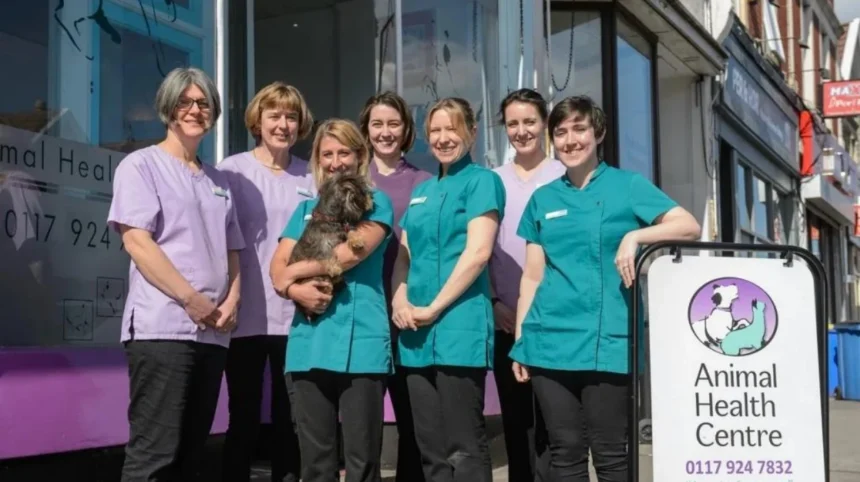
The RCVS classifies practices according to the services and standards they provide. Bristol examples listed by the RCVS include Animal Health Veterinary Centre in Horfield, Animal House Vets in Downend, Avenue Veterinary Centre in Staple Hill and The Pet Vet Bristol in Hengrove.
Emergency veterinary clinics provide urgent assessment outside ordinary appointment arrangements. Vets Now Bristol, located on Zetland Road in Redland, is listed by the RCVS as a Small Animal Emergency Service Clinic and treats cats, dogs and small mammals.
Referral hospitals provide more advanced investigation and treatment. They handle cases referred by primary-care veterinary surgeons when specialised equipment, expertise or hospital facilities are required.
Bristol also has services supporting animals beyond the standard cat-and-dog model. Rowe Veterinary Group’s Bristol-area veterinary hospital in Bradley Stoke lists birds, cats, dogs, deer, exotic and wild animals and small mammals among the animals treated.
The choice therefore depends on the animal, the medical problem and whether the appointment is routine, urgent or specialist.
How do you choose the right vet in Bristol?
Choose a Bristol vet by checking RCVS registration or accreditation, species coverage, location, opening hours, emergency arrangements, accessibility, clinical services and expected costs. Compare these factors with your animal’s needs rather than choosing a practice solely by distance or online reputation.
Location is important because routine appointments often require repeat visits. A nearby surgery reduces travel time for vaccinations, follow-up examinations and medication reviews.
Emergency arrangements are equally important. Ask the practice which provider handles emergencies outside normal opening hours. The RCVS states that every UK veterinary practice must ensure 24-hour emergency care is available, although the arrangement differs between practices.
RCVS accreditation provides another useful indicator. The RCVS Practice Standards Scheme is voluntary and assesses areas including hygiene, emergency cover, staff training, equipment, facilities and cost-estimation procedures. Accredited practices undergo assessment every four years, with spot checks also possible.
Species coverage must match your animal. A cat or dog owner has a large choice of small-animal practices. Owners of birds, rabbits, reptiles or other exotic animals need to confirm that the practice routinely treats their species.
Opening hours also differ. For example, RCVS records show Animal Health Veterinary Centre operates Monday to Friday with Saturday opening, while Animal House Vets provides weekday and Saturday appointments.
Accessibility is another practical consideration. Check parking, public transport access, disabled access, entrance arrangements and whether the clinic can accommodate larger carriers or mobility requirements.
Finally, ask how estimates work before non-emergency treatment. Veterinary practices can explain expected costs and treatment options, while emergency treatment requires immediate attention to animal welfare.
What routine services do Bristol vets provide?
Routine Bristol veterinary services include health examinations, vaccinations, parasite control, microchipping, dental assessment, neutering, diagnostic testing, medication management and preventive advice. Examples include puppy and kitten care, annual health checks and treatment of common illnesses.
Preventive healthcare forms the foundation of veterinary medicine. A routine consultation allows the veterinary team to assess an animal’s general condition before a problem becomes severe.
Vaccination protects animals against specified infectious diseases. The vaccination schedule depends on species, age, previous vaccination history, lifestyle and veterinary assessment.
Microchipping provides permanent identification through a small implanted electronic chip. The chip contains an identification number that links the animal to keeper information on an appropriate database.
Parasite control addresses organisms such as fleas, ticks and intestinal worms. Treatment programmes depend on the animal’s lifestyle and exposure risks. Veterinary teams can recommend suitable products and schedules.
Dental care is another major component. Veterinary examinations can identify tartar, gum disease, damaged teeth and oral pain. Dental treatment can involve professional cleaning, dental radiography and extraction when clinically necessary.
Neutering is also available at many companion-animal practices. The procedure involves sterilisation and requires veterinary assessment, anaesthesia and post-operative monitoring.
Routine diagnostic services vary by practice. These can include blood tests, urine analysis, microscopy, imaging and other investigations. More complex diagnostics are available through referral hospitals.
Bristol practices also provide medication management. Veterinary medicines are prescribed according to the animal’s diagnosis and clinical requirements. Owners should follow the veterinary team’s instructions regarding dose, frequency, duration and storage.
Preventive veterinary care is particularly important for older animals. Regular examinations help identify changes in weight, mobility, behaviour, appetite and organ function.
When should you use an emergency vet in Bristol?
Use an emergency vet when an animal has a life-threatening injury, severe breathing difficulty, collapse, uncontrolled bleeding, serious poisoning, seizures or another urgent condition. Bristol emergency providers assess severity, provide first aid and arrange further treatment when required.
Emergency veterinary care is different from a routine appointment. The immediate priority is stabilising the animal and addressing pain, suffering or threats to life.
The RCVS states that UK veterinary practices must ensure access to 24-hour emergency care and provide emergency first aid and pain relief. The organisation also states that owners have a legal duty of care to seek appropriate veterinary treatment when an animal is injured or ill.
Examples of emergencies include difficulty breathing, collapse, major trauma, severe bleeding, suspected poisoning, repeated seizures, inability to urinate, serious burns and severe abdominal symptoms.
The appropriate response is to contact the veterinary practice or emergency provider before travelling whenever possible. The team can assess the situation and give instructions for transport.
Bristol has dedicated emergency provision. Vets Now Bristol is listed by the RCVS as a Small Animal Emergency Service Clinic at 32–34 Zetland Road, Redland.
PDSA’s Bristol Pet Hospital also documents an out-of-hours emergency arrangement through Vets Now Emergency Bristol for eligible clients. The hospital is located at 556 Bath Road, Brislington.
Owners should save their registered practice’s emergency number before an emergency occurs. The RCVS specifically recommends knowing who provides out-of-hours care and how to contact them.
Emergency treatment normally costs more than routine veterinary care because emergency providers operate outside ordinary hours and maintain additional staffing and facilities. The RCVS advises owners to discuss costs with the veterinary team, but financial discussions should not delay emergency first aid or pain relief.
What specialist veterinary care is available around Bristol?
Specialist veterinary care around Bristol includes referral hospitals, advanced diagnostics, specialist consultations and multidisciplinary treatment. The University of Bristol’s Langford facilities provide small-animal referral services alongside veterinary education, research, diagnostic laboratories and clinical training facilities.
Specialist care normally begins with a referral from a primary-care veterinary practice. The primary vet assesses the animal and determines whether additional expertise or equipment is required.
Referral cases can involve complicated surgery, advanced imaging, internal medicine, oncology, neurology, cardiology, ophthalmology or other specialised disciplines. Availability depends on the referral centre and clinical requirement.
The University of Bristol Veterinary School is a major part of Bristol’s veterinary infrastructure. Its Langford campus contains a multidisciplinary small-animal referral hospital, small-animal and farm-animal practices and an equine practice nearby. It also includes diagnostic laboratories and purpose-built post-mortem facilities.
Langford is located in North Somerset rather than central Bristol. The University describes the campus as being 14 miles south of Bristol.
The university connection also supports veterinary education and research. The University of Bristol states that its veterinary science provision includes extensive clinical facilities and research-informed teaching. Its 2026 information records a QS World University Rankings by Subject 2025 position within the world’s top 30 universities for veterinary science.
Referral care therefore complements, rather than replaces, local general veterinary practices. A local vet remains the first point of contact for most routine conditions.
Which Bristol vets treat small mammals, birds and exotic animals?
Some Bristol veterinary practices treat animals beyond cats and dogs, including rabbits, birds and small mammals. Owners should confirm species coverage before booking because veterinary expertise, equipment and clinical facilities differ between practices.
Species-specific veterinary knowledge is important because anatomy, nutrition, medication, behaviour and disease patterns differ significantly between animals.
Small mammals can include rabbits, guinea pigs, hamsters and other companion species. Birds require additional expertise in avian anatomy, nutrition, respiratory conditions and handling.
The RCVS listing for The Pet Vet Bristol records cats, dogs, exotic or wild animals and small mammals among the animals treated.
Animal House Vets in Downend lists birds, cats, dogs and small mammals.
Rowe Veterinary Group’s Bristol-area hospital in Bradley Stoke has an even broader recorded species range, including birds, cats, dogs, deer, exotic or wild animals and small mammals.
These listings demonstrate why species should be confirmed before an appointment. A practice that treats cats and dogs does not automatically provide comprehensive care for every exotic species.
Owners should provide the species, breed, age and reason for consultation when booking. This allows the practice to determine whether the case is appropriate for its clinical team.
For complex exotic cases, referral can provide access to additional diagnostic and treatment facilities.
How does veterinary emergency care work outside normal hours?
Out-of-hours veterinary care in Bristol operates through practice-based services, shared local arrangements or dedicated emergency clinics. Your registered practice must provide access to emergency care, but the emergency location and contact process depend on its specific arrangement.
The RCVS identifies several models for emergency provision. A practice can provide 24-hour care itself, participate in shared arrangements, use a dedicated emergency clinic or work with an online service connected to local veterinary providers.
This means Bristol pet owners should not assume that their daytime surgery remains open overnight.
The correct process starts with the registered practice. Its telephone message, website or client information normally identifies the emergency provider.
PDSA Bristol provides a practical example. Its published client information states that its out-of-hours emergency service is provided by Vets Now Emergency Bristol at Zetland Veterinary Group in Redland.
The RCVS also explains that emergency providers should have appropriate medicines, equipment and facilities for emergency care, subject to exceptional circumstances.
Owners are generally responsible for transporting small animals to the emergency provider. The RCVS notes that home visits are typically associated with larger animals, where transportation is less practical.
This makes emergency planning an important part of responsible pet ownership. Keep the emergency number, practice address, pet insurance information and microchip details accessible.
What should Bristol pet owners know about veterinary costs?
Veterinary costs depend on consultation type, diagnosis, treatment, medication, diagnostic testing, surgery, hospitalisation and emergency status. Bristol owners should request estimates, understand treatment options and confirm payment arrangements before planned procedures.
There is no single standard price for veterinary treatment across Bristol. Practices operate different fee structures based on staffing, facilities, equipment and treatment complexity.
A routine consultation normally costs less than an emergency consultation because emergency services require additional staffing and out-of-hours infrastructure.
Diagnostic procedures also influence the final bill. Blood testing, imaging, laboratory analysis and specialist diagnostics add separate clinical costs.
Surgery introduces additional variables. The final cost can depend on the procedure, anaesthesia, monitoring, medication, hospitalisation and follow-up care.
The RCVS Practice Standards Scheme specifically includes cost-estimation procedures among the areas assessed for accredited practices.
The RCVS also states that emergency veterinary care generally costs more than routine treatment. Practices can discuss costs and payment arrangements with owners.
Pet insurance is another consideration. Policies differ in premiums, exclusions, excesses, annual limits and coverage conditions. Owners should understand their policy before treatment is required.
Some owners also use charitable veterinary services where eligibility requirements apply. PDSA Bristol operates at 556 Bath Road in Brislington and was listed by PDSA as accepting new clients when checked. Eligibility and service conditions should be confirmed directly with PDSA.
Cost should therefore be considered alongside clinical capability, emergency access and the animal’s welfare needs.
What role does the University of Bristol play in veterinary care?
The University of Bristol supports veterinary education, research and clinical services through its Veterinary School at Langford. Facilities include a small-animal referral hospital, diagnostic laboratories, clinical skills facilities, farm-animal services and research infrastructure.
The University of Bristol’s veterinary presence connects Bristol with a major regional centre for veterinary education and clinical research.
The Veterinary School’s Langford campus covers a 105-hectare estate and contains teaching and clinical facilities. The University lists a small-animal practice, farm-animal practice, small-animal hospital and Langford Vets businesses among its onsite clinical facilities.
The campus also includes a clinical skills laboratory, post-mortem laboratory, wet laboratories, dairy farm, abattoir and teaching facilities.
These facilities support the education of future veterinary surgeons while also contributing to clinical services and research.
The University’s veterinary science programme includes clinical experience and research-informed teaching. Its published 2026 information identifies the small-animal referral hospital and clinical skills laboratory as important components of the programme.
For Bristol pet owners, the university’s main relevance is specialist and referral veterinary infrastructure. A referral to Langford is normally arranged through veterinary clinical assessment rather than used as a substitute for a local routine practice.
The location also matters. Langford is outside Bristol’s urban core, so owners attending appointments should check travel requirements and appointment instructions in advance.
Explore More Area Guide
Best Dog Walks in Bristol: Parks, Woodlands & Routes 2026
Dog-Friendly Cafés in Bristol: Best Places to Visit 2026
How can you prepare for a veterinary visit in Bristol?
Prepare for a Bristol veterinary appointment by recording your pet’s symptoms, medication, vaccination history and relevant medical records. For emergencies, keep the practice’s out-of-hours number, transport arrangements, insurance information and microchip details readily available.
Preparation improves the quality of information available to the veterinary team.
For a routine appointment, record changes in appetite, drinking, weight, behaviour, mobility, toilet habits and sleep. Note when the symptoms started and whether they are becoming more frequent.
Bring current medication information. Include prescription medicines, supplements and recent treatments.
Vaccination records are useful when changing practices or travelling. Microchip information is also important for identification.
For an emergency, prepare transport before leaving home. Cats and small animals should normally travel securely in an appropriate carrier. Dogs should be transported safely according to their condition.
The RCVS recommends keeping emergency contact details and practice addresses accessible. It also advises owners to have microchip and insurance information available.
If poisoning is suspected, tell the veterinary team exactly what substance was involved, when exposure occurred and how much was potentially consumed. Do not delay veterinary contact while attempting home treatment.
For a referral appointment, bring previous clinical records when requested. The referring practice normally provides relevant information to the specialist team.
Preparation is especially important for older animals, animals receiving long-term medication and pets with recurring conditions.
How will veterinary care in Bristol remain important in the future?
Veterinary care will remain essential as Bristol’s pet-owning population requires preventive medicine, emergency treatment, diagnostics, surgery and specialist services. Digital systems, advanced diagnostics, university research and evolving clinical standards will continue shaping local veterinary provision.
Veterinary medicine is becoming increasingly integrated across general practice, emergency medicine, diagnostics, referral services and academic research.
RCVS accreditation provides a continuing framework for practice standards. The organisation’s current Practice Standards Scheme assesses areas including hygiene, emergency arrangements, staff training, equipment, facilities and cost-estimation procedures.
Emergency access will remain a fundamental requirement. The RCVS confirms that veterinary practices must ensure 24-hour emergency care is available, even though individual practices use different delivery models.
Specialist referral services also remain important for complex cases. Bristol benefits from its connection with the University of Bristol’s Langford Veterinary School, which combines clinical facilities with education and research.
Digital veterinary services are also becoming part of the wider care system. The RCVS recognises online emergency services as one model of connecting owners with veterinary professionals, provided appropriate hands-on treatment remains available when required.
For Bristol pet owners, the most important long-term consideration remains continuity of care. Registering with a suitable local practice, understanding its emergency arrangements and keeping medical records current creates a stronger foundation for routine and urgent treatment.
Bristol’s veterinary network therefore extends beyond individual surgeries. It includes primary-care practices, emergency providers, specialist referral facilities, charitable services, professional regulation and university-based veterinary infrastructure. Together, these services provide a broad framework for animal healthcare across Bristol and the surrounding region.
How do I find a vet in Bristol?
You can find a vet in Bristol through the Royal College of Veterinary Surgeons (RCVS) Find a Vet service. Compare location, opening hours, species treated, emergency arrangements, facilities and accreditation before registering.