Key Points
- The independent assessment of the East Bristol Liveable Neighbourhood concluded that pedestrian considerations were not effectively taken into account by the design features.
- Although motor vehicle usage declined and cycling increased during the project period, pedestrian levels have been unchanged in the entire scheme area.
- Several problems have been encountered in physical aspects such as lack of pavement maintenance, space constraints, and insufficient street lighting in the paths.
- These assessments have been undertaken through independent consultants and researchers who evaluate the performance of LTN infrastructure.
- According to urban planning professionals, the following structural changes should be made to assist foot traffic.
Bristol (Bristol Express News) September 5, 2026 — A new independent review of the East Bristol Liveable Neighbourhood has concluded that municipal planners ought to have delivered far greater enhancements for pedestrians during the design and implementation phases of the scheme. Whilst the local transport intervention successfully reduced motor vehicle traffic volumes and prompted a measurable uptick in cycling, the number of individuals travelling on foot experienced negligible growth. Furthermore, environmental assessments indicate that conditions on certain footways actively worsened, highlighting a notable disparity between cycle infrastructure improvements and pedestrian accessibility.
- Key Points
- What did the independent review reveal about pedestrian conditions in East Bristol?
- How did traffic and cycling levels respond to the scheme?
- Why did pavement conditions worsen for local pedestrians?
- Background of the particular development
- Prediction: How will this development affect local residents and future urban planning?
What did the independent review reveal about pedestrian conditions in East Bristol?
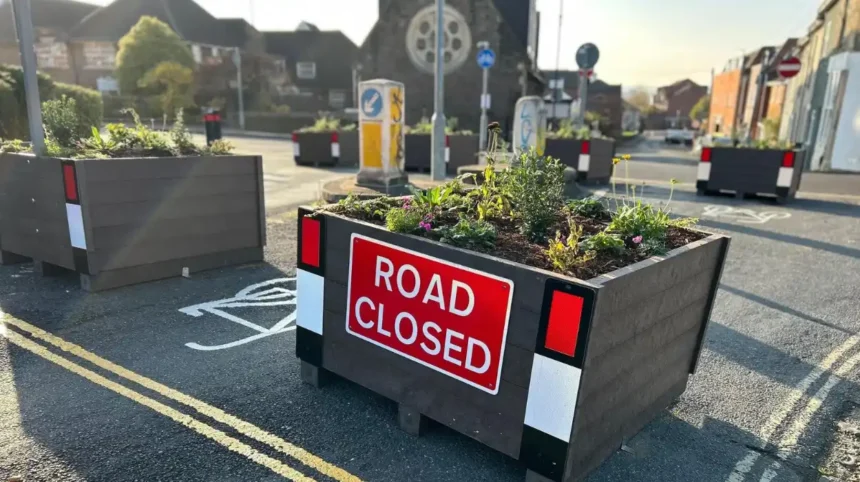
The independent study, undertaken jointly by transport consultants and academic researchers, examined the operational impact of the East Bristol Liveable Neighbourhood project. According to the research team, the scheme successfully met several key targets regarding traffic evaporation and active travel adoption among cyclists. Through modal filters, bollards, and restricted access points, motor vehicle movements inside the residential zone dropped significantly.
However, the findings highlight a structural imbalance in how active travel modes were prioritised. The review indicates that pedestrian activity remained largely unchanged, showing no significant statistical increase despite quieter residential streets. Researchers observed that physical footway conditions deteriorated in specific locations due to neglected pavement infrastructure, narrow walkways, and temporary street clutter. Consequently, pedestrians did not experience the full physical or safety benefits intended by the Low Traffic Neighbourhood design.
How did traffic and cycling levels respond to the scheme?
Data compiled within the evaluation report reveals a clear divergence between cycling metrics and walking engagement. Motorised traffic levels within the scheme’s internal boundary recorded a substantial reduction as through-traffic was redirected toward primary arterial routes.
This drop in traffic congestion directly fostered a safer environment for cyclists. The report confirms that cycling journeys within the neighborhood rose steadily post-implementation, supported by quieter roadways and improved junction navigation. Despite these gains, the lack of dedicated footway investment meant that the reduction in vehicular traffic alone was insufficient to encourage a higher volume of daily walking trips.
Why did pavement conditions worsen for local pedestrians?
The independent review noted that existing infrastructural deficiencies on footways were left unaddressed during the installation of traffic-calming measures. On several residential streets, footpaths suffered from cracked paving, poor drainage, and inadequate street lighting, which created trip hazards and reduced feelings of personal safety during evening hours.
In addition, the physical placement of certain traffic-filtering apparatus inadvertently restricted footway space. On narrower roads, street furniture and signage positioned to deter motor vehicles created spatial pinch-points for wheelbarrow users, mobility scooter drivers, and parents with pushchairs. The report emphasised that without targeted civil engineering works directed at footway restoration, reducing vehicle numbers does not automatically guarantee an improved walking environment.
Background of the particular development
Low Traffic Neighbourhoods (LTNs) have been widely deployed across British cities as part of broader national strategies to reduce carbon emissions, improve air quality, and encourage active travel. The East Bristol Liveable Neighbourhood was conceived by local authorities to mitigate commuter short-cutting through residential communities located between major transit corridors.
During the initial planning and public consultation phases, local councils pledged that the project would transform neighbourhood streets into safer spaces for all non-motorised road users. While cycle corridors and traffic filters received primary focus during the initial engineering roll-out, footway maintenance and pedestrian-specific infrastructure were largely deferred to subsequent funding cycles, leading to the current findings outlined by the academic review.
Explore More Local Bristol News
Bristol Temple Meads Unveils £23m Eastern Entrance in Bristol 2026
Bristol Care Home Closure Threatens Dementia Services as Union Warns 2026
Prediction: How will this development affect local residents and future urban planning?
This evaluation is likely to prompt a significant shift in how municipal highway teams and urban planners design future Liveable Neighbourhoods across the United Kingdom. For local residents in East Bristol, the findings will likely accelerate targeted council interventions aimed at repairing damaged pavements, clearing pedestrian obstructions, and installing upgraded street lighting and dropped kerbs.
For the broader public, particularly elderly residents and mobility-impaired individuals, the report reinforces the necessity of adopting a balanced approach to active travel scheme design. Transport authorities are expected to revise design frameworks to ensure that pedestrian infrastructure receives equal capital investment alongside cycle lanes and vehicular restrictions, preventing future traffic-calming schemes from inadvertently leaving pedestrians behind.