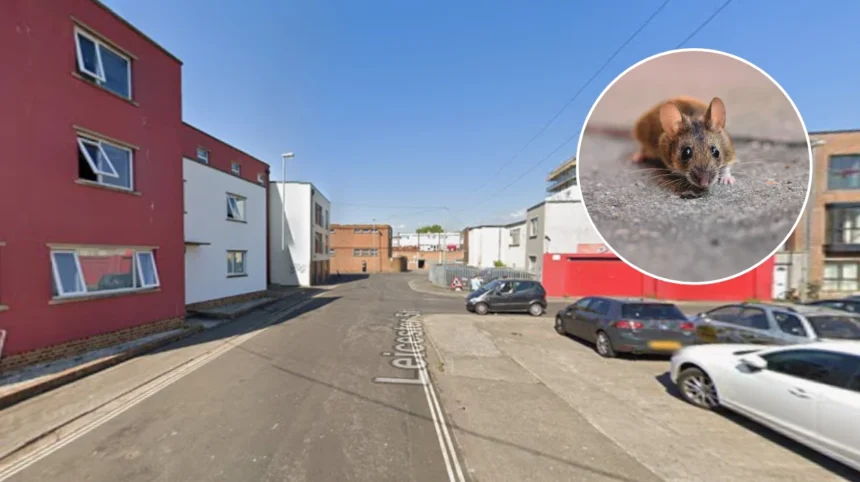
Key Points:
- The tenants in Crown Apartments, located in Leicester Street, Bedminster, have been suffering from a massive rat infestation in 2024, which only occurred a year since the social housing block was opened in 2023.
- Four tenants of different properties have accused their housing association, Bromford, of neglect and mismanagement.
- These allegations involve the strong smell of rat urine and faeces, rats scratching at the walls inside, power failures due to chewed wiring, and faeces dropping on a WiFi engineer’s head.
- Images and videos viewed by Bristol Live indicate rats scampering across kitchen appliances and getting stuck behind drying racks in flats that have children living in them.
- According to Bromford, it has spent about £12,000 on pest control measures and proofing in the last month, working in tandem with Rentokil and Bristol City Council’s Environmental Health department.
Bedminster (Bristol Express News) September 12, 2026 – Residents of a social housing block in Bedminster are enduring a severe rodent infestation, reporting that they have been left to live amidst a plague of rats while their housing association has allegedly neglected the issue for years.
How Did the Infestation at Crown Apartments Begin and Unfold?
People residing in Crown Apartments in Leicester Street state that their lives have become miserable since the apartment block became infested with rodents in 2024, merely a year after the building officially opened. Upon entering the building, visitors are immediately met with the overpowering stench of rat urine and faeces. As reported by Angus McIntyre, reporter for Bristol Live, local residents who requested anonymity expressed feelings of frustration, sadness, and anger over the escalating crisis.
Members hailing from four separate households reported identical accounts detailing alleged neglect and operational mismanagement by Bromford, the housing association responsible for the premises. One disabled resident living alone described being kept awake at night by the sound of rodents scratching aggressively at the inside of her bedroom walls.
As reported by Angus McIntyre of Bristol Live, the resident stated: “I’ve been in floods of tears. It’s just terrifying. I don’t want to live here any more.” She added: “I don’t trust Bromford to fix problems in a timely manner. They’re saying now that it’s under control; I don’t know what under control means because I think what they’ve done is seal up the bin room, but all the rats are now stuck in the walls of the building.”
The same resident noted that the door leading to the bin storage area remained broken for nearly a year prior to being repaired, creating an open pathway for rats to travel freely between the street and the building. Furthermore, occupants informed Bristol Live that the structure is riddled with holes, enabling the animals to migrate from the internal walls into shared communal areas. These infestations have resulted in power cuts triggered by rats chewing directly through electrical cables.
What Impact is the Infestation Having on Families and Young Children?
Another tenant residing in the building alongside her four-year-old daughter recounted stepping out onto her ground floor terrace to enjoy a morning coffee, only to discover rat droppings spread across her outdoor table. She noted the danger this posed, given how easily her young daughter could have accessed the area and ingested the droppings. Other occupants shared photographic evidence documenting rat faeces inside their private apartments.
As reported by Angus McIntyre of Bristol Live, the mother of the four-year-old explained:
“About three months ago, my WiFi cut out completely and my provider sent an engineer round. For some reason, the equipment they needed to access was in the bin store, and three separate engineers refused to go in because of health and safety concerns related to the rats.”
She continued, as reported by Bristol Live:
“One engineer actually came out and he tried to do some internal work in the building rather than in the bin store, and as he lifted up a ceiling tile rat faeces literally fell on his head. The stench as soon as he opened the ceiling was horrific, and he obviously left. One of the WiFi engineers found it so bad they actually emailed the landlords themselves.”
Disturbing visual media reviewed by Bristol Live reveals rodents climbing over a resident’s cooker and microwave, alongside footage of a large rat trapped behind a drying rack inside a flat shared by a father and two children under the age of four. While some occupants have been temporarily relocated to AirBnBs during remediation attempts, they report that the rats remain upon their return. The mother of the four-year-old remarked, as reported by Bristol Live: “I think the building’s going to end up condemned, to be honest. It’s that bad. They’ve had pest control out for months, surely they should be on top of it now not having rats literally inside people’s homes.”
Crown Apartments comprises 26 social housing units with a combined monthly rental value exceeding £30,000. Opened in 2023, the development is managed by Bromford Housing, an association responsible for over 47,000 properties across central and south-west England, which uses the corporate slogan “a home you can thrive in.”
How is Housing Association Bromford Responding to the Crisis?
In response to the mounting complaints, housing officials have detailed ongoing remediation efforts and investments aimed at resolving the structural vulnerabilities contributing to the infestation.
As reported by Angus McIntyre of Bristol Live, Natalie Colfer, head of neighbourhoods and communities at Bromford, stated:
“We understand the concerns our customers have raised regarding rat activity at Crown Apartments and recognise the distress this has caused.”
Colfer added, as reported by Bristol Live:
“In the past month we have invested around £12,000 in specialist pest control treatment and proofing works. This includes proofing the top and bottom floors of the building to restrict rodent movement between floors.”
Furthermore, Bromford indicated that pest control contractor Rentokil initiated external proofing works expected to last approximately a week. Additional scheduled measures involve communal area enhancements, replacement of shared carpets, and a deep clean of the bin store. Colfer noted that affected tenants with rats inside their living spaces have received alternative accommodation, and Bromford continues collaboration with Bristol City Council’s Environmental Health team through regular progress review meetings. Bristol City Council has also been approached separately for comment.
Explore more Bedminster News:
Former Wilko to Become Flats in Bedminster, Bristol 2026
Former NatWest Bank Chinese Restaurant Plans Submitted: Bedminster Parade 2026
Background of the Development
Crown Apartments on Leicester Street opened in 2023 as a social housing development comprising 26 units managed by Bromford Housing. Within a year of its opening, tenants reported structural vulnerabilities, including a broken bin store door and internal gaps within the building fabric, which allowed urban rodent populations to infiltrate wall cavities and communal areas.
Social housing regulations in the United Kingdom hold registered providers legally accountable under the Homes (Fitness for Human Habitation) Act 2018, requiring landlords to maintain properties free from hazards such as pest infestations that render homes unfit for human habitation. The ongoing situation at Crown Apartments highlights broader systemic challenges faced by social housing tenants regarding maintenance responsiveness, timely pest mitigation, and tenant communication standards across housing associations in England.
How This Development Can Affect Social Housing Tenants
This high-profile development is likely to intensify regulatory scrutiny on Bromford Housing and prompt local authorities across South West England to re-evaluate pest management protocols in newly constructed social housing blocks. For social housing tenants residing in similar multi-occupancy complexes, increased public awareness may empower them to demand faster maintenance turnarounds, transparent communication, and comprehensive proofing rather than piecemeal extermination efforts.
Consequently, housing associations face heightened pressure to audit their properties proactively, potentially leading to increased capital expenditure on structural rodent-proofing to mitigate legal liabilities, prevent regulatory fines, and protect tenant welfare.