Key Points
- Historic Conversion Proposed: Plans have been formally submitted to Bristol City Council to transform the former NatWest Bank building on Bedminster Parade into a high-end Chinese restaurant.
- Preserving Grade II-Listed Heritage: Architects intend to retain the principal banking hall, grand proportions, and architectural features as the core dining space while repurposing existing secure banking vaults into customer toilets and storage.
- Minimal Historic Impact: Key commercial kitchen infrastructure will be placed within existing back-of-house servicing zones to minimise alterations to the historic building fabric.
- Broader City Planning Activity: The weekly council planning validation list also highlights urgent remediation work for water ingress affecting flats above a Southville Tesco Express and the conversion of a St Philips repair yard into an indoor sports venue.
- Public Participation: All submitted proposals are available on the council’s planning portal for public review and formal commentary.
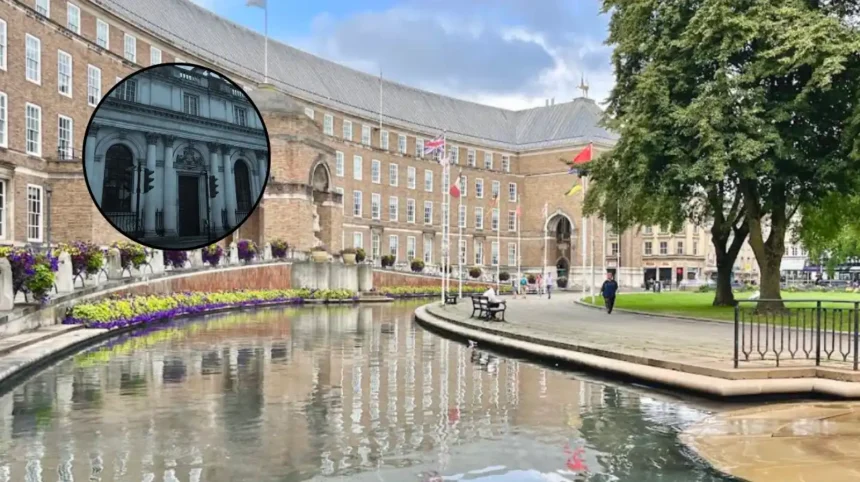
Bedminster (Bristol Express News) August 25, 2026 — As reported by Adam Postans of Bristol Live, new planning proposals recently submitted to Bristol City Council reveal that one of South Bristol’s most stunning architectural landmarks—the historic former NatWest Bank located on Bedminster Parade—is slated to be transformed into a top-end Chinese restaurant.
- Key Points
- What are the key details of the proposed Chinese restaurant conversion in Bedminster?
- What other key planning applications were submitted to Bristol City Council this week?
- How will urgent structural repairs address water leaks at the Tenon Building in Southville?
- What are the plans for converting the Gas Lane vehicle repair yard in St Philips?
- What happens next in the Bristol City Council planning process?
- Background of the particular development
- Prediction: How this development can affect South Bristol residents and local businesses
The site, a prominent Grade II-listed property, forms the centerpiece of a fresh batch of notable planning applications validated by local authority planning officers over the past seven days. The building’s owners have formally requested permission to carry out both internal and external modifications to repurpose the vacant commercial space into a vibrant hospitality venue.
What are the key details of the proposed Chinese restaurant conversion in Bedminster?
According to details outlined in the official submission documents cited by Adam Postans of Bristol Live, the design strategy prioritises the preservation of the structure’s original interior character. Architects working on behalf of the applicant stated in planning documents:
“The principal banking hall will be retained as the primary space, with its generous proportions and architectural features forming the focal point of the restaurant. A new feature bar is proposed within the location formerly occupied by the bank counters and teller area.”
The planning application specifies that the back-of-house operations will seamlessly integrate into the existing building infrastructure without damaging its heritage features. The existing service areas to the rear will continue to accommodate primary support functions, with new commercial kitchen facilities positioned inside existing kitchen space to utilise established servicing routes.
Furthermore, the historic strong rooms and former secure banking vaults will undergo conversion to provide modern customer toilet facilities and ancillary storage space. Summarising the concept, the applicant’s architecture team noted that “the scheme has been carefully developed to respect the building’s architectural and historic significance while introducing a high-quality Chinese restaurant that complements the character and vitality of Bedminster Parade”.
What other key planning applications were submitted to Bristol City Council this week?
As noted in the weekly local authority planning roundup by Adam Postans of Bristol Live, dozens of planning applications are validated by Bristol City Council every week for various developments across the city. Beyond the high-profile bank conversion, two other prominent applications were highlighted in this week’s submissions.
How will urgent structural repairs address water leaks at the Tenon Building in Southville?
An application has been filed requesting urgent remedial works at the Tenon Building, located in Upper Sydney Street, Southville. The four-storey property consists of 19 residential flats positioned directly above a ground-floor Tesco Express retail outlet.
Planning agents acting for the applicant stated in official documents that the works are vital to secure the structural integrity and long-term maintenance of the premises. The planning agents explained:
“There have been fundamental structural failures to the render and parts of the roof that are causing water ingress and worsening structural damage to the building. Consequently, there is an urgent need to resolve these issues.”
The submitted documents reveal that severe dampness and water ingress have rendered two of the 19 apartments uninhabitable, while window views for residents in many of the remaining flats are currently obscured by external safety scaffolding.
What are the plans for converting the Gas Lane vehicle repair yard in St Philips?
In a separate commercial filing for eastern Bristol, developers have requested a formal change of use for a property situated on Gas Lane in St Philips. The application seeks permission to alter the ground floor of the premises—currently functioning as a vehicle repair and storage business—into a brand-new restaurant and indoor sports center.
As part of the scheme, the venue would accommodate indoor table games, including snooker and pool, alongside a full takeaway and food delivery service operating from the site.
What happens next in the Bristol City Council planning process?
As reported by Adam Postans of Bristol Live, every application submitted to the council must undergo validation before being published for public inspection on the local authority’s planning portal. Members of the public, local business owners, and community stakeholders are legally permitted to view all associated building blueprints and submit formal comments either in support of or in objection to the plans.
At present, no firm target dates have been set by council coordinators for when decisions will be made regarding the Bedminster bank conversion, the Southville residential repairs, or the St Philips recreation venue. The vast majority of standard applications are ultimately determined directly by municipal planning officers under delegated authority, though contentious schemes or those affecting major listed heritage assets may be referred to elected local councillors serving on the council’s planning committees.
Background of the particular development
The conversion of former financial institutions into leisure and dining establishments reflects a broader economic shift across high streets in the United Kingdom over the past decade. Due to the rapid rise of digital banking, mobile payment applications, and centralized online services, major banking firms have drastically reduced their physical footprint. Hundreds of retail bank branches across urban and suburban districts have closed their doors permanently, leaving prominent, high-volume commercial buildings vacant.
In South Bristol, Bedminster Parade and the adjoining East Street corridor have historically served as primary commercial arteries. The former NatWest Bank building represents a prime example of late 19th and early 20th-century civic architecture, featuring high ceilings, stone facades, and reinforced interior layouts typical of traditional banking halls.
When listed buildings of this nature fall vacant, local planning authorities often encourage adaptive re-use proposals. Repurposing these spaces into hospitality venues preserves the exterior historic fabric while re-energising commercial footfall along the high street, preventing long-term urban decay in crucial town centers.
Prediction: How this development can affect South Bristol residents and local businesses
The successful transformation of the former NatWest Bank into a top-end Chinese restaurant is poised to have a noticeable ripple effect across the South Bristol community, particularly for local residents, neighboring independent traders, and the broader hospitality ecosystem along Bedminster Parade.
Impact on local residents
For residents living in Bedminster, Southville, and neighboring urban areas, the re-purposing of a high-profile Grade II-listed building resolves long-standing concerns regarding vacant high street property. Rather than seeing a prominent heritage asset fall into disrepair or become a target for vandalism, local homeowners and tenants gain access to a premium dining venue within walking distance. However, nearby occupants may monitor the decision closely regarding potential night-time noise, operational waste management, and parking demand during peak dining hours.
Impact on high street economy and local traders
For surrounding retail and food businesses along Bedminster Parade, the introduction of a high-end restaurant offers a major boost to evening footfall. High-quality anchor dining establishments tend to draw visitors from across the wider Bristol area, benefiting nearby pubs, bars, transport services, and adjacent independent traders. Furthermore, reusing existing architectural features—such as transforming bank counters into a central bar area and secure vaults into customer facilities—sets a positive design precedent for sustainable, heritage-led regeneration throughout South Bristol.