Bristol has a well-established specialty coffee culture built around independent coffee shops, local roasters, single-origin beans, barista training and changing seasonal menus. The city’s specialty scene includes established Bristol roasters such as Clifton Coffee Roasters, Extract Coffee Roasters and Full Court Press, alongside specialist cafés serving carefully prepared espresso and filter coffee. VisitBristol also identifies Dareshack, Spicer + Cole, Small St Espresso and Full Court Press among Bristol’s specialty coffee destinations.
- What is specialty coffee in Bristol?
- Which Bristol coffee roasters are important to the specialty coffee scene?
- Where can you find specialty coffee in central Bristol?
- Which Bristol areas are known for specialty coffee?
- How does coffee roasting affect specialty coffee flavour?
- How do single-origin coffees differ from coffee blends?
- What coffee brewing methods are available in Bristol specialty coffee shops?
- Which Bristol specialty coffees are notable examples?
- How does coffee origin affect flavour?
- How does direct trade influence specialty coffee in Bristol?
- Why are barista skills important for specialty coffee?
- How can visitors choose specialty coffee in Bristol?
- How is Bristol’s specialty coffee scene changing?
- What makes Bristol a significant destination for specialty coffee?
Specialty coffee differs from standard commercial coffee through greater attention to bean quality, traceability, processing, roasting, brewing and sensory evaluation. The result is a coffee experience where origin, variety, processing method and preparation have a visible role in the final cup.
Bristol is particularly significant because local roasters supply independent cafés, restaurants, hotels, workplaces and home consumers. Clifton Coffee began servicing independent Bristol businesses in 2001 and established its own production roastery in 2013. Extract Coffee Roasters began in 2007 and operates its roastery in Bristol. Full Court Press opened its specialty coffee shop in 2013 and now roasts coffee in Bristol.
What is specialty coffee in Bristol?
Specialty coffee in Bristol refers to high-quality coffee produced with close attention to origin, green-bean quality, processing, roasting, brewing and sensory characteristics. Bristol’s scene combines local roasters, independent cafés, single-origin coffees, trained baristas and specialist brewing methods.
The term specialty coffee describes a quality-focused approach rather than simply a particular drink. Specialty coffee businesses document where beans originate, who produces them, how they are processed and how roasting affects flavour.
The coffee industry uses several important variables when evaluating a specialty coffee. These include the producing country, growing region, farm or cooperative, coffee variety, altitude, processing method, roast profile and brewing method.
Bristol’s specialty scene reflects this detailed approach. Full Court Press describes its coffee programme around high-grade coffees, changing origins and different flavour profiles. Its current selection includes coffees from Ethiopia, Colombia, Mexico, Uganda, Kenya, Nicaragua and other producing countries.
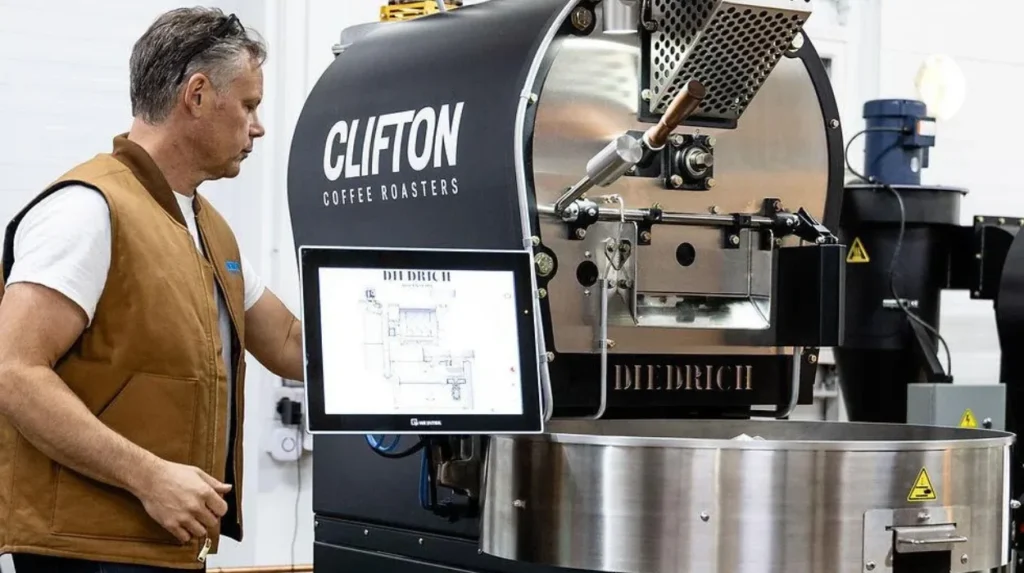
The city also has a strong local-roasting infrastructure. Clifton Coffee operates a Bristol roastery and supplies coffee to independent cafés and hospitality businesses. Extract Coffee Roasters operates from New Gatton Road in Bristol. Full Court Press operates a roastery coffee bar at Oxford Street.
This infrastructure makes Bristol more than a city where specialty coffee is consumed. It is also a city where coffee is sourced, roasted, trained, packaged and distributed.
Which Bristol coffee roasters are important to the specialty coffee scene?
Bristol’s specialty roasting landscape includes Clifton Coffee Roasters, Extract Coffee Roasters and Full Court Press, each with established roasting operations, specialty coffee programmes and relationships with cafés, hospitality businesses and consumers in Bristol and beyond.
Clifton Coffee Roasters
Clifton Coffee began in Bristol in 2001 when founder James Fisher started servicing espresso machines for independent businesses. The company expanded into wholesale coffee and barista training before establishing its own production roastery in 2013.
Its current coffee range includes house coffees, single-origin coffees and specialty releases. Clifton states that 90% of its coffee volume is bought directly from origin through its own relationships. Its sourcing programme includes relationships with producers, cooperatives, exporters and other organisations.
Clifton also became a certified B Corporation in 2023. B Corp certification evaluates a company’s social and environmental performance alongside governance and business practices.
Extract Coffee Roasters
Extract Coffee Roasters began in 2007 and operates a Bristol roastery at New Gatton Road. The company focuses on specialty coffee, roasting, sourcing, training and wholesale supply. B Lab records Extract Coffee Roasters as a certified B Corporation since July 2025.
Extract offers espresso coffees, filter coffees, single-origin coffees and Nespresso-compatible pods. Its sourcing and sustainability programme focuses on growers, communities, environmental impact and coffee drinkers.
Full Court Press
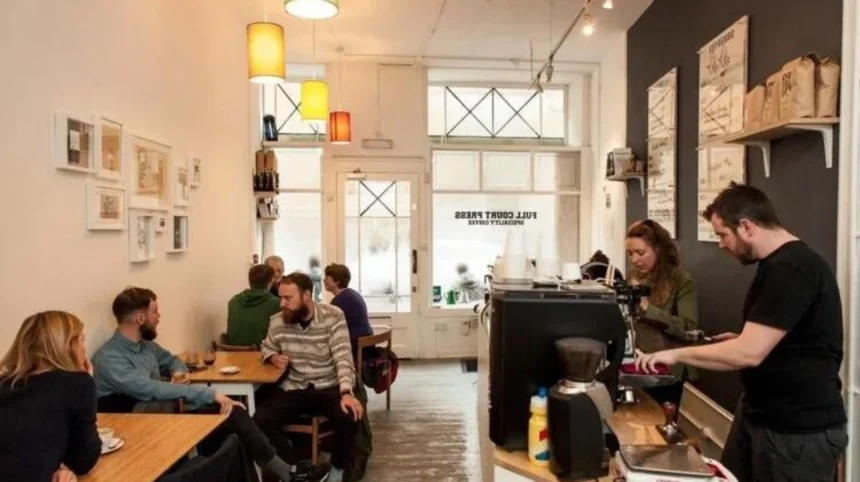
Full Court Press operates from Broad Street in Bristol’s Old City and has a roastery coffee bar at Oxford Street. Its coffee shop was established in 2013. The company describes its programme around specialty coffee, transparency, variety and changing coffees.
Its current range demonstrates the diversity available in Bristol. Coffees listed include washed Ethiopian, Colombian, Kenyan and Mexican coffees, alongside natural and honey-processed examples from countries including Uganda and Brazil.
Where can you find specialty coffee in central Bristol?
Central Bristol has several established specialty coffee destinations, including Full Court Press on Broad Street and Dareshack on Wine Street, while VisitBristol also identifies Small St Espresso, Spicer + Cole and other independent cafés as specialty coffee options.
Full Court Press occupies a central position in Bristol’s Old City at 59 Broad Street. Its menu changes regularly, with two espresso options and two filter options available as standard according to its current café information.
Dareshack is a specialty coffee bar in the Vintry Building on Wine Street. Its 4,000-square-foot concept space combines a coffee bar, studio and exhibition environment. The business describes itself as a central Bristol specialty coffee destination.
VisitBristol identifies Small St Espresso, Full Court Press, Dareshack and Spicer + Cole among places associated with specialty coffee in Bristol.
Central Bristol is therefore useful for visitors who want to explore specialty coffee without travelling far between different neighbourhoods.
The Old City is particularly practical because Full Court Press combines a coffee shop with access to its wider roasting programme. The area also connects easily with Bristol’s historic streets, shopping areas and cultural attractions.
Which Bristol areas are known for specialty coffee?
Specialty coffee is distributed across Bristol rather than concentrated in one district, with notable coffee destinations in the city centre, Clifton, Stokes Croft, Easton, Redcliffe, Wapping Wharf and other neighbourhoods served by independent cafés and local roasters.
Clifton is an important part of Bristol’s coffee identity. The neighbourhood gives its name to Clifton Coffee Roasters, one of the city’s longest-established specialty coffee businesses.
Stokes Croft also features prominently in Bristol’s independent food and drink landscape. VisitBristol lists Pinkmans locations across areas including Clifton, Stokes Croft, Bristol Cathedral and Wapping Wharf.
Wapping Wharf provides another useful coffee destination because of its concentration of independent food and drink businesses around Bristol’s Harbourside.
Easton and St Werburgh’s also connect with Bristol’s specialty coffee network. Extract Coffee Roasters identifies nearby stockists including East Bristol Bakery and Popti Bros.
The geographical spread matters because Bristol’s specialty coffee culture operates through a network rather than a single coffee quarter. Visitors can therefore combine coffee stops with neighbourhood exploration.
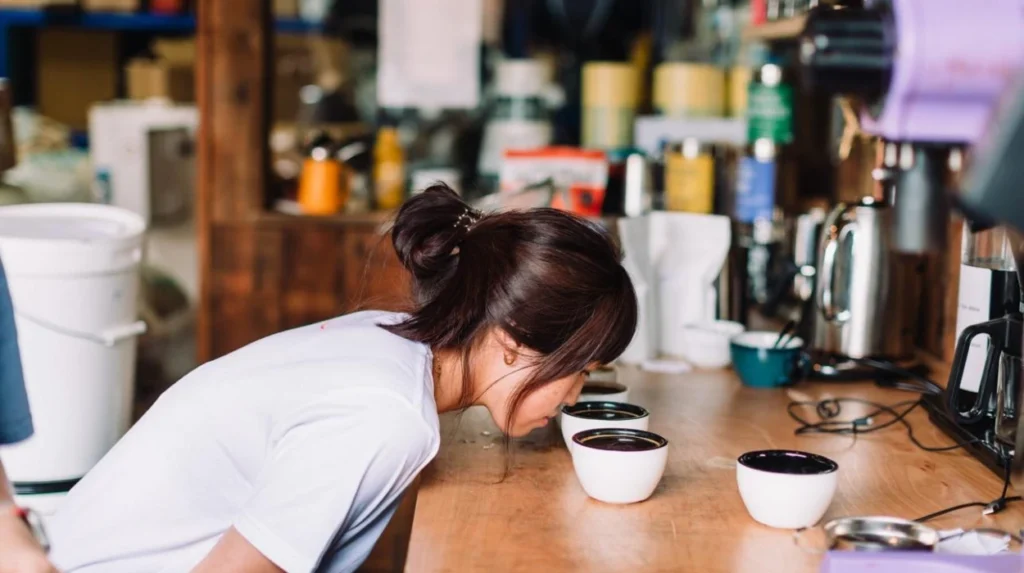
How does coffee roasting affect specialty coffee flavour?
Coffee roasting transforms green coffee through controlled heat, changing its aroma, flavour, acidity, sweetness and body. Specialty roasters develop specific roast profiles to preserve or emphasise characteristics associated with the coffee’s origin, variety and processing method.
Green coffee contains chemical compounds that change during roasting. Heat causes a sequence of reactions that develop the aromas and flavours associated with roasted coffee.
Roasters control variables including temperature, time and development. A roast profile determines how quickly the coffee moves through different stages of roasting.
The desired profile depends on the coffee and intended brewing method. Espresso and filter coffee often require different approaches because extraction conditions differ.
Clifton Coffee offers coffees designed for different applications, including espresso and filter. Its current range includes house coffees, single-origin coffees and more experimental releases.
Full Court Press similarly separates coffees into filter roasts and other roast formats. Its current selection includes filter coffees from Ethiopia, Colombia, Kenya, Mexico and other origins.
Roasting therefore provides the connection between the characteristics of green coffee and the flavour experienced in the cup.
How do single-origin coffees differ from coffee blends?
Single-origin coffee comes from a defined producing origin, while a blend combines coffees from different origins or lots. Single-origin coffees highlight distinctive regional characteristics, whereas blends are commonly developed to provide consistency, balance and a specific flavour profile.
A single-origin coffee can identify a country, region, estate, farm, cooperative or producer depending on the sourcing structure.
For example, Clifton Coffee currently lists Suspension Espresso as a coffee from Sul de Minas in Brazil. Its E1 Project Espresso comes from Ahuachapán in El Salvador, while Cadence Espresso comes from Guji in Ethiopia.
Full Court Press provides an even wider illustration. Its current coffee catalogue includes origins such as Peru, Burundi, Colombia, Ethiopia, Mexico, Uganda, Kenya and Nicaragua.
Blends have a different function. Roasters combine coffees to create a repeatable sensory profile. House coffees often provide a dependable option for espresso-based drinks such as flat whites, cappuccinos and lattes.
Single-origin coffees are particularly useful for tasting differences between producing regions. Blends are useful when consistency across multiple cups and brewing conditions is the primary objective.
What coffee brewing methods are available in Bristol specialty coffee shops?
Bristol specialty coffee shops commonly prepare espresso and filter coffee, with brewing choices determined by the coffee, grind size, water, temperature, dose, extraction time and equipment. Cafés also use milk-based espresso drinks and alternative brewing formats for different preferences.
Espresso is produced by forcing hot water through finely ground coffee under pressure. The result is a concentrated drink used as the base for flat whites, cappuccinos, Americanos and other drinks.
Filter coffee uses a different extraction process. Water passes through ground coffee and a filter, producing a cleaner cup with different extraction characteristics.
Clifton Coffee provides specific grind formats for different home brewing systems. Its guidance identifies filter grind for V60, Chemex and AeroPress, cafetière grind for immersion brewing, and espresso grind for espresso machines.
V60 is a cone-shaped pour-over brewer. Chemex is a glass filter brewer. AeroPress is a compact immersion and pressure-based brewing device. Cafetière, also known as French press, uses immersion extraction.
Specialty cafés also adjust recipes according to the coffee. Full Court Press states that its brews, methods and recipes are tailored to individual coffees.
This approach recognises that one brewing recipe does not produce identical results across different coffees.
Which Bristol specialty coffees are notable examples?
Current Bristol roaster selections demonstrate specialty coffee diversity through Brazilian espresso, Ethiopian high-altitude coffee, Colombian varieties, Salvadoran direct-trade projects and coffees from Africa, Latin America and Asia, with flavour descriptions changing according to origin and processing.
Clifton Coffee’s Suspension Espresso provides a Brazilian example. The coffee comes from Sul de Minas and is associated with tasting notes of malted milk biscuits, peanut butter and dark chocolate.
The E1 Project Espresso demonstrates a long-term sourcing model. Clifton launched the project in 2015 with producer Ricardo Lima and his family in El Salvador. The current coffee comes from Finca Buena Vista in Ahuachapán, uses Bourbon variety coffee and has a washed process.
Cadence Espresso demonstrates the characteristics of Ethiopian specialty coffee. Its current lot comes from Dogo Sodu in Ethiopia’s Guji Zone, with coffee cherries sourced from smallholders in Gerba Layo at elevations between 2,250 and 2,350 metres above sea level.
Full Court Press offers another broad selection. Current examples include Beshasha from Ethiopia, Arcesio Pancho from Colombia, Union San Pedro from Mexico, Kii AA from Kenya and Bukonzo Dream from Uganda.
These coffees demonstrate why specialty coffee is closely connected to geography, farming, processing and roasting.
How does coffee origin affect flavour?
Coffee origin influences flavour through climate, altitude, soil, coffee variety, farming practices and processing conditions. Specialty coffee menus identify these factors to help drinkers understand why Ethiopian, Brazilian, Colombian, Kenyan and other coffees produce different sensory characteristics.
Coffee grows within the tropical coffee belt surrounding the equatorial regions. Arabica coffee, widely used in specialty coffee, is cultivated across countries in Africa, Latin America and Asia.
Altitude affects growing conditions and coffee development. Processing also has a major role.
Washed coffee uses water during processing to remove fruit material before drying. Natural coffee dries with the fruit surrounding the seed. Honey processing leaves some mucilage on the coffee during drying.
Full Court Press currently lists washed, natural and honey-processed coffees. Its catalogue includes a natural Uganda coffee, a honey-processed Brazilian coffee and washed coffees from countries including Ethiopia, Colombia, Kenya and Mexico.
This information gives drinkers a practical method for comparing coffees. Origin identifies where the coffee comes from, while processing describes an important stage between harvesting and roasting.
How does direct trade influence specialty coffee in Bristol?
Direct sourcing connects Bristol roasters more closely with coffee producers through long-term purchasing relationships, origin visits and traceability. Clifton Coffee states that 90% of its coffee volume is bought directly from origin, while Extract uses long-term producer relationships in its sourcing model.
Direct trade is not a single legally defined global purchasing system. Coffee companies use the term to describe sourcing relationships with producers that involve direct communication, repeat purchasing, origin visits or greater supply-chain visibility.
Clifton Coffee states that 90% of its coffee volume is bought directly from origin through its own relationships. The company describes relationships involving producers, cooperatives, private exporters, NGOs and Indigenous Rights Groups.
Its E1 Project demonstrates the long-term approach. The project began in 2015 and continues to form part of the company’s sourcing programme.
Extract Coffee Roasters also describes long-term partnerships with producers as part of its Direct Impact model. Its approach connects sourcing with environmental, social and economic considerations.
For consumers, origin information provides greater visibility into the journey from producer to roaster and ultimately to the café.
Why are barista skills important for specialty coffee?
Barista skills determine how effectively specialty coffee is extracted and presented. Dose, grind size, water quantity, extraction time, temperature and milk preparation all influence the final drink, making training an important part of Bristol’s specialty coffee infrastructure.
Specialty coffee quality does not end with roasting. Brewing controls determine how much of the roasted coffee becomes soluble in water.
A barista adjusts the grind according to extraction conditions. A finer grind generally slows water movement through coffee, while a coarser grind generally increases water flow.
Dose refers to the amount of ground coffee used. Yield refers to the amount of brewed beverage produced. Extraction time measures the period during which water interacts with the coffee.
Clifton Coffee has operated barista training alongside its wholesale operation and maintains a training facility in Bristol. The company also identifies its Bristol site as an SCA training location.
SCA means the Specialty Coffee Association, a global organisation focused on coffee education, standards, research and professional development.
Training supports consistency across cafés because staff learn how to control brewing variables rather than simply following a fixed recipe.
How can visitors choose specialty coffee in Bristol?
Visitors can choose specialty coffee by identifying the café’s current roaster, asking about espresso and filter options, checking the coffee origin and processing method, and selecting a brewing style that matches their preferred flavour profile and drinking format.
The simplest starting point is the café menu. Specialty cafés commonly identify the roaster or coffee origin.
Ask whether the café currently serves a house espresso, single-origin espresso or filter coffee. Menu availability changes because specialty coffee programmes rotate seasonal lots.
For a more detailed tasting experience, choose a filter coffee and ask about its origin, processing method and flavour notes. Filter preparation generally exposes more of the coffee’s individual sensory characteristics.
For milk drinks, espresso blends and balanced single-origin coffees provide different options. A flat white contains espresso and steamed milk, while an Americano combines espresso with hot water.
Visitors should also consider location. Full Court Press provides a central Old City option, Dareshack operates on Wine Street, and VisitBristol identifies specialty coffee options across the wider city.
Explore More Area Guide
Best Coffee Roasters in Bristol: Wogan, Clifton & Extract
Best Independent Cafés in Bristol: Local Coffee Guide
How is Bristol’s specialty coffee scene changing?
Bristol’s specialty coffee sector continues to develop through local roasting, direct sourcing, professional training, changing single-origin menus, sustainability programmes and independent cafés. The city’s established roasters provide infrastructure for continued growth in specialty coffee consumption and education.
The local market already extends beyond cafés. Bristol-based roasters supply homes, offices, restaurants, hotels and independent coffee shops.
Clifton Coffee has expanded from espresso-machine servicing into roasting, wholesale, education and specialty coffee sourcing. Extract combines roasting with wholesale, training and sustainability programmes. Full Court Press operates both a city-centre café and a roastery coffee bar.
Sustainability is increasingly integrated into this structure. Clifton became a B Corporation in 2023, while Extract achieved B Corp certification in July 2025.
The continued emphasis on traceability also changes how coffee is presented to consumers. Current Bristol coffee menus provide information about countries, regions, producers, varieties, processing methods and tasting characteristics.
This creates a more detailed coffee culture where the drink is connected to its production chain rather than treated solely as a finished beverage.
What makes Bristol a significant destination for specialty coffee?
Bristol’s specialty coffee significance comes from its combination of established roasters, independent cafés, professional training, direct sourcing, changing single-origin selections and a city-wide network of coffee businesses serving residents, workers and visitors.
The city has developed a complete specialty coffee ecosystem.
Clifton Coffee provides long-established roasting, wholesale and training infrastructure. Extract provides another major Bristol roasting operation with a sourcing and sustainability programme. Full Court Press combines roasting with a specialist coffee shop and changing multi-origin selection.
Independent cafés extend this ecosystem into neighbourhoods across Bristol. VisitBristol specifically highlights the breadth of coffee shops, local roasters and specialty destinations available across the city.
For visitors, this means specialty coffee can form part of a wider Bristol itinerary. Central coffee shops connect with the Old City and Harbourside, while Clifton, Stokes Croft, Easton and other neighbourhoods provide additional options.
For residents, the local roasting industry provides access to fresh beans, subscriptions, brewing equipment, training and rotating coffees.
Bristol’s specialty coffee scene is therefore defined by the full chain from producer relationships and green coffee sourcing through roasting, brewing, hospitality and consumer education. That structure gives the city a strong and identifiable specialty coffee culture that continues to evolve with new coffees, techniques and sourcing relationships.
What is specialty coffee in Bristol?
Specialty coffee in Bristol is high-quality coffee produced with careful attention to bean origin, farming, processing, roasting and brewing. Bristol has an established specialty scene supported by local roasters and independent cafés.