Bristol has one of the most established independent coffee-roasting scenes in the South West of England. The city is home to long-running names such as Wogan Coffee, Clifton Coffee Roasters and Extract Coffee Roasters, alongside newer specialist businesses including Blind Owl Coffee, Boona Boona Coffee Roasters, TwoDay Coffee Roasters and Lost Horizon Coffee.
- Why does Bristol have such a strong coffee-roasting culture?
- Which are the established coffee roasters in Bristol?
- What is Wogan Coffee known for in Bristol?
- What makes Clifton Coffee Roasters important to Bristol’s coffee scene?
- What is distinctive about Extract Coffee Roasters?
- Which newer Bristol coffee roasters are worth knowing?
- Which Bristol coffee roasters offer cafés or places to buy coffee directly?
- How should coffee drinkers choose between Bristol roasters?
- How does coffee roasting affect the final cup?
- How important are sustainability and ethical sourcing among Bristol roasters?
- Where are Bristol’s coffee-roasting businesses located?
- How can visitors experience Bristol’s coffee-roasting culture?
- How is Bristol’s coffee-roasting industry likely to remain relevant?
The city’s roasting culture combines traditional family businesses, specialty coffee companies, direct sourcing, wholesale supply, barista education, sustainability programmes and small-batch production. Bristol’s coffee identity therefore extends beyond cafés. It includes the businesses that source green coffee, roast beans, develop blends, train baristas and supply independent restaurants and coffee shops.
Current specialist coffee directories identify a substantial group of independent Bristol roasters. One September 2026 directory lists 10 active roasters, while another specialist directory focuses on eight established independent names. The exact number changes as small roasting businesses launch, relocate or change their operating model.
For visitors, residents and home brewers, the city provides several ways to experience this industry. Some roasters operate shops or cafés. Others concentrate on online sales and wholesale distribution. Some offer subscriptions. Others emphasise single-origin coffee, organic certification, Fairtrade certification, fresh roasting or direct relationships with producers.
Why does Bristol have such a strong coffee-roasting culture?
Bristol has a strong coffee-roasting culture because independent food businesses, specialty cafés, wholesale suppliers and established roasters have developed together. Wogan began roasting in Bristol in 1970, while Clifton and Extract expanded the city’s specialty sector from the 2000s.
Bristol’s coffee history predates the current specialty-coffee movement. Wogan Coffee states that its Bristol operation began in 1970 and remains a third-generation family company. The business continues to hand-roast coffee and operates from premises close to the city centre.
The next major stage involved specialty coffee businesses that focused more strongly on sourcing, roasting precision, brewing education and wholesale relationships. Clifton Coffee Roasters was founded by James Fisher in 2001. Its early business serviced espresso machines for independent Bristol businesses before expanding into wholesale coffee and barista training.
Clifton began its own in-house roasting operation in 2013. This development shifted the company from equipment and coffee supply towards an integrated model covering sourcing, roasting, education and distribution. The company now supplies independent cafés, restaurants, hotels and other hospitality businesses across the UK.
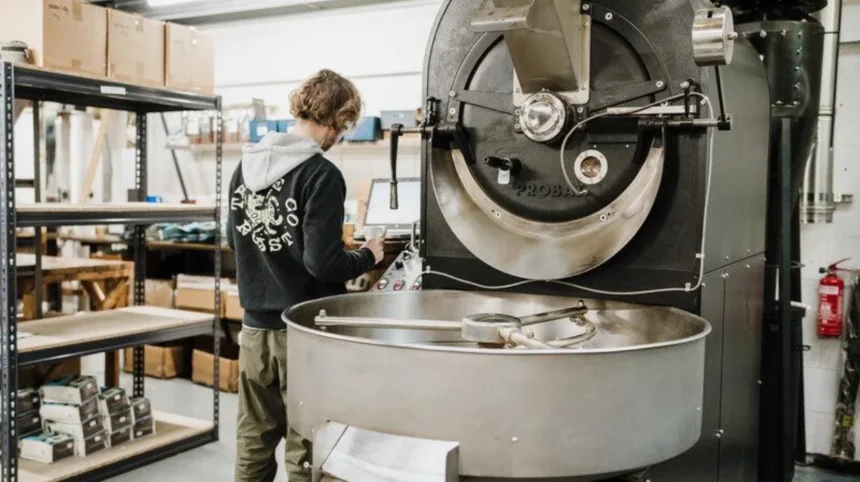
Extract Coffee Roasters represents another important part of Bristol’s specialty-coffee development. The company traces its origins to a chicken shed in Bristol and has built its operation around hand-restored vintage Probat roasting equipment.
The result is a city where coffee roasting operates at several scales. Wogan represents long-term family roasting. Clifton represents specialty coffee combined with wholesale and education. Extract represents vintage equipment, specialty sourcing and environmental initiatives. Smaller businesses add micro-roasting, open-access roasting and café-based production.
Which are the established coffee roasters in Bristol?
The established Bristol roasters include Wogan Coffee, Clifton Coffee Roasters and Extract Coffee Roasters. Wogan dates to 1970, Clifton began in 2001 and Extract was founded in 2007, giving the city a roasting history spanning several generations.
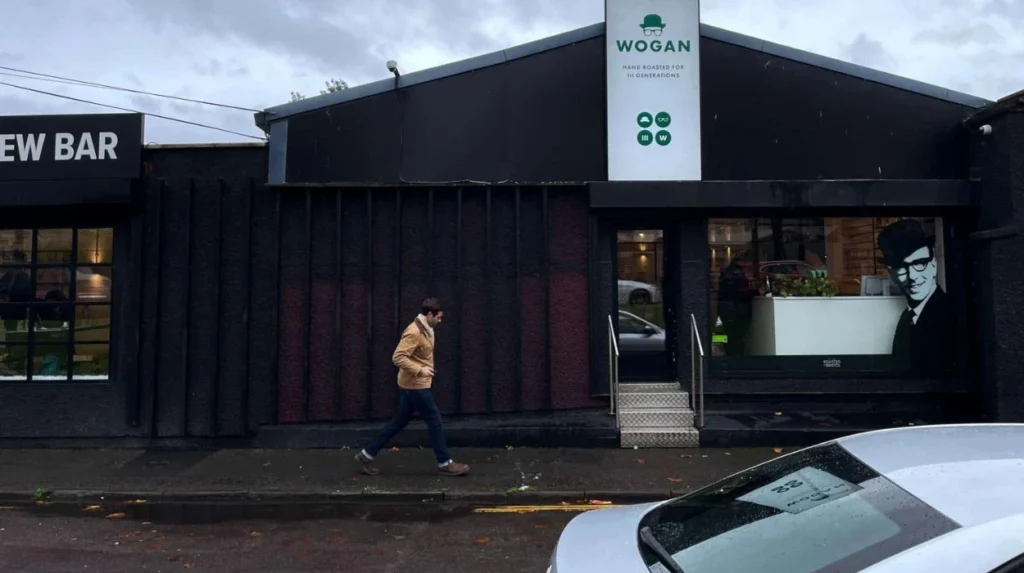
Wogan Coffee is one of Bristol’s longest-running coffee companies. Its official history records its establishment in 1970 and describes the company as a third-generation family business. The company continues to operate a roastery, bean shop and brew bar in Bristol.
Clifton Coffee Roasters began in Bristol in 2001. The company initially focused on espresso-machine servicing before moving into wholesale coffee and barista education. Its in-house roasting programme began in 2013. Clifton became a certified B Corporation in 2023.
Extract Coffee Roasters was founded in 2007. Its history is associated with hand-restored Probat roasters and a specialty-coffee approach. Extract states that it continues to roast on restored machines known as Betty and Bertha.
These three businesses illustrate different stages of Bristol’s coffee industry. Wogan demonstrates the longevity of independent family roasting. Clifton demonstrates the development of specialty coffee as a professional wholesale and education sector. Extract demonstrates the growth of modern specialty roasting alongside an emphasis on restored equipment and environmental performance.
Their longevity also provides important context for Bristol’s current coffee scene. The city’s specialty sector did not appear suddenly through recent café trends. It developed over decades through roasting, equipment servicing, hospitality supply and consumer interest in better-quality coffee.
What is Wogan Coffee known for in Bristol?
Wogan Coffee is known for family-owned roasting, hand-roasted specialty coffee and more than five decades of Bristol history. Established in 1970, the company operates a roastery, bean shop and brew bar and offers coffees from multiple producing countries.
Wogan Coffee is based in Bristol and remains independently owned. Its official history describes the business as being in its third generation, with roasting continuing in the city where the company was established.
The company’s current range includes coffees from producing countries such as Nicaragua, Colombia and Honduras. Its catalogue includes conventional specialty coffees as well as organic and Fairtrade options. Wogan also sells a Swiss Water decaffeinated coffee made from Honduras beans.
Wogan’s Bristol facilities provide a direct connection between roasting and retail. The company operates a Bean Shop where customers can purchase coffee in 250g, 500g and 1kg quantities. Customers can choose whole beans or ground coffee.
The Brew Bar provides another way to experience the company’s coffee. Wogan states that its Bristol site also provides information about processing methods and flavour notes.
Sustainability forms part of the company’s current business strategy. Wogan states that it has a target of becoming carbon neutral by 2030. This target connects its Bristol roasting operation with wider concerns about the environmental effects of coffee production and distribution.
For visitors, Wogan is particularly relevant because it provides a physical roasting environment rather than operating only as an online coffee supplier.
What makes Clifton Coffee Roasters important to Bristol’s coffee scene?
Clifton Coffee Roasters is important to Bristol’s coffee scene because it combines coffee sourcing, roasting, wholesale distribution, equipment support and professional education. Founded in 2001, it added in-house roasting in 2013 and became B Corp certified in 2023.
Clifton Coffee Roasters has developed a broad coffee-industry model. Its original business serviced espresso machines for independent Bristol businesses. It later expanded into wholesale supply and barista training before establishing its own production roastery.
The company’s current operation includes coffee sourcing, roasting and education. Clifton states that 90% of its coffee is purchased directly from origin through relationships developed by its sourcing team. Direct purchasing refers to buying relationships established between coffee companies and producers or producer organisations rather than relying exclusively on conventional commodity supply chains.
Clifton also operates professional training facilities. Its website identifies its Bristol facility as an SCA training campus. SCA refers to the Specialty Coffee Association, an international industry organisation involved in coffee education, standards and professional development.
The company became a certified B Corporation in 2023. B Corp certification assesses a company’s social and environmental performance across defined areas rather than evaluating coffee flavour alone.
Clifton’s influence therefore extends beyond its own bags of coffee. Its wholesale operation connects the Bristol roasting industry with cafés, restaurants and hospitality businesses across the UK.
For home brewers, Clifton also sells single-origin coffees, house coffees and brewing equipment. Its product range supports different preparation methods, including espresso and filter brewing.
What is distinctive about Extract Coffee Roasters?
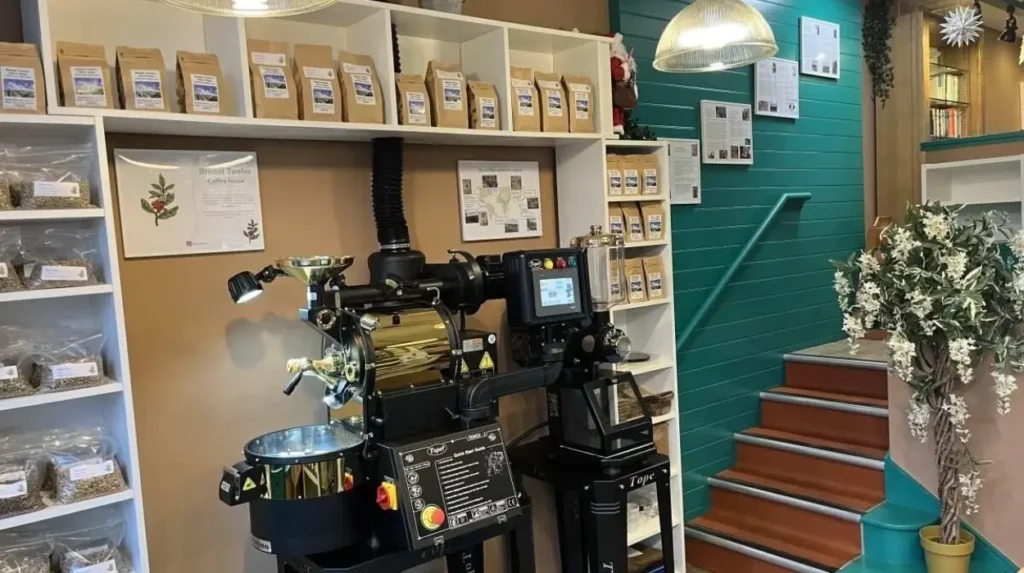
Extract Coffee Roasters is distinctive for its specialty-coffee focus, hand-restored vintage Probat roasters and environmental initiatives. Founded in Bristol in 2007, Extract developed from a small operation into an established roastery supplying coffee while maintaining its restoration-led roasting identity.
Extract’s history is closely linked to vintage roasting equipment. The company states that its roasters were rescued from scrap and restored by its team. Its largest named machine, Bertha, has a 120kg capacity and dates from the 1990s.
The restoration process forms part of Extract’s environmental approach. The company states that Bertha was rebuilt over four years and now operates 60% more efficiently than when the machine was originally built. An afterburner is used to reduce volatile organic compound emissions from the roasting process.
Extract also presents coffee production as a relationship between producers, communities, consumers and the environment. Its published mission uses the phrase “Make Coffee Better” and identifies growers, communities and the planet as important parts of its business purpose.
The company’s Bristol origins are also significant. Extract states that it began in a chicken shed before developing into a larger specialty roastery. This history reflects the growth of small independent coffee roasting businesses during the expansion of specialty coffee in the United Kingdom.
Extract therefore represents an important connection between Bristol’s independent coffee culture and modern specialty-roasting practices.
Which newer Bristol coffee roasters are worth knowing?
Bristol’s newer and smaller roasting businesses include Blind Owl Coffee, Boona Boona Coffee Roasters, TwoDay Coffee Roasters, Triple Co Roast, Lost Horizon Coffee and Radical Roasters. They add micro-batch production, cafés, subscriptions, direct retail and specialist sourcing.
Blind Owl Coffee began roasting in Bristol in 2018. The company started with a 5kg roaster and developed into a local roasting operation with direct-to-consumer coffee and subscription options.
Boona Boona Coffee Roasters began in a garden shed in Totterdown before expanding its roasting operation. Its current model focuses on organic and Fairtrade-certified coffee, including single-origin coffees.
TwoDay Coffee Roasters operates from St Michael’s Hill. Its defining approach is freshness. Its stated retail model limits the age of coffee sold through the shop to two days from roasting. The business also operates a shop and café-style customer experience.
Triple Co Roast operates an open-access roasting model. Customers and interested visitors can visit the roastery and observe the roasting process. This approach provides direct exposure to coffee production rather than separating roasting from the consumer experience.
Lost Horizon Coffee is another Bristol independent roaster. The company operates within the city’s small-scale specialty sector and offers direct coffee sales.
Radical Roasters also contributes to Bristol’s independent roasting network. Specialist Bristol coffee directories identify its roasting operation alongside other local businesses in the city.
These businesses demonstrate how Bristol’s coffee sector has expanded beyond a small number of established roasters.
Which Bristol coffee roasters offer cafés or places to buy coffee directly?
Several Bristol roasters provide direct customer experiences through cafés, shops or brew bars. Wogan has a Brew Bar and Bean Shop, TwoDay has a St Michael’s Hill shop, while other roasters combine roasting with café operations or public-facing spaces.
A roastery and a coffee shop serve different functions. A roastery focuses on transforming green coffee beans through controlled heat. A café focuses on brewing roasted coffee for immediate consumption. Some Bristol businesses combine both activities.
Wogan provides one of the clearest examples. Its Bristol premises include a Bean Shop and Brew Bar, allowing customers to buy roasted coffee and drink coffee at the same operation.
TwoDay Coffee Roasters also operates a customer-facing shop at St Michael’s Hill. Its model connects retail with its emphasis on freshly roasted coffee.
Specialist directories also identify Odd Kin Coffee as a Bristol roaster with a café. TwoDay is likewise identified as combining a roastery with a customer-facing site.
This distinction matters for visitors. A company that sells coffee online provides access to Bristol-roasted beans, while a public-facing roastery or café allows visitors to experience the coffee within the city.
Visitors should check opening hours before travelling because roasting facilities and retail counters operate different schedules from conventional cafés.
How should coffee drinkers choose between Bristol roasters?
Coffee drinkers can compare Bristol roasters through roast style, origin, processing, freshness, decaffeination, certification, brewing method and buying format. Examples include single-origin coffee, blends, organic Fairtrade coffee, decaffeinated coffee, subscriptions and freshly roasted retail bags.
Roast style is one of the most important factors. Light roasting generally preserves more of the sensory characteristics associated with the coffee’s origin. Medium roasting balances origin characteristics with roast development. Darker roasting produces stronger roast flavours and greater bitterness.
Origin also affects coffee selection. Single-origin coffee comes from a defined producing origin rather than combining beans from multiple origins. Bristol roasters offer coffees from countries including Colombia, Nicaragua and Honduras. Wogan’s current catalogue provides examples from all three.
Processing method is another relevant factor. Coffee producers commonly use washed, natural and honey processing methods. These processes influence how coffee cherries are transformed before the green beans reach a roaster.
Freshness is particularly important after roasting. Coffee releases carbon dioxide following roasting, and brewing performance changes as the coffee ages. TwoDay’s business model makes freshness central by restricting retail coffee to a maximum of two days after roasting.
Decaffeination provides another comparison point. Decaffeinated coffee removes most caffeine while retaining the coffee’s core flavour compounds. Bristol roasters including Wogan and Clifton offer decaffeinated products.
Buying format also matters. Customers can purchase whole beans, ground coffee, subscriptions or coffee prepared in a café. Home espresso users require a grind suitable for espresso machines. Filter users generally need a coarser grind.
How does coffee roasting affect the final cup?
Coffee roasting transforms green coffee through controlled heat, creating the aroma, colour, flavour and solubility required for brewing. Roast temperature, time, development and bean characteristics influence the final coffee, while brewing method determines how those roasted compounds enter the cup.
Green coffee beans contain carbohydrates, acids, proteins, oils and other compounds. Roasting causes chemical reactions that alter these components and create the familiar colour, aroma and flavour associated with roasted coffee.
The Maillard reaction is one important process. It occurs between reducing sugars and amino acids during heating and contributes to aroma and flavour compounds associated with roasted foods.
Caramelisation also contributes to flavour development as sugars respond to heat. The balance between roast development and the characteristics of the original green coffee influences the final sensory profile.
Specialty roasters control variables such as temperature, airflow and roasting time. Different machines produce different heat-transfer characteristics. Clifton focuses on dedicated specialty roasting, while Extract uses restored vintage Probat machines.
Brewing then determines extraction. Extraction is the process through which soluble compounds move from ground coffee into water. Espresso uses pressure and a short brewing time. Filter coffee uses gravity and a longer contact period.
Grind size, water temperature, brewing time, water quality and coffee-to-water ratio all affect extraction.
This explains why the same Bristol-roasted coffee can taste different when prepared through an espresso machine, cafetière, AeroPress or pour-over brewer.
How important are sustainability and ethical sourcing among Bristol roasters?
Sustainability is an important part of Bristol’s modern roasting sector, with examples including direct sourcing, B Corp certification, carbon-reduction targets, organic and Fairtrade products, restored roasting equipment and efforts to reduce environmental impacts from production.
Coffee production connects Bristol consumers with agricultural regions across Africa, Central America, South America and other producing areas. Sustainability therefore involves both local roasting practices and conditions in coffee-growing regions.
Clifton Coffee Roasters states that 90% of its coffee is bought directly from origin through its own sourcing relationships. The company also became B Corp certified in 2023.
Wogan has established a carbon-neutral target for 2030. The company links this target to the environmental pressures affecting coffee-growing regions and its own operations.
Boona Boona provides another example through organic and Fairtrade-certified coffee. Organic certification relates to defined agricultural production standards, while Fairtrade certification involves standards governing producer and trading relationships.
Extract’s restoration of vintage Probat machines provides an example of equipment reuse. Its Bertha roaster has been restored and upgraded with an afterburner to reduce emissions.
Sustainability therefore has several components. It includes agricultural standards, producer relationships, energy consumption, equipment efficiency, packaging, transport and waste.
For consumers, checking the specific sourcing and certification information published by each roaster provides more useful information than relying on general environmental claims.
Where are Bristol’s coffee-roasting businesses located?
Bristol’s coffee roasters operate across several parts of the city, including Avonmouth, St Philips, St Michael’s Hill, Stokes Croft, Easton and areas near the central neighbourhoods. Their locations reflect both industrial roasting requirements and customer-facing retail demand.
Roasting requires suitable commercial premises because coffee roasting produces heat, smoke and odours and requires equipment capable of processing green coffee at controlled temperatures. Larger roasting operations therefore often use industrial or commercial units.
Clifton Coffee Roasters operates from Avonmouth at its Bristol headquarters. The company’s listed address is Island Trade Park on Bristow Broadway.
Wogan operates its roasting and production headquarters on Elton Street, while its Brew Bar and Bean Shop are located at Bourbon House on Clement Street.
TwoDay Coffee Roasters has a customer-facing location on St Michael’s Hill. Other Bristol roasting businesses operate from areas including St Philips Marsh, Stokes Croft and industrial parts of the city.
This geographical pattern creates two different visitor experiences. Industrial roasteries focus primarily on production and wholesale distribution. City-centre or neighbourhood sites provide direct retail access and opportunities to drink the coffee.
Visitors should therefore distinguish between a roastery address and a public café address. Some businesses have separate production and customer-facing premises.
Explore More Area Guide
Best Independent Cafés in Bristol: Local Coffee Guide
Best Coffee Shops in Bristol: Top Cafés & Roasters
How can visitors experience Bristol’s coffee-roasting culture?
Visitors can experience Bristol’s coffee-roasting culture through roastery shops, brew bars, specialist cafés, freshly roasted bean purchases and public-facing roasting businesses. Wogan, TwoDay and other independent operators provide direct opportunities to connect Bristol roasting with coffee consumption.
A coffee-focused visit can begin with a roastery or bean shop. Wogan’s Bristol facility combines coffee retail with a Brew Bar and provides information about coffee processing and flavour notes.
TwoDay offers another customer-facing model through its St Michael’s Hill shop. Its emphasis on coffee roasted within two days gives visitors a direct example of freshness-focused retail.
A wider Bristol coffee visit can then include independent cafés using locally roasted beans. Clifton Coffee Roasters and Extract supply coffee to hospitality businesses, while Bristol’s café network includes establishments that use beans from local and regional roasters.
For home brewers, purchasing 250g or 1kg bags provides a way to explore Bristol roasting without visiting several cafés. Wogan, Clifton, Extract and smaller roasters offer direct-to-consumer purchasing and subscription options.
Visitors interested in coffee production should check whether a roasting site accepts walk-in customers. Production facilities often have different opening arrangements from cafés.
How is Bristol’s coffee-roasting industry likely to remain relevant?
Bristol’s coffee-roasting industry remains relevant because independent roasting connects local hospitality with global coffee production, while subscriptions, home brewing, professional education, direct sourcing and sustainability continue to shape consumer demand and business development.
Coffee consumption increasingly extends beyond cafés. Home espresso machines, filter brewers and subscription services create demand for roasted beans that consumers prepare themselves.
Bristol’s roasters already operate across these channels. Clifton sells coffee and brewing equipment while providing home-barista education. Wogan offers subscriptions and direct bean sales. Smaller Bristol roasters also operate subscription models.
Professional education provides another long-term connection. Clifton’s training facilities demonstrate how roasting companies can operate as education providers as well as coffee suppliers.
Sourcing also remains strategically important. Coffee is an agricultural product, so weather conditions, farming costs, transport, currency movements and producer economics affect availability and pricing.
The environmental dimension is equally significant. Wogan’s 2030 carbon-neutral target, Clifton’s direct-origin sourcing and B Corp certification, and Extract’s equipment-efficiency work show different approaches to reducing environmental and social impacts.
Bristol’s coffee-roasting sector therefore combines established businesses with newer independent operators. Its development from Wogan’s 1970 origins through the specialty expansion of the 2000s and the growth of smaller roasters demonstrates a long-running local industry rather than a short-lived café trend.
For anyone researching the best coffee roasters in Bristol, the most useful comparison is not simply the name on the bag. The important factors include roasting history, sourcing model, freshness, coffee style, sustainability practices, customer access and brewing options. Bristol provides examples across each of these areas, making its roasting sector one of the city’s significant independent food and drink industries.
What are the best coffee roasters in Bristol?
Bristol has several established and independent coffee roasters, including Wogan Coffee, Clifton Coffee Roasters and Extract Coffee Roasters. Other local names include Blind Owl Coffee, Boona Boona Coffee Roasters and TwoDay Coffee Roasters.