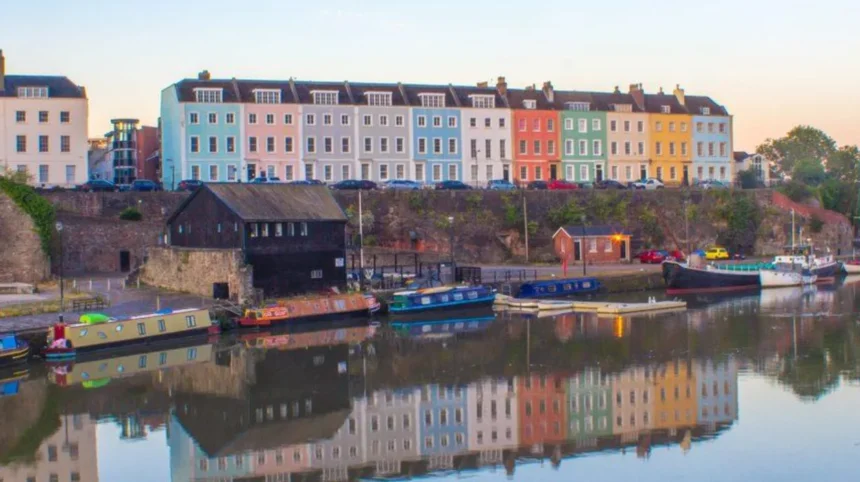
Moving from Birmingham to Bristol is a relocation between two major English cities with different housing markets, transport systems, neighbourhood structures and economic profiles. Bristol is a compact, densely populated city in South West England, while Birmingham is a much larger West Midlands authority.
- Why are people moving to Bristol from Birmingham?
- How different are Bristol and Birmingham for housing costs?
- Which Bristol areas suit people moving from Birmingham?
- How does commuting from Bristol to Birmingham work?
- What is public transport like after moving to Bristol?
- What jobs are available in Bristol after moving from Birmingham?
- How should families compare schools and education in Bristol?
- What lifestyle changes should Birmingham residents expect after moving to Bristol?
- What should you budget for when moving from Birmingham to Bristol?
- How should you plan the move from Birmingham to Bristol?
Bristol recorded around 472,500 residents in the 2021 Census, compared with approximately 1.145 million residents in Birmingham. Bristol’s population increased by 10.3% between 2011 and 2021, while Birmingham increased by 6.7%.
The move also changes housing costs significantly. In July 2026, the provisional average house price in Bristol was £352,000, compared with £234,000 in Birmingham. Average private rent in August 2026 was £1,883 in Bristol and £1,099 in Birmingham.
These differences make preparation important. A successful move requires attention to housing, employment, commuting, transport, schools, neighbourhoods, daily expenses and access to services.
Why are people moving to Bristol from Birmingham?
People move from Birmingham to Bristol for employment, education, lifestyle, coastal-region access and the city’s growing technology, professional-services, creative and aerospace economy. Bristol also provides direct rail access to Birmingham and strong connections across the South West.
Bristol is part of the wider West of England economic area. The region has a £53.7 billion economy, approximately 45,900 businesses and around 662,000 supported jobs according to the West of England Combined Authority.
The region has established strengths in professional services, finance, law, consulting, construction, life sciences, digital technology, creative industries and advanced engineering. The West of England Combined Authority identifies these sectors as important components of the regional growth strategy.
Bristol also has major educational institutions. The University of Bristol is a Russell Group university and has a substantial influence on the city’s student population, research activity and knowledge economy. The university’s vice-chancellor, Professor Evelyn Welch, became Chair of the Russell Group in August 2026.
The geographical change is also important. Bristol provides access to Bath, Somerset, South Gloucestershire, Gloucestershire and North Somerset. Birmingham provides a different regional network across the West Midlands.
For people who previously worked in Birmingham, Bristol provides a different labour-market geography without placing them far from Birmingham. Direct trains between Bristol and Birmingham take approximately 1 hour 25 minutes, with frequent services operated by CrossCountry.
How different are Bristol and Birmingham for housing costs?
Bristol housing costs are substantially higher than Birmingham housing costs. In July 2026, Bristol’s average house price was £352,000 and Birmingham’s was £234,000. Average private rent was £1,883 in Bristol and £1,099 in Birmingham.
The latest Office for National Statistics figures show a clear difference between the two housing markets.
In Bristol, the provisional average house price was £352,000 in July 2026. The average first-time-buyer price was £313,000. The average price for a home bought with a mortgage was £353,000.
Birmingham recorded a provisional average house price of £234,000 in July 2026. The average first-time-buyer price was £212,000, while the average mortgage-buyer price was £239,000.
The difference is also visible in rental housing.
Bristol’s average private rent reached £1,883 per month in August 2026. This represented a 5.9% annual increase from £1,778 in August 2025. Birmingham’s average private rent was £1,099 per month in August 2026, up from £1,068 a year earlier.
Property type also affects the budget.
In Bristol, July 2026 average prices were approximately £689,000 for detached homes, £447,000 for semi-detached homes, £384,000 for terraced homes and £241,000 for flats and maisonettes.
In Birmingham, the corresponding figures were approximately £443,000 for detached homes, £275,000 for semi-detached homes, £222,000 for terraced homes and £145,000 for flats and maisonettes.
This difference means a Birmingham household needs to reassess its housing budget before moving. The same purchase budget does not provide the same property size or location in Bristol.
The ONS also notes that local housing figures are based on smaller numbers of properties than national estimates, so short-term movements require longer-term interpretation.
Which Bristol areas suit people moving from Birmingham?
Bristol has distinct residential areas with different housing types, transport links and local environments. Popular areas include Clifton, Redland, Bishopston, Southville, Bedminster, Horfield, Fishponds, Brislington, Easton, Henleaze and Westbury-on-Trym.
Bristol’s neighbourhood structure is different from Birmingham’s large metropolitan geography. The city contains central districts, inner residential areas, suburban communities and adjoining urban settlements.
Clifton is known for Georgian and Victorian architecture, the Clifton Suspension Bridge and proximity to the city centre. Housing includes period terraces, apartments and converted buildings.
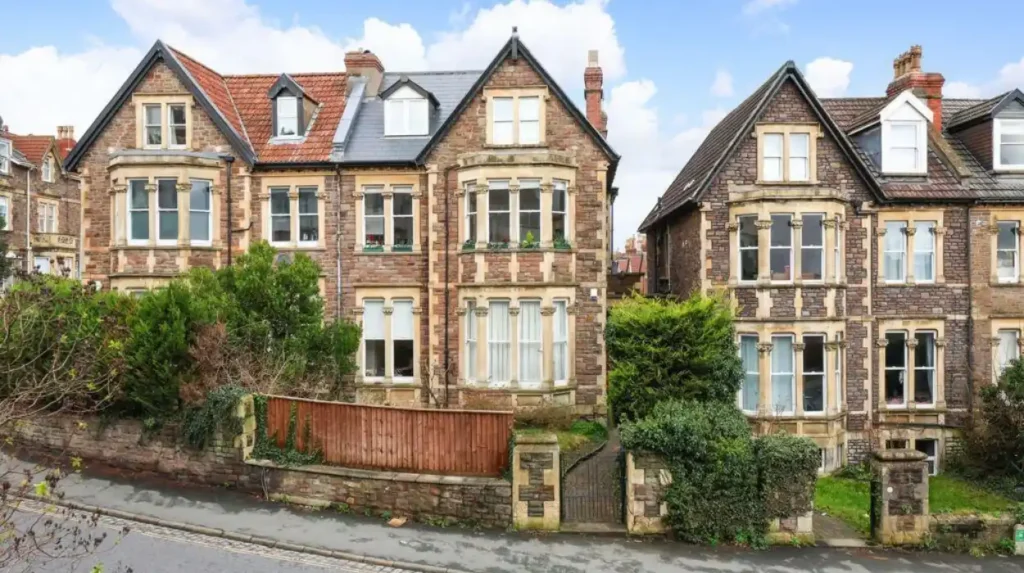
Redland sits north of the central area and has substantial Victorian and Edwardian housing. Its location provides access to Gloucester Road, Whiteladies Road and the University of Bristol.
Bishopston is closely associated with Gloucester Road. The area contains terraced housing, independent businesses and established public transport connections.
Southville and Bedminster sit south of the River Avon and provide access to North Street, the city centre and employment areas around central Bristol.
Horfield and Fishponds provide more suburban residential environments. These areas contain terraces, semi-detached houses and local shopping streets.
Brislington is located southeast of the city centre. It provides road connections toward Bath and surrounding areas.
Easton has a dense urban character and strong connections to central Bristol. It is also served by major bus corridors and sits close to Bristol Temple Meads.
Henleaze and Westbury-on-Trym provide established residential environments in north-west Bristol. Housing stock includes larger family properties as well as smaller homes and flats.
Neighbourhood selection should therefore begin with the daily destination rather than the postcode alone. A person working at Southmead Hospital needs a different transport calculation from someone working near Temple Meads, Bristol Airport, Filton or the city centre.
Bristol’s planning system is also changing. Bristol City Council states that its existing Local Plan is being updated, with the Bristol Local Plan 2022 to 2040 in an advanced examination stage and a new Local Plan 2045 process beginning in 2026.
How does commuting from Bristol to Birmingham work?
Bristol and Birmingham have a strong direct rail connection. CrossCountry operates direct services between Bristol Temple Meads and Birmingham New Street, with journey times commonly around 1 hour 20 to 1 hour 25 minutes and services operating seven days a week.
The railway is one of the most important practical links between the two cities.
CrossCountry lists Bristol Temple Meads to Birmingham New Street journeys taking approximately 1 hour 25 minutes. Sample services in September 2026 showed direct journeys of 1 hour 19 minutes, 1 hour 21 minutes and 1 hour 22 minutes.
This makes occasional Birmingham travel practical after relocation.
Bristol Temple Meads is the principal central railway station. Bristol Parkway is another important station, particularly for northern Bristol, South Gloucestershire and areas around Filton.
Birmingham New Street provides access to Birmingham city centre and the wider West Midlands rail network.
Regular commuters should calculate the complete journey rather than only the intercity train time. The full journey includes travel from home to Bristol Temple Meads, waiting time, the train journey, movement through Birmingham New Street and the final journey to work.
Driving provides another connection through the motorway network, particularly using routes involving the M5 and M42. Road conditions vary significantly according to time, weather, incidents and planned works.
For people working primarily in Bristol, living close to a reliable bus corridor, railway station or cycle route can reduce dependence on the car.
Bristol’s transport planning also places emphasis on public transport, walking and cycling. The city’s planning documents support improvements to strategic bus services, the MetroBus network, walking and cycling infrastructure and a proposed mass-transit network.
What is public transport like after moving to Bristol?
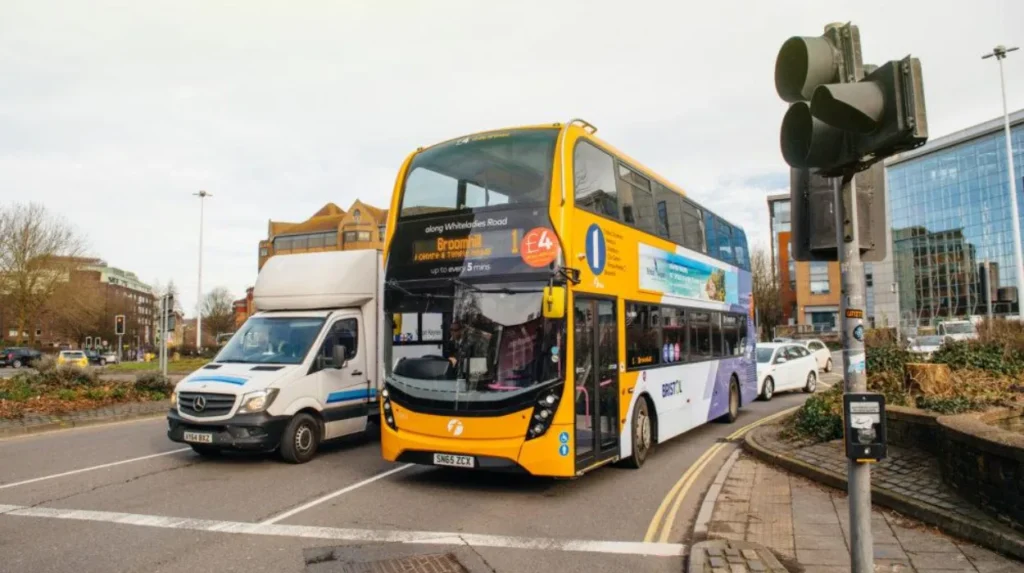
Bristol’s public transport network is centred on buses, MetroBus services, rail connections and active travel infrastructure. The city does not have an underground railway or tram system, so neighbourhood choice has a direct effect on everyday journey times.
Bristol’s transport structure differs substantially from Birmingham’s extensive rail, tram and bus network.
Bristol relies heavily on buses for journeys within the city. MetroBus provides higher-capacity bus services on selected corridors. Rail services connect Bristol with destinations including Bath, Cardiff, Gloucester, Weston-super-Mare and other regional centres.
Bristol also has an active cycling network and walking infrastructure. The council’s Liveable Neighbourhood programme aims to make local areas easier to navigate by walking, cycling and public transport while reducing through traffic.
This matters when choosing a home.
A property with a lower rent but weak transport connections can create higher daily costs through additional bus journeys, fuel, parking and travel time.
A central or inner-city property can reduce commuting distances but usually carries higher housing costs.
Bristol also operates a Clean Air Zone. The city has a small CAZ D zone covering central areas. Older and more polluting vehicles are subject to charges when they travel within the zone, while compliant vehicles are not charged.
The council states that charges apply 24 hours a day, every day, and that the standard charge for private cars that do not meet the emissions requirements is £9 per day.
People bringing a car from Birmingham should check its emissions category before moving. This is particularly important for households that regularly drive into central Bristol.
What jobs are available in Bristol after moving from Birmingham?
Bristol has a diversified labour market covering professional services, finance, law, consulting, digital technology, creative industries, life sciences, aerospace, engineering, education, healthcare, hospitality and logistics. The wider West of England economy supports hundreds of thousands of jobs.
Bristol’s economy is not based on one industry.
The West of England Combined Authority identifies professional services, financial services, insurance, construction, life sciences, digital technology and other innovation-led sectors among the region’s economic strengths.
The region also has major employment activity in health, education, hospitality and logistics. Its 2025 Growth Strategy identified the everyday economy as responsible for 57% of jobs across the region.
The digital and creative sectors are particularly significant. The West of England’s regional evidence reports that employment in priority sectors has expanded substantially, including a 52% increase in Digital and Technologies employment and an 82% increase in Creative Industries employment since 2015.
A Birmingham professional therefore needs to compare employers rather than assuming a direct salary equivalent.
Salary, commuting costs, housing costs, workplace location and working arrangements all affect the financial result of a relocation.
Major employment locations include Bristol city centre, Temple Quarter, Southmead, Filton and surrounding areas in South Gloucestershire.
Filton is particularly important for aerospace and engineering employment. The wider region also has connections with advanced manufacturing, research and technology.
Bristol’s employment market is continuing to develop. The West of England Growth Strategy published in 2025 targets 72,000 additional jobs over ten years and 28% economic growth.
This provides useful context for people planning a long-term relocation rather than a short-term move.
How should families compare schools and education in Bristol?
Families moving from Birmingham should compare individual schools, admissions criteria, catchment arrangements, transport routes and Ofsted information rather than relying on neighbourhood reputation. Bristol contains state schools, academies, independent schools, further-education institutions and higher-education providers.
School planning should begin before choosing a property.
Bristol’s education system includes primary schools, secondary schools, sixth forms, colleges and universities. School admissions are influenced by the specific local authority and school arrangements.
Families should check the current admissions rules for each school and verify catchment information using official sources. Catchment boundaries and admission arrangements can change.
Travel distance also matters. A home close to a school does not automatically guarantee a place.
The University of Bristol contributes substantially to the city’s higher-education environment. It is a Russell Group university with major research activity and a large student community.
The city also benefits from the presence of other higher-education institutions and colleges.
Families moving from Birmingham should therefore compare the entire education journey. This includes primary education, secondary education, sixth-form options, college provision and university access.
For younger children, proximity to schools, parks, childcare, healthcare and local shops often has a greater effect on daily logistics than proximity to the city centre.
What lifestyle changes should Birmingham residents expect after moving to Bristol?
Moving from Birmingham to Bristol changes the scale, geography and daily rhythm of urban life. Bristol has a smaller population, dense inner neighbourhoods, extensive green spaces, a strong cultural sector, access to the Avon and proximity to South West destinations.
Bristol is smaller than Birmingham by population. The 2021 Census recorded approximately 472,500 residents in Bristol compared with around 1.145 million in Birmingham.
Bristol’s smaller scale affects daily movement.
Central Bristol is compact enough for many journeys to combine walking, cycling and buses. Neighbourhood centres provide local shops, restaurants, cafés, community facilities and services.
The city also has significant green spaces and access to outdoor areas. Clifton and the Avon Gorge provide distinctive urban landscapes. Ashton Court sits on the western edge of Bristol, while areas around the Harbourside and Floating Harbour provide waterfront environments.
Bristol’s location also creates access to wider South West destinations.
Bath is nearby by rail and road. The Mendip Hills, Somerset countryside, Gloucestershire and the Severn Estuary are also within the wider regional travel area.
Bristol Airport provides another major advantage for international travel. The airport currently lists more than 100 direct destinations, including Amsterdam, Dublin, Paris, Barcelona, Madrid, Rome, Lisbon, Copenhagen and numerous Mediterranean destinations.
This regional accessibility is relevant to residents who travel frequently for business or leisure.
The city also has an established cultural identity built around music, festivals, theatre, museums, independent businesses, street art and food.
Birmingham residents will therefore encounter familiar big-city services alongside a more compact urban structure.
Explore More Area Guide
Moving to Bristol From London: 2026 Relocation Guide
Moving to Bristol: Housing, Jobs, Transport and Living Guide
What should you budget for when moving from Birmingham to Bristol?
A Bristol relocation budget should account for higher housing costs, deposits, moving services, transport, council tax, utilities and everyday expenses. The largest financial difference is housing, with 2026 ONS figures showing substantially higher Bristol purchase and rental prices.
Housing is the first budget category to calculate.
The latest ONS data put Bristol’s average private rent at £1,883 per month in August 2026. Birmingham’s equivalent figure was £1,099.
That difference is £784 per month at the citywide average.
Over twelve months, the difference between those average rents is £9,408. Actual household costs vary by property size, neighbourhood, tenure and contract terms.
Buying also requires a larger budget in Bristol. The July 2026 provisional average house price difference was £118,000 between Bristol and Birmingham.
A moving budget should also include:
- rental deposit or home-purchase costs
- removal company fees
- storage
- utility setup
- broadband installation
- insurance
- transport
- parking
- council tax
- furniture
- initial household expenses
Car owners should add Bristol Clean Air Zone considerations to their calculations. Non-compliant vehicles entering the zone are charged, with private cars currently listed at £9 per day.
Public transport users should calculate weekly or monthly travel based on their actual home-to-work route.
The ONS states that housing affordability should be assessed using house prices alongside local earnings rather than headline prices alone. Its 2025 England and Wales analysis reported that the median English home cost 7.6 times median full-time annual earnings.
This makes household income an important part of any Bristol relocation calculation.
How should you plan the move from Birmingham to Bristol?
A Birmingham-to-Bristol relocation works best when housing, employment, transport, schools and household finances are assessed together. Start with the work location, establish the housing budget, compare neighbourhoods, inspect properties and arrange transport before setting the moving date.
The first stage is to establish the reason for moving and the required location.
Someone working at Temple Meads needs a different housing search from someone working in Filton or Southmead.
The second stage is financial planning. Set a maximum rent or purchase price based on actual household income. Include commuting, council tax, utilities and parking.
The third stage is neighbourhood research. Compare several areas rather than choosing a postcode based only on online descriptions.
The fourth stage is transport planning. Test the journey during realistic commuting hours. Bristol’s transport system depends heavily on buses, walking, cycling and rail, so the exact home location matters.
The fifth stage is property inspection. Check the condition of the building, heating system, insulation, parking arrangements, broadband availability, local traffic and nearby services.
The sixth stage is administrative preparation. Update your address with employers, banks, insurers, healthcare providers, driving authorities and other relevant organisations.
The final stage is the physical move.
People who retain Birmingham employment should also calculate the Bristol-to-Birmingham travel requirement. Direct CrossCountry services provide a practical rail connection, with journeys commonly taking around 1 hour 20 minutes.
For households making the move permanently, the main long-term issue is the relationship between income and Bristol housing costs.
Bristol remains a major regional employment centre with a growing economic base, strong universities, extensive cultural infrastructure and international transport connections. At the same time, its housing costs are significantly above Birmingham’s current averages.
A Birmingham-to-Bristol move therefore involves more than changing addresses. It changes the household’s housing budget, commuting pattern, neighbourhood structure and access to the South West economy.
Is Bristol more expensive than Birmingham?
Yes. Bristol is substantially more expensive for housing. In July 2026, the average Bristol house price was about £352,000 compared with £234,000 in Birmingham. Average private rent in August 2026 was £1,883 in Bristol compared with £1,099 in Birmingham.