Bristol is one of the South West’s strongest housing markets, but it is also one of the region’s least affordable major cities. The city combines high employment, major universities, established neighbourhoods, transport links and strong demand for housing. These factors keep prices above many comparable UK cities.
- What makes an area affordable in Bristol?
- Which areas are among the most affordable in Bristol?
- Is Hartcliffe one of the most affordable areas in Bristol?
- Is Withywood a good affordable area in Bristol?
- Is Knowle West affordable compared with other Bristol areas?
- Are Hengrove and Whitchurch Park affordable areas in Bristol?
- Are Southmead and Lawrence Weston affordable areas in north Bristol?
- Is Lawrence Hill an affordable place to live in Bristol?
- How do Bristol’s affordable areas compare with the citywide housing market?
- Which Bristol areas offer lower rental costs?
- How should buyers compare affordable areas in Bristol?
- Which affordable Bristol areas suit different housing needs?
- What does the future of affordable housing look like in Bristol?
The latest Office for National Statistics data puts Bristol’s average house price at £352,000 in July 2026, up 2.1% from July 2025. The average price for first-time buyers was £313,000, while the average private rent reached £1,883 per month in August 2026.
Bristol City Council’s 2026/27 housing profile also identifies affordability as a major local issue. The city’s affordability ratio was 8.88 in April 2025, meaning the median home cost almost nine times median annual earnings. The council uses five times earnings as its affordability benchmark.
For buyers and renters, affordability therefore depends heavily on neighbourhood, property type, transport access and housing condition. Areas such as Hartcliffe, Withywood, Knowle West, Hengrove, Southmead, Lawrence Weston, Avonmouth, Filwood and Lawrence Hill generally provide lower-cost housing options than premium areas such as Clifton, Redland and Westbury-on-Trym.
What makes an area affordable in Bristol?
An affordable Bristol area combines lower purchase or rental costs with practical transport, local services and suitable housing. Affordability is measured against both property prices and earnings, while neighbourhood value also depends on property type, condition, location and household needs.
The word affordable has several meanings in Bristol. A neighbourhood with a lower average sale price is not automatically affordable for every household. Income, deposit size, mortgage costs and property type all affect the real cost.
The ONS defines an area as affordable when average homes cost no more than five times average earnings. Its neighbourhood affordability tool compares median property prices with local earnings data.
Bristol sits above that benchmark. The city’s 2025 affordability ratio was 8.88 according to Bristol City Council. The council also reported that Bristol had the highest affordability ratio among England and Wales Core Cities in its 2026/27 housing profile.
Property type makes a significant difference. In July 2026, Bristol’s average prices were approximately £241,000 for flats and maisonettes, £384,000 for terraced homes, £447,000 for semi-detached homes and £689,000 for detached homes.
This explains why flats in lower-priced neighbourhoods can provide a substantially cheaper entry point than houses.
Which areas are among the most affordable in Bristol?
Some of Bristol’s lower-priced neighbourhoods include Hartcliffe, Withywood, Knowle West, Hengrove, Lawrence Weston, Avonmouth, Filwood and Southmead. These areas generally sit below the city’s overall housing market, although prices vary considerably by street, property type, condition and transaction date.
Bristol does not have one official permanent ranking of the cheapest neighbourhoods. Prices change as properties are sold and neighbourhood boundaries differ between datasets.
Recent local housing data identifies several areas with comparatively lower median prices. A Bristol property-price analysis using 2025 postcode data placed BS13, covering Hartcliffe and Withywood, at a median of £290,000. BS11, covering Shirehampton and Avonmouth, was about £293,000, while BS14, covering Whitchurch and Hengrove, was about £300,250.
Other comparatively lower-priced postcode districts included BS15, covering Kingswood and Hanham, at £302,500, BS10, covering Southmead and Henbury, at £320,000, and BS4, covering Brislington and Knowle, at £324,000.
A separate analysis of Bristol South identified Hartcliffe, Withywood, Knowle West, Highridge and Hengrove among the lowest-priced neighbourhoods in that part of the city.
These figures demonstrate why buyers searching for affordable Bristol property often begin in the south, south-west and northern parts of the city rather than the most central and affluent neighbourhoods.
Is Hartcliffe one of the most affordable areas in Bristol?
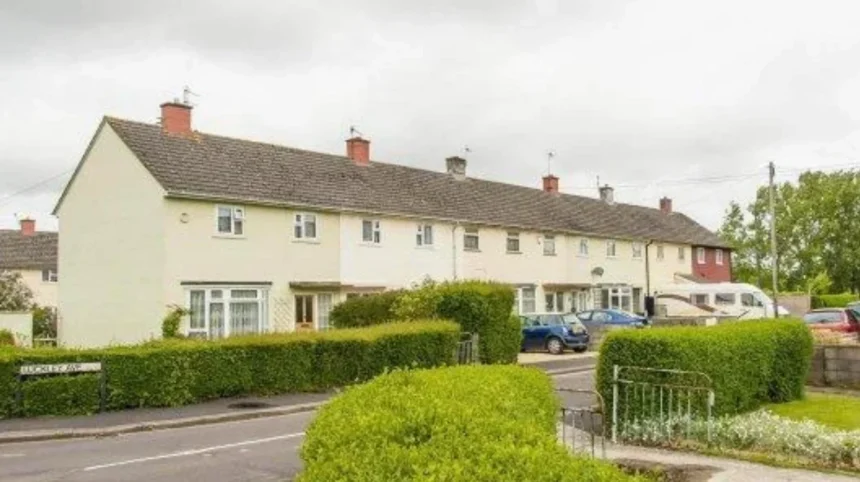
Hartcliffe is one of Bristol’s lower-priced residential areas, with substantial terraced and semi-detached housing and a significant supply of flats. Recent sold-price data places typical transactions below Bristol’s citywide average, although individual properties vary by size, condition and exact location.
Hartcliffe is in south Bristol and forms part of the Hartcliffe and Withywood area. The neighbourhood contains a substantial amount of post-war housing, including terraces and semi-detached homes.
Recent sold-price information shows an overall Hartcliffe average of approximately £252,711 over the previous year. Terraced properties averaged about £251,272, semi-detached properties about £274,537 and flats about £151,500.
Another dataset based on HM Land Registry transactions recorded a £240,000 median sale price for Hartcliffe in 2025, followed by a year-to-date 2026 median of £260,000.
The difference between these datasets illustrates an important point about local housing statistics. Average and median prices measure different things, and results change according to the transaction period and property mix.
Hartcliffe has a particularly useful supply of lower-cost housing for buyers who prioritise space over central location. Terraced homes form a significant part of the local market.
Transport and everyday services also matter. Hartcliffe connects to wider south Bristol through bus routes and road links, while nearby areas include Withywood, Bishopsworth, Hengrove and Knowle West.
Is Withywood a good affordable area in Bristol?
Withywood is a south Bristol neighbourhood with relatively lower property prices and substantial family housing. Its housing stock includes terraced and semi-detached properties, while nearby Hengrove, Hartcliffe and Bishopsworth provide additional services, shopping, employment access and transport connections.
Withywood sits immediately south of Hartcliffe and is commonly included within the wider BS13 housing market.
Recent postcode-level data placed BS13 at around £290,000 median price in 2025, covering Hartcliffe and Withywood together.
Neighbourhood-level figures also identify Withywood among Bristol South’s lower-priced locations. One recent analysis placed its median house price at approximately £245,000, compared with substantially higher prices in Southville and Ashton.
The housing profile is important for buyers. Withywood contains a significant amount of family-oriented housing rather than being dominated by central-city flats.
Its position also creates a practical connection between several south Bristol neighbourhoods. Hengrove provides retail and leisure facilities, while Hartcliffe and Bishopsworth extend the residential area around Withywood.
For buyers comparing Bristol suburbs, Withywood is particularly relevant when the priority is a house rather than a centrally located apartment.
Is Knowle West affordable compared with other Bristol areas?
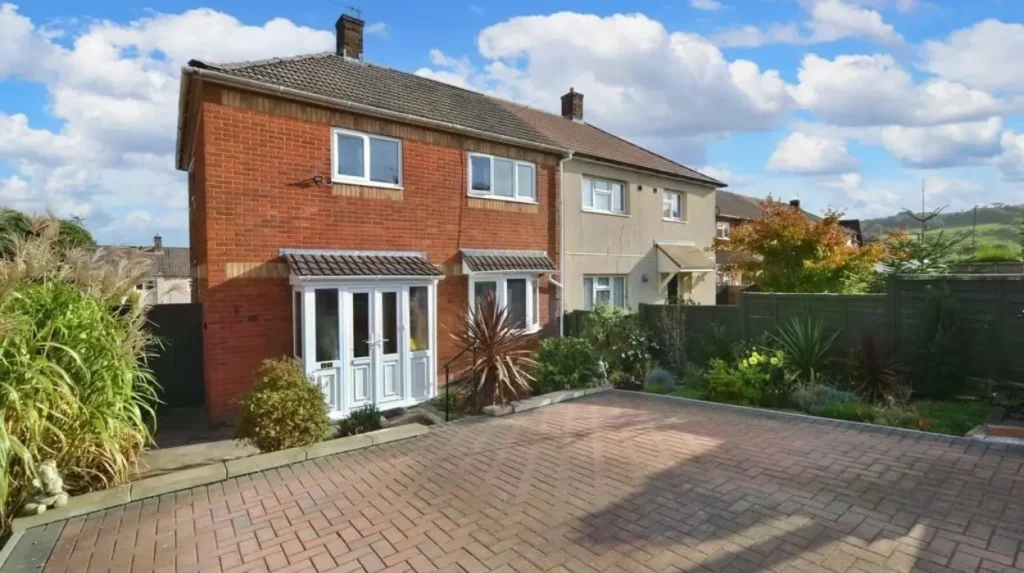
Knowle West is one of the lower-priced established neighbourhoods in south Bristol. Its housing stock contains many terraced and semi-detached properties, creating comparatively accessible options for households seeking more space than central Bristol provides within a lower purchase budget.
Knowle West developed extensively during Bristol’s twentieth-century housing expansion. It contains predominantly residential streets with a large supply of family housing.
Recent Bristol South property analysis placed Knowle West at approximately £245,950 median house price, making it one of the lower-priced neighbourhoods identified in that part of the city.
Its position is important when assessing affordability. Knowle West sits close to other lower-cost south Bristol districts, including Hartcliffe, Hengrove and Whitchurch.
The neighbourhood also benefits from access to wider Bristol through bus connections and nearby major roads. Local facilities support everyday needs without requiring residents to travel into the city centre for every service.
Housing condition remains an important consideration. Older properties can have different maintenance, insulation and energy-efficiency requirements. Buyers therefore need to assess the individual property rather than relying only on neighbourhood averages.
Knowle West suits searches focused on houses, established residential streets and lower purchase prices. It is less relevant for buyers whose primary requirement is immediate access to Bristol city centre on foot.
Are Hengrove and Whitchurch Park affordable areas in Bristol?
Hengrove and Whitchurch Park provide comparatively lower-cost housing in south Bristol, with a mixture of terraced, semi-detached and newer residential properties. Their location offers access to retail, leisure, employment areas, green space and transport routes serving central Bristol.
Hengrove is positioned between several major south Bristol neighbourhoods. It sits close to Knowle West, Whitchurch, Brislington and Hartcliffe.
The wider BS14 postcode district recorded a median price of approximately £300,250 in 2025 in recent postcode-level analysis.
Bristol City Council ward data has also placed Hengrove and Whitchurch Park below the citywide average in previous rolling-year housing analysis. A council ward profile recorded a median sales value of £301,750 in the relevant period.
Hengrove has an important retail and leisure role in south Bristol. Hengrove Park is also significant to the area’s wider regeneration and employment landscape.
Whitchurch Park provides access to green space and residential streets with different housing types. The combination makes the area relevant to families and first-time buyers searching for houses at prices below Bristol’s most expensive neighbourhoods.
The affordability advantage depends on the property. Newer homes can command higher prices than older terraces, while larger family homes cost more than smaller properties.
Are Southmead and Lawrence Weston affordable areas in north Bristol?
Southmead and Lawrence Weston are important lower-cost housing markets in north and north-west Bristol. Both contain substantial residential housing, while their locations provide access to employment, healthcare, schools, transport routes and surrounding communities.
Southmead is particularly significant because it contains Southmead Hospital, one of Bristol’s major healthcare institutions. The neighbourhood also connects with Horfield, Filton, Henbury, Lockleaze and Westbury-on-Trym.
Recent postcode data placed BS10, covering Southmead and Henbury, at approximately £320,000 median price in 2025.
Bristol City Council ward data previously recorded Southmead at £305,000 in a rolling-year comparison, below the citywide average used in that analysis.
Lawrence Weston is further west and has historically provided lower-priced housing within Bristol. It sits close to Shirehampton and Avonmouth and benefits from connections towards the north-western employment areas.
The wider BS11 postcode district, covering Shirehampton and Avonmouth, recorded a median of approximately £293,000 in 2025 in recent postcode analysis.
These neighbourhoods are relevant for households that need access to Bristol’s employment infrastructure without paying the premium associated with central and western neighbourhoods.
Is Lawrence Hill an affordable place to live in Bristol?
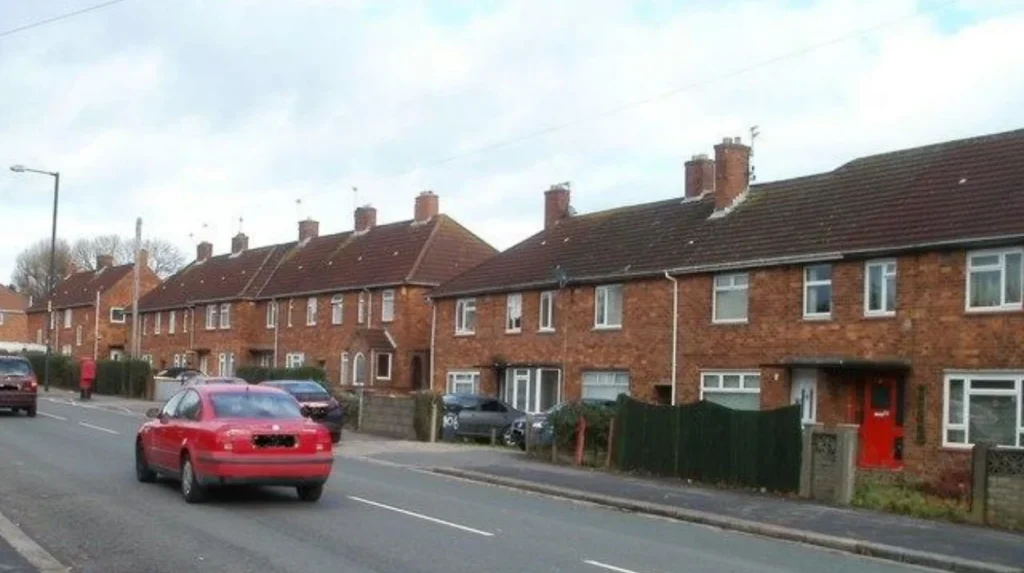
Lawrence Hill provides comparatively lower-cost flats and some terraced housing close to central Bristol. Its prices reflect its dense urban housing stock, strong transport connections and proximity to employment areas, while individual properties differ substantially in value and condition.
Lawrence Hill is an inner-east Bristol neighbourhood close to Easton, St George, Barton Hill and the city centre.
Its housing market contains a high proportion of flats alongside terraced properties. Recent transaction data places the area’s overall average at roughly £239,286, with flats averaging approximately £167,625 and terraced properties about £334,833 over the reported period.
The property mix explains why Lawrence Hill can appear affordable in citywide comparisons. Flats create lower entry prices than houses, while larger and better-positioned terraced properties command substantially higher prices.
The neighbourhood also has strong transport advantages. Lawrence Hill railway station provides services towards Bristol Temple Meads and other destinations. Major bus corridors provide additional connections.
The area is therefore relevant to buyers who value proximity to central Bristol. A lower-priced flat can provide an alternative to paying the higher prices found in central residential neighbourhoods.
Buyers need to examine lease length, service charges, maintenance obligations and building condition when comparing flats. These costs affect the overall affordability of an apartment.
How do Bristol’s affordable areas compare with the citywide housing market?
Bristol’s lower-cost neighbourhoods remain expensive by national standards, but they sit below the citywide market. The latest city average is £352,000, while several lower-priced postcode areas record median prices around £290,000 to £324,000.
The latest ONS data provides the citywide benchmark. Bristol’s average house price was £352,000 in July 2026, while first-time buyers paid an average of £313,000.
The difference becomes clearer when property types are separated. Flats and maisonettes averaged £241,000, while terraced homes averaged £384,000.
Recent postcode-level figures show lower median markets in areas such as:
BS13: Hartcliffe and Withywood, approximately £290,000.
BS11: Shirehampton and Avonmouth, approximately £293,000.
BS14: Whitchurch and Hengrove, approximately £300,250.
BS15: Kingswood and Hanham, approximately £302,500.
BS10: Southmead and Henbury, approximately £320,000.
BS4: Brislington and Knowle, approximately £324,000.
These figures are not directly interchangeable with the ONS city average because geographic boundaries, periods and methodologies differ. The ONS also warns that local housing estimates are based on smaller numbers of properties and short-term movements can be variable.
The figures nevertheless show a consistent geographical pattern. Lower-priced housing is concentrated in several southern, south-western, northern and north-western neighbourhoods.
Which Bristol areas offer lower rental costs?
Lower rental costs are generally associated with smaller flats, shared accommodation and neighbourhoods outside the most expensive central and western districts. Bristol’s average rent reached £1,883 in August 2026, with one-bedroom homes averaging £1,225 and two-bedroom homes £1,544.
Rental affordability differs from house-purchase affordability. A neighbourhood with lower property prices can still have strong rental demand.
The latest ONS figures put Bristol’s average private rent at £1,883 per month in August 2026, up 5.9% from £1,778 in August 2025.
By bedroom count, average Bristol rents were £1,225 for one-bedroom homes, £1,544 for two-bedroom homes, £1,759 for three-bedroom homes and £2,546 for homes with four or more bedrooms.
By property type, flats and maisonettes averaged £1,508, compared with £2,008 for terraced homes, £2,091 for semi-detached homes and £2,106 for detached homes.
Renters therefore have two major affordability levers: location and property size.
Bristol City Council also publishes Local Housing Allowance rates. From April 2026, the Bristol monthly Universal Credit LHA rates range from £511.33 for the shared-room rate to £1,850 for four bedrooms. These rates apply to eligible households and are not market rent averages.
How should buyers compare affordable areas in Bristol?
Buyers should compare total housing costs rather than headline prices alone. The relevant factors include purchase price, mortgage payment, deposit, council tax, service charges, energy costs, transport, property condition, tenure and access to employment and essential services.
A low purchase price does not guarantee the lowest total cost.
For flats, buyers need to check service charges, ground rent arrangements where applicable, lease length and major works obligations. These expenses can change the effective monthly housing cost.
For older houses, energy performance is another important factor. Insulation, heating systems, windows and roof condition influence ongoing running costs.
Transport also affects affordability. A cheaper home that requires expensive commuting can produce a higher household budget than a slightly more expensive home near a frequent public transport route.
Location should therefore be compared with the household’s daily travel pattern. Bristol has major employment concentrations around the city centre, Temple Quarter, Southmead, Filton, Avonmouth and other employment areas.
Property condition also matters. A £250,000 house requiring substantial renovation has a different financial profile from a £270,000 home requiring limited immediate work.
The ONS neighbourhood affordability tool provides a useful starting point because it compares local house prices with earnings rather than relying only on citywide averages.
Explore More Area Guide
Best Areas for First-Time Buyers in Bristol
Best Areas for Young Professionals in Bristol
Which affordable Bristol areas suit different housing needs?
Hartcliffe, Withywood and Knowle West provide lower-cost house markets; Southmead and Lawrence Weston offer north Bristol alternatives; Lawrence Hill provides lower-cost flats near the centre; Hengrove and Whitchurch provide mixed housing and south Bristol access.
The most suitable area depends on the housing requirement.
For lower-cost houses, Hartcliffe, Withywood and Knowle West are important areas to investigate. Their housing stock contains substantial numbers of terraces and semi-detached properties.
For lower-cost flats, Lawrence Hill provides a significant supply of apartments. Its proximity to central Bristol adds transport value.
For north Bristol access, Southmead is relevant because of its proximity to major healthcare and employment infrastructure. Lawrence Weston and Avonmouth are relevant for households working in north-west Bristol.
For south Bristol households, Hengrove and Whitchurch Park combine residential housing with access to retail, leisure and transport infrastructure.
For first-time buyers, property type is particularly important. The citywide first-time-buyer average was £313,000 in July 2026, but smaller flats and lower-priced neighbourhoods provide routes below that citywide figure.
For families, terraced and semi-detached houses provide more space but usually require larger budgets than flats.
For renters, bedroom requirements have a direct effect on affordability because Bristol’s average monthly rent rises from £1,225 for one-bedroom homes to £2,546 for homes with four or more bedrooms.
What does the future of affordable housing look like in Bristol?
Bristol’s affordability challenge remains closely connected to house-price growth, earnings, housing supply and rental demand. Future affordability depends on new housing delivery, regeneration, transport investment, household incomes and the balance between market and affordable housing provision.
Bristol’s housing affordability challenge has developed over several decades. Bristol City Council reports that average house prices increased by 69% between 2015 and 2025, representing a £143,000 increase.
The city also delivered 1,433 new homes during 2023/24, according to Bristol City Council’s 2025 key facts publication.
Housing supply therefore remains central to the city’s affordability discussion. Bristol City Council has policies covering affordable housing, including requirements and guidance for developers and housebuilders.
The future housing market will also depend on the distribution of new homes. New development in lower-priced areas can alter local supply, while transport improvements can change the relationship between neighbourhoods and employment centres.
For households searching for affordable property, the practical approach remains neighbourhood-level research. Citywide averages hide major differences between areas.
Bristol’s latest housing data shows that affordable options exist, but they are concentrated in specific neighbourhoods and property types. Hartcliffe, Withywood, Knowle West, Hengrove, Southmead, Lawrence Weston, Avonmouth and Lawrence Hill are among the locations worth examining when the objective is to reduce housing costs.
The most reliable comparison uses recent transaction data, current rental listings, household income, property condition and commuting costs together. ONS data should provide the statistical benchmark, while individual property research determines the actual cost of living in a particular Bristol neighbourhood.
What are the most affordable areas in Bristol?
Hartcliffe, Withywood, Knowle West, Hengrove, Southmead, Lawrence Weston, Avonmouth and Lawrence Hill are among the Bristol areas associated with comparatively lower property prices.