Key Points
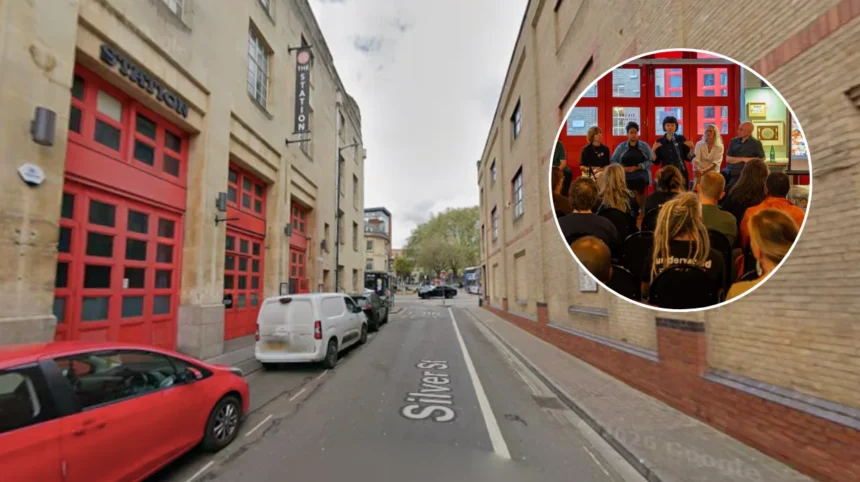
- A powerful memorial in the form of 4,972 handmade forget-me-nots was erected at the Old Fire Station on Silver Street Wednesday evening in tribute to the lives lost due to poor drug policies during the past year.
- This was a significant component of a wider community event held by Transform Drugs with the assistance of various other groups, including the Loop and Mwanzo Project, in order to promote a health-centered approach to drug consumption.
- Bristol had been declared Britain’s first “city of harm reduction” in July of this year, thus changing the focus of the city council to a kinder and evidence-based one.
- Important speakers at the event included Steve Roles of Transform Drugs, the mother who had lost her son due to drug misuse and was now an activist for change – Anne-Marie Cockburn, former undercover police officer Neil Woods, Maya Mate-Kole, Mwanzo Project CEO, Lydia Plant, Bristol Drug Project CEO, and Katy Porter, Loop CEO.
- Activists highlighted that there is an urgent need to change the course from punishment and the black market to a regulated and legal supply as well as educational programs.
Bristol (Bristol Express News) September 17, 2026 — A striking memorial comprising 4,972 handmade forget-me-nots was laid out at the Old Fire Station on Silver Street on Wednesday evening, serving as a solemn reminder of every individual who has lost their life due to drug policy failures over the past 12 months. As reported by Karen Johnson of Bristol24/7, these flowers formed the visual anchor for a prominent community event dedicated to discussing the future of drug safety policies in Bristol. Hosted by Transform Drugs and backed by organisations such as the Loop and the Mwanzo Project, the gathering offered families, community stakeholders, and local residents a platform to voice their experiences and advocate for a healthier, more compassionate approach to combating drug use.
Why Did Bristol Recently Declare Itself a City of Harm Reduction?
The discussions on Wednesday build directly upon a major municipal milestone achieved in July, when Bristol was officially named the United Kingdom’s first official “city of harm reduction.” During that council decision, local leaders resolved to pivot towards a more compassionate, evidence-led approach rather than relying solely on criminalisation.
Ahead of the recent event, Councillor and Anyone’s Child founding member Cara Lavan stated, as reported by Karen Johnson of Bristol24/7, that passing the motion sent a clear message to the national government: “When it comes to drug policy, Bristol wants a more compassionate, evidence-led approach.” Lavan further expressed hope that local authorities across the country would look to Bristol and pass similar motions to establish their own spaces of harm reduction, noting that frontline workers strive to improve health outcomes daily despite legislative limitations imposed by the government.
How Do Campaigners Argue That Current Drug Policies Are Failing Families?
During the Wednesday evening gathering, speakers highlighted the human toll exacted by current legislative frameworks. Steve Roles, a senior policy analyst for Transform Drug’s Anyone’s Child campaign, explained to Bristol24/7 that the event served as a crucial channel to “give a voice” to those impacted by the war on drugs, encompassing both individuals who have struggled with substance use and family members affected by restrictive policies.
As detailed by Karen Johnson of Bristol24/7, many of the families collaborating with Roles and his team have lost loved ones to overdoses or have relatives serving prison sentences. Roles noted that these families are actively seeking a health-led approach rather than punitive enforcement, arguing that alternative strategies could have fundamentally changed their personal stories. He emphasised that criminalising individuals and attempting to curb availability strictly through supply-side enforcement is “just not working,” despite millions of pounds being poured into these measures annually. Posing a central question to attendees, Roles asked, “If what we’re doing isn’t working, what would an alternative policy look like?”
Explore more Local Bristol News:
Council Refuses Repair Timetable for Closed Pero’s Bridge City Centre 2026
Luxury Hot Chocolate Cafe Knoops Closes Clifton Branch 2026
What Lessons Do Grieved Families Share Regarding Regulated Drug Supplies?
The emotional weight of the evening was profoundly underscored by Anne-Marie Cockburn, a founding member of the campaign who tragically lost her 15-year-old daughter, Martha Fernback, after she unknowingly consumed half a gram of 91 per cent pure MDMA. Cockburn forcefully argued that a legally regulated supply of drugs, coupled with comprehensive education, could have safeguarded her daughter and could protect other young people facing similar vulnerabilities.
In statements shared ahead of the event and reported by Bristol24/7 journalist Karen Johnson, Cockburn asserted: “It’s too late for my daughter, but in order to protect other families, we need to remove drugs from the illegal market and establish a legal, regulated supply.” Reflecting on her personal grief, she added, “As I stand by my only child’s grave, I don’t need any more evidence that it’s time to have a grown-up discussion about this.”
The event also featured insights from other prominent figures in the sector, including former undercover officer and Good Cop, Bad War and Drug Wars co-author Neil Woods, Mwanzo Project CEO Maya Mate-Kole, Bristol Drug Project CEO Lydia Plant, and Katy Porter, CEO of the UK’s first drug checking charity, the Loop. Together, these contributors reinforced the overarching message that community support, evidence-based harm reduction, and open public discourse are vital to transforming how society addresses substance use and preventing future tragedies.
Background of the Particular Development
The conversation surrounding drug policy reform in Bristol represents a culmination of years of grassroots advocacy led by families, health professionals, and harm reduction charities. For decades, UK drug strategy has been dominated by the Misuse of Drugs Act 1971, which relies heavily on criminal sanctions, possession arrests, and supply-side policing. However, mounting criticism from public health experts, combined with record-high drug-related mortality rates across England and Wales, has prompted local authorities to seek localized solutions. Bristol’s recent designation as a “city of harm reduction” marks a historic departure from traditional municipal compliance, attempting to align local support services, drug-checking initiatives like those run by the Loop, and educational frameworks under a unified, health-first umbrella.
This progressive shift in Bristol is expected to exert mounting pressure on the national government to review existing drug legislation and consider decriminalisation or regulated-supply pilot schemes. For the local community, including substance users, frontline health workers, and grieving families, this policy direction could lead to increased funding for localized support services, reduced social stigma, and greater availability of safety testing facilities. However, the success of Bristol’s harm reduction model will depend heavily on central government cooperation, as local councils currently lack the legislative authority to fully reform drug laws independently. If successful, Bristol’s framework could serve as a blueprint for other UK towns and cities aiming to transition from punitive enforcement toward health-led community care.