Key Points
- Investigation of a £4-million investment package, which comes from the Clean Air Zone revenue, is underway by Bristol City Council with the aim of improving the city’s public transport network.
- The proposals will include launching an anti-clockwise city center circular bus route and a one-hour pass that will enable people to use two buses within one hour.
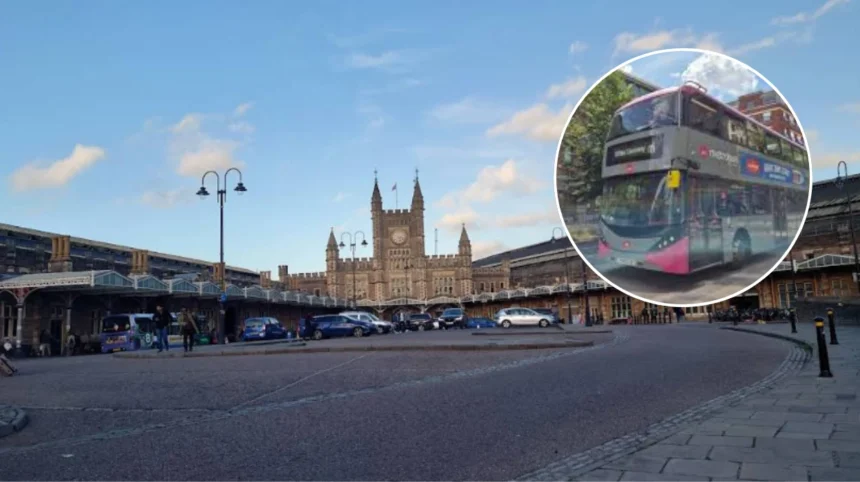
- According to the planned circle line route, the following stations will be served: Temple Meads, Old Market, Cabot Circus, Broadmead, The Centre, and Redcliffe using the existing bus lanes.
- It was decided in the transport policy committee last Thursday, September 17, to set up a new task group of councilors to decide on the ways of spending the money, with the launch expected to take place in April or September next year.
- Single bus fares currently are £2.60, which means two buses journey will cost passengers £5.20, but starting next January, national single fares will be reduced to £2 due to proposals by Prime Minister Andy Burnham.
- Other considerations of the task group will include more frequent bus services, cheaper day rider ticket costs and revenue from an autumn consultation on workplace parking levies relating to a publicly owned bus company.
Bristol (Bristol Express News) September 18, 2026 — As reported by local democracy reporter Alex Seabrook of Bristol Live, a new city centre circular bus service and a flexible one-hour ticket are currently being considered as part of a proposed £4-million transport upgrade for Bristol.
- Key Points
- What Are the Details of the Proposed £4-Million Bristol Bus Upgrades?
- How Will the New City Centre Circular Bus Service Operate?
- How Does This Initiative Fit Into Broader Fares and Subsidised Routes?
- Background of the Development
- How This Development Can Affect Public Transport Users in Bristol
What Are the Details of the Proposed £4-Million Bristol Bus Upgrades?
As detailed by Alex Seabrook of Bristol Live, the multi-million-pound package aims to tackle the steep costs and inconveniences associated with multi-bus travel across the city. At present, passengers wishing to travel outside the city centre often have to use two separate services, forcing them to pay double.
Transport bosses at Bristol City Council noted that introducing a one-hour ticket—similar to systems in London and Manchester where commuters pay once and can board another bus or tram within 60 minutes without incurring extra charges—would encourage “the use of interchanges” and simplify journeys.
Councillors will spend the upcoming months deciding how best to allocate £4 million generated from Clean Air Zone income. As outlined by Alex Seabrook of Bristol Live, options on the table include reduced fares for day rider tickets, the one-hour transfer ticket, and a dedicated circular bus route.
How Will the New City Centre Circular Bus Service Operate?
As outlined by Alex Seabrook of Bristol Live, the proposed yellow route for the new circle line would run anti-clockwise around the city centre. The proposed path potentially runs from Temple Meads to Old Market, Cabot Circus, Broadmead, the Centre, and Redcliffe.
While this route has long been mapped out as an aspiration and benefits from existing bus lanes designed to prevent services from getting stuck in traffic, a circle line concept was originally suggested back in 2019 by former Labour mayor of Bristol, Marvin Rees.
According to the report by Alex Seabrook of Bristol Live, the transport policy committee voted on Thursday, September 17, to establish a new task group of councillors. This group will discuss spending strategies for the £4 million fund, with potential rollouts for new services or ticket changes targeted for April or September next year.
Speaking directly to the committee, Adam Crowther, head of city transport, stated that the options include “increased frequencies, new services, reduced fares for day rider tickets — and that’s particularly about enabling better interchange between different services,” as documented by Alex Seabrok of Bristol Live.
How Does This Initiative Fit Into Broader Fares and Subsidised Routes?
As highlighted by Alex Seabrook of Bristol Live, a single bus ticket currently costs £2.60 in Bristol, meaning journeys requiring two separate services—such as traveling from Brislington to Bedminster—total £5.20. However, from January next year, single fares will be capped at £2 across the country as part of an initiative from the new prime minister, Andy Burnham, designed to assist citizens with the rising cost of living.
Previous council decisions have already directed Clean Air Zone surplus revenue toward launching new night buses and services connecting isolated neighbourhoods. These funds are distributed as subsidies to operators like First Bus for routes deemed vital to local communities yet commercially unprofitable.
As noted by Alex Seabrook of Bristol Live, these subsidized routes include:
- Service 36: Running from Highridge and Bishopsworth to Withywood, Hartcliffe, Imperial Park, Knowle, Brislington, and St Anne’s.
- Service 16: Running from Fishponds, Kingswood, St George, Barton Hill, Temple Meads, and the city centre.
- Service 37: Running from Hartcliffe and Knowle up to Avonmouth and Severnside.
Last year, the Clean Air Zone generated a surplus of £13.5 million, the majority of which is earmarked for transportation enhancements. The newly formed task group will also examine how to utilise income generated from a planned workplace parking levy—which includes exploring the feasibility of establishing a publicly owned bus company—with a public consultation due to take place later this autumn.
Explore more City Centre News:
Council Refuses Repair Timetable for Closed Pero’s Bridge City Centre 2026
Flaking Bristol City Centre Mural Repaint Set For Bristol 2026
Background of the Development
The current deliberations surrounding Bristol’s public transport infrastructure stem from years of local policy discussions aimed at reducing traffic congestion, improving air quality, and making public transport financially viable for residents. The implementation of Bristol’s Clean Air Zone (CAZ) generated a significant financial surplus of £13.5 million last year, creating a ring-fenced funding pool dedicated entirely to transport and environmental improvements.
Historically, public transport networks in the region have faced criticism over fragmented routes, high ticket prices for multi-bus commutes, and infrequent services in outer residential neighbourhoods. Previous local administrations, including former mayor Marvin Rees’s tenure, laid initial groundwork for concepts like a city centre circle line as early as 2019. The latest push by the transport policy committee to establish a councillor task group represents a structured effort to deploy these CAZ funds and align local transit adaptations with broader national regulatory and funding shifts, such as the upcoming national single fare cap announced by Prime Minister Andy Burnham.
How This Development Can Affect Public Transport Users in Bristol
The introduction of a £4-million investment package featuring a one-hour transfer ticket and a dedicated city centre circular bus service could substantially reshape daily commuting habits for Bristol residents, particularly lower-income households and suburban commuters. By eliminating the penalty of paying double for multi-bus journeys, the one-hour ticket directly lowers the financial barrier of cross-town travel, making public transport a more competitive alternative to private cars.
Furthermore, a reliable, anti-clockwise circle line connecting key hubs like Temple Meads, Cabot Circus, and the Centre would streamline transit through the busiest parts of the city, reducing travel times and mitigating congestion. If the task group successfully implements these measures alongside increased frequencies and subsidized neighbourhood routes by next autumn, daily commuters can expect a more cohesive, affordable, and flexible public transit network that eases the ongoing cost-of-living pressures in the region.