Bristol is a historic city in South West England known for its maritime heritage, Georgian architecture, street art, museums, independent culture, green spaces, and major attractions. The city combines its historic harbour with modern neighbourhoods, making it a practical destination for first-time visitors.
- What is Bristol and why is it important to visitors?
- What is Bristol famous for?
- What should a first-time visitor see in Bristol?
- How should first-time visitors explore Bristol’s historic centre?
- What is Bristol Harbourside and what can visitors do there?
- Why is Clifton Suspension Bridge important?
- What can visitors learn about Isambard Kingdom Brunel in Bristol?
- What museums should first-time visitors explore in Bristol?
- What is Bristol Cathedral and why should visitors see it?
- What is Bristol’s street art scene known for?
- What food and markets should visitors experience in Bristol?
- Which Bristol neighbourhoods are useful for first-time visitors?
- How can visitors travel around Bristol?
- How many days do you need for a first visit to Bristol?
- When is the best time for a first visit to Bristol?
- What should first-time visitors know before arriving in Bristol?
What is Bristol and why is it important to visitors?
Bristol is a major city in South West England with a population of more than 470,000 people. It has a historic harbour, nationally important museums, cultural venues, historic buildings, green spaces, and strong transport connections.
Bristol sits on the River Avon, close to the Severn Estuary. Its location supported centuries of maritime trade and shaped the city’s economic development.
The city became a major port during the medieval period. Bristol later developed industries connected with shipbuilding, engineering, manufacturing and commerce. Its maritime history remains visible around Bristol Harbourside.
Bristol also has a major cultural role in South West England. The city contains the University of Bristol, University of the West of England, Bristol Old Vic, Bristol Museum & Art Gallery and SS Great Britain.
For a first-time visitor, Bristol is best understood through several connected areas. The historic city centre explains its commercial past. Harbourside presents its maritime identity. Clifton provides landmark architecture and views. Stokes Croft and surrounding neighbourhoods show Bristol’s contemporary creative culture.
What is Bristol famous for?
Bristol is famous for Clifton Suspension Bridge, SS Great Britain, its historic harbour, street art, maritime history, Bristol Old Vic, Brunel heritage, and the city’s strong music, creative and cultural identity.
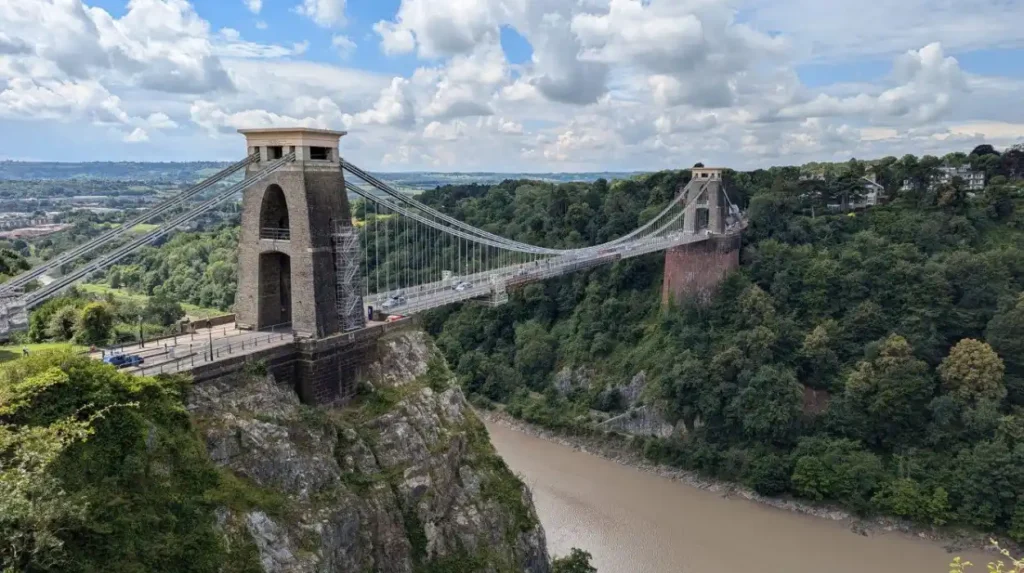
Clifton Suspension Bridge is one of Bristol’s most recognisable landmarks. The bridge crosses the Avon Gorge and was designed by engineer Isambard Kingdom Brunel, although it opened in 1864 after his death.
SS Great Britain is another major Brunel landmark. The iron steamship was launched in Bristol in 1843. It later became an important museum attraction and provides direct insight into nineteenth-century engineering and global travel.
Bristol is also strongly associated with street art. The city has become internationally recognised for its graffiti and mural culture. Stokes Croft, Bedminster and other neighbourhoods contain prominent examples of large-scale public artwork.
The city’s maritime identity remains important. Bristol Harbour contains historic vessels, museums, waterfront buildings and public spaces.
Bristol Old Vic is one of Britain’s oldest continuously operating theatres. Its history dates to 1766, giving the city a significant place in British theatre history.
What should a first-time visitor see in Bristol?
A first-time Bristol visitor should prioritise Bristol Harbourside, Clifton Suspension Bridge, SS Great Britain, Bristol Cathedral, Bristol Museum & Art Gallery, Bristol Old Vic, St Nicholas Market and the historic city centre.
Bristol Harbourside provides a useful starting point because several attractions sit within walking distance. The area includes waterfront paths, museums, restaurants, public spaces and historic vessels.
SS Great Britain stands on Great Western Dockyard. The attraction explains Brunel’s engineering work and the ship’s role in nineteenth-century international travel.
Bristol Cathedral stands near College Green. The cathedral was founded as an Augustinian abbey in 1140 and became a cathedral after the Dissolution of the Monasteries in the sixteenth century.
Bristol Museum & Art Gallery presents collections covering archaeology, geology, natural history and fine art. It provides historical context for the wider city and region.
St Nicholas Market is located in the Old City. It has operated since 1743 and remains an important market destination.
Clifton Suspension Bridge requires a separate visit because it sits west of the central area. The surrounding Clifton and Clifton Village districts provide additional architectural and walking opportunities.
How should first-time visitors explore Bristol’s historic centre?
First-time visitors should explore Bristol’s historic centre on foot because major heritage sites sit close together. The route can include Corn Street, St Nicholas Market, Bristol Old City, Bristol Cathedral, College Green and the Harbourside.
Corn Street forms part of Bristol’s historic commercial core. The street contains substantial historic buildings associated with the city’s former financial and trading activity.
St Nicholas Market is particularly important for understanding Bristol’s commercial heritage. Its covered market dates from the eighteenth century and contains independent traders and food businesses.
Bristol Old City contains historic streets and buildings that reflect the development of the medieval and early modern city. The area includes St Stephen’s Church and nearby commercial streets.
Bristol Cathedral sits close to College Green. The cathedral’s architecture contains Norman, Gothic and later elements. Its Chapter House and Elder Lady Chapel are important surviving features.
The Harbourside begins close to the historic centre. Visitors can continue from the Old City towards the waterfront and connect the city’s commercial history with its maritime history.
This central route also provides access to restaurants, cafés, shops, galleries and cultural venues. Walking reduces the need for local transport between closely located attractions.
What is Bristol Harbourside and what can visitors do there?
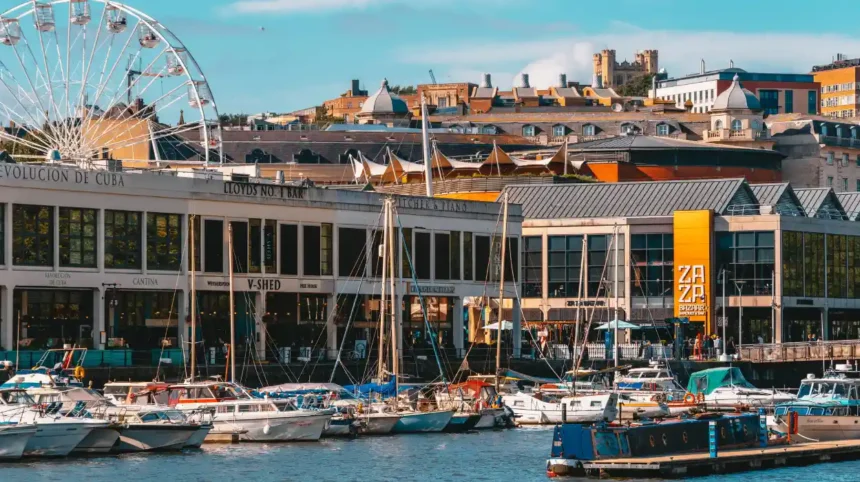
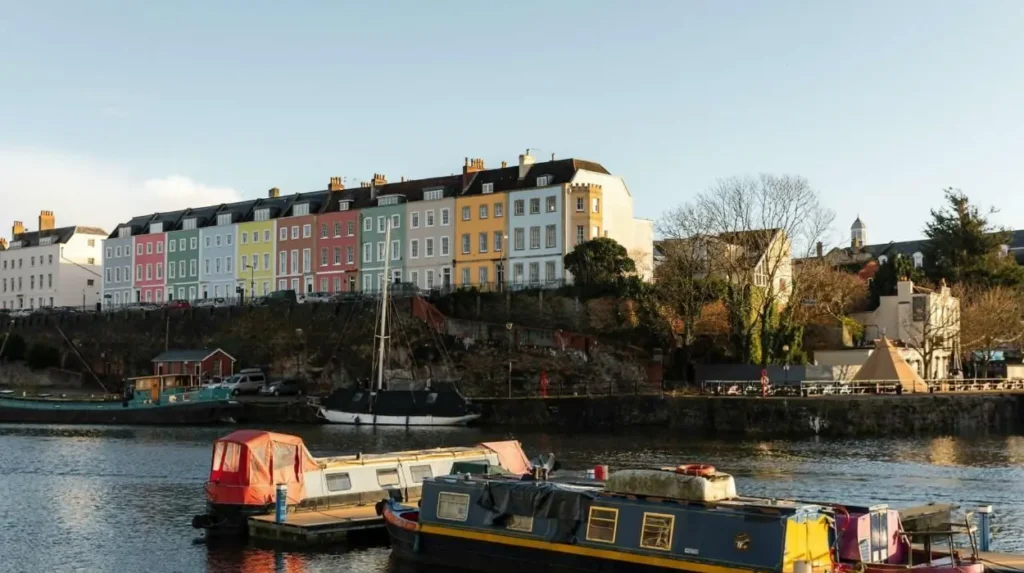
Bristol Harbourside is a regenerated waterfront district centred on the historic harbour. Visitors can see SS Great Britain, M Shed, Arnolfini, waterfront architecture, historic vessels, public spaces and cultural attractions around the docks.
Bristol Harbour developed as a major commercial port. The Floating Harbour was created in the early nineteenth century to provide a more controlled area for ships.
M Shed is a museum dedicated to Bristol and its people. Its collections cover the city’s social history, transport, industry, culture and changing urban environment.
SS Great Britain occupies the Great Western Dockyard. The ship provides a direct connection between Bristol’s engineering history and the development of international steam navigation.
Arnolfini is a major contemporary arts centre located beside the harbour. Its programme has included visual art, performance, dance, film and other cultural activities.
The waterfront also contains public walking routes. Visitors can move between attractions without relying on a car.
Harbourside is therefore more than a single attraction. It is a connected visitor district where Bristol’s industrial, maritime and cultural histories meet.
Why is Clifton Suspension Bridge important?
Clifton Suspension Bridge is an iconic Bristol landmark spanning the Avon Gorge. Designed by Isambard Kingdom Brunel and completed in 1864, it represents a major achievement in nineteenth-century suspension-bridge engineering.
The bridge connects Clifton in Bristol with Leigh Woods in North Somerset. It spans the Avon Gorge above the River Avon.
Brunel won the competition to design the bridge in 1831. Financial and construction difficulties delayed the project. The completed bridge opened in December 1864.
The bridge has a main span of approximately 214 metres. Its towers rise prominently above the gorge and form a defining element of Bristol’s landscape.
Visitors can cross the bridge on foot. The Clifton side also provides access to viewpoints around the gorge.
The Clifton Suspension Bridge Visitor Centre explains the structure’s engineering and history. The site is important for understanding Brunel’s wider contribution to Bristol’s industrial heritage.
The bridge is also useful for visitors interested in landscape. The Avon Gorge provides a strong geographical connection between the city, river and surrounding countryside.
What can visitors learn about Isambard Kingdom Brunel in Bristol?
Isambard Kingdom Brunel was a nineteenth-century British engineer responsible for major transport and engineering projects. Bristol preserves several important examples of his work, including SS Great Britain and Clifton Suspension Bridge.
Brunel was born in 1806 and became one of Britain’s best-known engineers. His work covered railways, bridges, tunnels, docks and ships.
The Great Western Railway connected London with Bristol and transformed travel between the two cities. Bristol Temple Meads station is associated with Brunel’s railway work.
SS Great Britain demonstrated advances in iron ship construction and steam propulsion. The vessel was designed for long-distance passenger and cargo travel.
Clifton Suspension Bridge demonstrates Brunel’s approach to large-scale structural engineering. Although he died in 1859, the bridge was completed several years later.
Bristol’s Brunel heritage is therefore spread across different parts of the city. Visitors can connect railway, maritime and bridge engineering through separate sites.
This heritage also explains Bristol’s importance during Britain’s industrial expansion. Transport infrastructure helped connect the city with national and international markets.
What museums should first-time visitors explore in Bristol?
Bristol’s major museums cover maritime history, local history, art, archaeology, natural history, industry and engineering. First-time visitors should consider Bristol Museum & Art Gallery, M Shed and the SS Great Britain museum.
Bristol Museum & Art Gallery is located in Clifton. It contains collections covering art, archaeology, geology and natural history.
The museum provides regional and international perspectives. Its collections include objects from different periods and geographical areas.
M Shed focuses specifically on Bristol. The museum uses objects, photographs and other collections to explain how the city developed.
Its displays cover subjects including transport, industry, social change and everyday life. The museum therefore provides useful context for visitors who want to understand Bristol beyond its tourist landmarks.
The SS Great Britain museum is focused on Brunel’s ship and its historical context. Visitors can examine the vessel and learn about nineteenth-century ocean travel.
The museums complement outdoor attractions. Clifton Suspension Bridge explains engineering through the built environment, while the museums provide documentary and material evidence about Bristol’s development.
What is Bristol Cathedral and why should visitors see it?
Bristol Cathedral is a historic Anglican cathedral on College Green. Founded as an Augustinian abbey in 1140, it became a cathedral in 1542 and contains significant medieval and later architectural features.
The building began as an Augustinian monastery founded by Robert Fitzharding. The site became Bristol Cathedral during the English Reformation.
The cathedral contains important examples of medieval architecture. The eastern end includes a distinctive hall church arrangement, while the Chapter House contains elaborate Romanesque decoration.
The Elder Lady Chapel dates from the early sixteenth century. Its architecture provides evidence of the transition between medieval and Tudor religious building traditions.
College Green sits outside the cathedral. The open space creates a direct visual relationship between the cathedral and surrounding historic buildings.
For first-time visitors, Bristol Cathedral provides historical depth within the central visitor area. It also connects the city’s religious history with its medieval urban development.
What is Bristol’s street art scene known for?
Bristol has an internationally recognised street-art culture associated with graffiti, murals and public visual art. The city is strongly connected with Banksy, while many other artists have contributed to its urban art landscape.
Banksy is an anonymous British street artist associated with Bristol’s graffiti tradition. Several works have been linked to the city.
The city’s street-art culture developed through local graffiti communities and broader urban creative movements. Stokes Croft and surrounding streets became important locations for large-scale murals.
Bedminster also hosts Upfest, a major street-art festival that has brought artists and public artwork to the area.
Street art changes over time. Murals are painted over, removed, restored or replaced. Visitors should therefore treat street-art locations as changing parts of the city’s cultural landscape rather than fixed museum exhibits.
The street-art scene adds another layer to Bristol’s cultural identity. It sits alongside formal institutions such as museums, theatres and galleries.
What food and markets should visitors experience in Bristol?
Bristol has a diverse food scene shaped by independent businesses, international communities, markets and contemporary restaurants. St Nicholas Market provides a central starting point for visitors exploring local food and independent traders.
St Nicholas Market is Bristol’s oldest and most established market destination. Its history dates to 1743.
The market includes food traders, independent retailers and specialist businesses. Its location near the Old City makes it convenient during a central walking itinerary.
Bristol also has established food districts in neighbourhoods such as Stokes Croft, Clifton, Southville and Bedminster.
The city’s diverse population contributes to its range of international food. Visitors can find cuisines representing different regions and communities.
Food markets and independent businesses also support Bristol’s wider cultural identity. They provide a different experience from large national retail centres.
For first-time visitors, combining a market visit with nearby historic attractions creates an efficient central itinerary.
Which Bristol neighbourhoods are useful for first-time visitors?
Central Bristol, Harbourside, Clifton, Clifton Village, Stokes Croft, Southville and Bedminster are useful visitor areas. Each provides different attractions, architecture, food, shopping, cultural venues or access to major landmarks.
Central Bristol provides the highest concentration of historic attractions. It includes the Old City, St Nicholas Market, Bristol Cathedral and nearby cultural venues.
Harbourside focuses on waterfront attractions. M Shed, SS Great Britain and Arnolfini sit within or near this area.
Clifton is known for the suspension bridge, Georgian architecture and access to the Avon Gorge. Clifton Village contains independent shops, cafés and historic streets.
Stokes Croft has a strong association with street art, independent businesses and Bristol’s contemporary creative culture.
Southville and Bedminster provide additional food, shopping and cultural options south of the city centre. They also offer access to the wider city through local transport routes.
Choosing accommodation close to these districts reduces travel time. First-time visitors should consider the location of planned attractions rather than selecting accommodation based only on a city-centre label.
How can visitors travel around Bristol?
Visitors can explore central Bristol on foot and use buses, trains, cycling routes and ferries for longer journeys. Bristol has an integrated local transport network connecting the city centre with surrounding neighbourhoods and regional destinations.
Walking is practical for many central attractions. The Old City, Harbourside, College Green and nearby shopping areas are connected by relatively short distances.
Bristol Temple Meads is the city’s principal railway station. It provides national rail connections to destinations including London, Cardiff, Bath and other major cities.
Bristol Parkway is another important railway station in the metropolitan area. It serves routes through South Gloucestershire and wider regional destinations.
Bristol’s bus network connects central areas with neighbourhoods across the city. Visitors should check current routes and timetables before travelling because services and road conditions change.
The city also supports cycling. Bristol has invested in cycling infrastructure and is part of the national cycling network.
Harbourside also provides water-based transport options on the Floating Harbour. These services connect selected waterfront locations and offer an alternative way to move around the central area.
How many days do you need for a first visit to Bristol?
Two days provide enough time to cover Bristol’s major central attractions, while three days allow visitors to explore Clifton, museums, neighbourhoods, markets and cultural venues at a slower pace. Longer stays support wider regional trips.
A one-day visit requires careful prioritisation. Visitors can focus on the Old City, Bristol Cathedral, Harbourside and one major attraction such as SS Great Britain.
Two days provide greater flexibility. The first day can focus on the historic centre and harbour. The second can include Clifton Suspension Bridge, Clifton Village and Bristol Museum & Art Gallery.
Three days create additional time for neighbourhood exploration. Visitors can add Stokes Croft, Southville, Bedminster or other cultural destinations.
Longer stays also allow day trips from Bristol. Bath, the Mendip Hills, the Cotswolds and South Wales are accessible from the wider region.
The appropriate length depends on the number of attractions included. Bristol’s compact central districts support short breaks, while its museums and surrounding areas reward longer visits.
Explore More Area Guide
Moving to Bristol From Cardiff: Complete Relocation Guide
Moving to Bristol From Manchester: Complete Relocation Guide
When is the best time for a first visit to Bristol?
Bristol can be visited throughout the year because its main attractions include museums, historic buildings, theatres, markets and outdoor landmarks. Spring and summer support longer outdoor visits, while autumn and winter suit indoor cultural itineraries.
Spring brings longer daylight and improving conditions for walking. Parks, the harbour and the Avon Gorge become useful parts of a visitor itinerary.
Summer provides the longest daylight hours. Outdoor attractions and waterfront areas become easier to combine in one day.
Autumn provides access to museums, galleries, theatres and historic buildings alongside outdoor sightseeing. Visitor activity varies by event and school-holiday periods.
Winter places greater emphasis on indoor attractions. Bristol Museum & Art Gallery, M Shed, Bristol Cathedral and theatres provide alternatives when outdoor sightseeing is less practical.
Visitors should check attraction opening hours before travelling. Individual museums, historic sites and cultural venues operate their own schedules.
What should first-time visitors know before arriving in Bristol?
First-time visitors should plan around Bristol’s geography, attraction opening times, walking distances and transport connections. Booking major attractions in advance, checking current travel information and grouping nearby destinations improves the efficiency of a Bristol visit.
Bristol contains hills and uneven streets. Clifton and areas around the Avon Gorge involve changes in elevation. Comfortable footwear is useful for walking itineraries.
Major attractions have separate admission arrangements and opening hours. Visitors should check official information before travelling.
Bristol’s central area includes pedestrianised streets and restricted vehicle zones. Drivers should check current parking and traffic restrictions rather than relying on older travel information.
The city’s railway stations connect Bristol with major regional destinations. Bristol Temple Meads is particularly useful for visitors arriving by train.
A location-based itinerary reduces unnecessary travel. Combining the Old City with St Nicholas Market, Bristol Cathedral and Harbourside creates a logical central route.
For a first visit, Bristol’s strongest defining features are its maritime history, engineering heritage, historic architecture, cultural institutions, markets and creative neighbourhoods. Understanding these connections makes the city easier to explore and provides a clear framework for discovering Bristol beyond its most famous landmarks.
What is Bristol best known for?
Bristol is best known for Clifton Suspension Bridge, SS Great Britain, its historic harbour, maritime heritage, street art, Banksy, Bristol Old Vic and its strong creative and cultural scene.