Bristol has become one of the South West’s most active urban housing markets, with new build developments forming a major part of the city’s regeneration strategy. New homes are appearing on brownfield land, former industrial sites, transport corridors, regeneration areas and council-owned land.
- Why is Bristol experiencing so much new build development?
- How has new housing development evolved in Bristol?
- Which parts of Bristol have the largest new build development programmes?
- What types of homes are being built in Bristol?
- How does Bristol decide where new homes can be built?
- How are affordable homes included in Bristol new build developments?
- What role does brownfield land play in Bristol’s new build developments?
- What is happening with new council housing in Bristol?
- How does regeneration influence new build developments in Bristol?
- What should buyers check before purchasing a Bristol new build home?
- How do new build developments affect Bristol’s housing market?
- What does the future look like for new build developments in Bristol?
- What are the key facts about new build developments in Bristol?
The term new build development describes housing constructed as part of a newly developed scheme rather than an existing property being sold after previous occupation. A development can include houses, apartments, affordable homes, social-rent properties, shared-ownership homes, build-to-rent accommodation and purpose-built student housing.
Bristol City Council’s latest development monitoring data show that 1,703 additional dwellings were completed between April 2024 and March 2025. This compared with a five-year annual average of 1,777 homes. A significant 92.5% of completions were delivered on previously developed, or brownfield, land.
The scale of construction reflects Bristol’s housing demand and long-term regeneration programme. The emerging Bristol Local Plan sets a minimum requirement of 1,925 new homes each year and at least 12,000 new affordable homes between 2022 and 2040.
For buyers, renters, investors and residents, understanding where new developments are concentrated is important. Major regeneration areas include Bristol Temple Quarter, Bedminster Green, Frome Gateway, Lockleaze, Hengrove Park, Hartcliffe and Western Harbour.
Why is Bristol experiencing so much new build development?
Bristol needs additional housing because population growth, housing affordability pressures, employment demand and regeneration have increased demand for homes, while available land inside the urban area remains constrained. New development therefore focuses strongly on brownfield sites and regeneration locations.
Bristol is a major economic and employment centre in the South West. Its housing market serves people working in professional services, education, healthcare, technology, engineering, creative industries and other sectors.
Housing demand has also been affected by the cost of existing homes. The Office for National Statistics recorded an average Bristol house price of £357,000 in June 2026, with the figure rising 3.5% compared with June 2025. The average private rent reached £1,880 per month in July 2026, an annual increase of 6.5%.
These figures create a strong policy focus on increasing housing supply. New construction does not address affordability by itself, but it increases the total housing stock and provides opportunities for different tenure models.
Bristol City Council also uses regeneration to combine housing delivery with improvements to transport, public spaces, employment areas and community infrastructure.
The council identifies major regeneration programmes including Temple Quarter, Bedminster Green, Frome Gateway, Western Harbour, Knowle West and Whitehouse Street.
How has new housing development evolved in Bristol?
Bristol’s modern new-build programme developed from traditional suburban expansion toward urban regeneration, brownfield redevelopment and higher-density schemes. Former industrial land, underused sites and transport-linked areas now form a significant part of the city’s housing pipeline.
Bristol has a long history of industrial development. Areas close to the River Avon, harbour, railway infrastructure and major industrial corridors experienced substantial industrial activity during the nineteenth and twentieth centuries.
Later changes in manufacturing and land use left some sites underused. Urban regeneration policies increasingly identified these locations as opportunities for housing and mixed-use development.
This approach supports the principle of making better use of land already connected to existing infrastructure. Bristol’s 2025 monitoring report shows that 92.5% of housing completions in 2024/25 were on previously developed land.
The council began its dedicated New Build Housing Programme in 2014, focusing on brownfield sites for high-quality council homes. The programme aims to address affordable housing demand while improving underused sites and local environments.
The approach has expanded beyond traditional council housebuilding. Modern developments involve local authorities, housing associations, private developers, community-led organisations, Homes England and other public-sector partners.
This creates a broader housing ecosystem in Bristol, ranging from private homes for sale to social-rent housing and shared ownership.
Which parts of Bristol have the largest new build development programmes?
The strongest concentrations of new housing activity are linked to major regeneration areas, brownfield sites and strategic growth locations. Temple Quarter, Bedminster Green, Frome Gateway, Lockleaze and Hengrove are particularly important because their development programmes combine housing with infrastructure and wider regeneration.
Bristol Temple Quarter
Bristol Temple Quarter is one of the city’s largest regeneration programmes. The area covers approximately 135 hectares and has an ambition for 10,000 homes and 22,000 jobs. The programme is led by a partnership involving Bristol City Council, Homes England, the West of England Mayoral Combined Authority and Network Rail.
The area around Bristol Temple Meads is strategically important because it connects new housing with the city’s principal railway station and wider transport network.
Temple Quarter also includes major education, employment and public-realm investment. Its housing programme therefore forms part of a broader urban transformation rather than a standalone residential scheme.
Bedminster Green
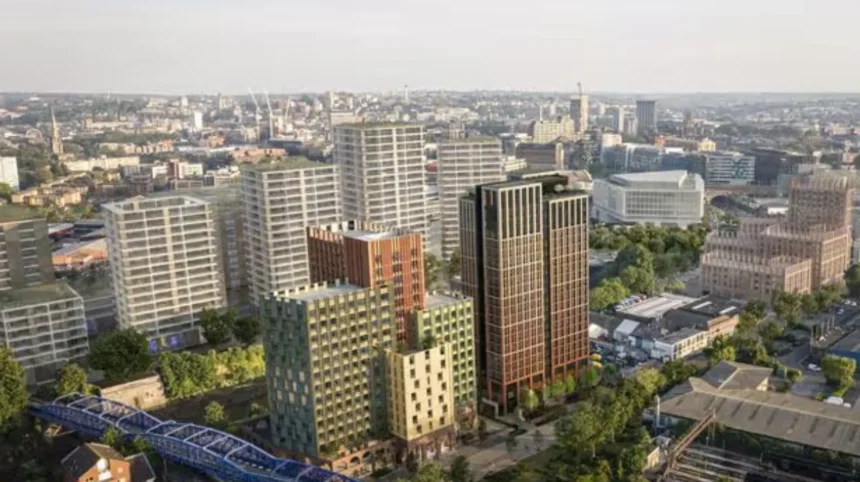
Bedminster Green is another major housing-led regeneration area in south Bristol. The project covers five development plots and combines housing with public-space improvements, transport changes and environmental works.
The framework includes affordable housing, private rented homes, homes for sale and student accommodation. It also includes restoration of the River Malago and proposals for a low-carbon district heating network.
Frome Gateway
Frome Gateway sits in St Jude’s and Lawrence Hill, immediately north of Bristol city centre. Its regeneration framework targets at least 1,000 new homes, alongside employment space, improved public areas and Riverside Park improvements.
The project focuses on previously developed land and seeks to reconnect the area with the River Frome and surrounding communities.
Lockleaze
Lockleaze has a significant regeneration programme supporting more than 700 new homes, together with transport infrastructure and improvements to the existing estate.
The location demonstrates how new housing can form part of an estate regeneration programme rather than being limited to large private developments.
Hengrove Park and Hartcliffe
South Bristol also has substantial development activity at Hengrove Park and Hartcliffe Campus. The second phase of Hengrove Park has outline consent for up to 1,435 new homes, with a minimum of 30% affordable housing and a new public park.
What types of homes are being built in Bristol?
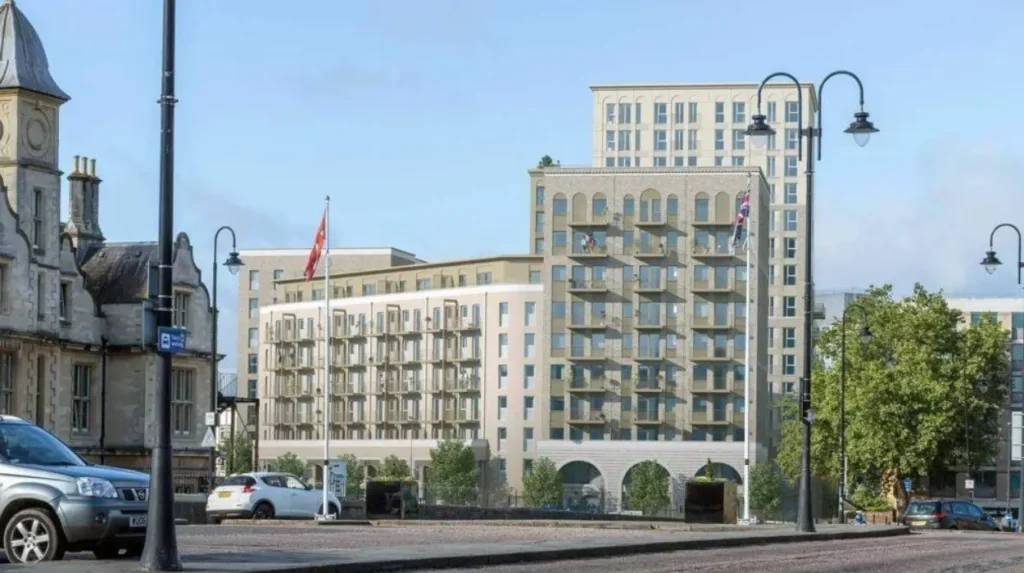
New build developments in Bristol include houses, apartments, affordable homes, social-rent properties, shared-ownership homes, private rented accommodation and purpose-built student housing. Examples include family houses in Lockleaze, apartments in Bedminster Green and affordable council homes across south Bristol.
The mix depends on the location, planning permission, developer, local housing needs and development economics.
Houses
New houses remain important for families and households requiring additional bedrooms or private outdoor space. Lockleaze includes a mixture of houses and flats within its regeneration programme.
Apartments
Apartments form a major component of high-density urban development. Bristol’s 2025 monitoring report recorded 936 flats among the 1,703 dwellings completed in 2024/25.
Apartment-led development is particularly common around city-centre regeneration areas, transport corridors and former industrial sites.
Affordable housing
Affordable housing includes homes designed for households unable to meet their housing needs through standard market housing costs. Bristol’s definition covers affordable rented housing and affordable home ownership options.
The city delivered 607 new affordable homes in 2023/24. Between 2021/22 and 2023/24, Bristol delivered 1,390 affordable homes.
Social-rent homes
Social-rent homes are rented at regulated social housing rents and are generally provided by councils or registered housing providers.
Bristol City Council continues to prioritise social rent within its affordable housing programme.
Shared ownership
Shared ownership allows eligible purchasers to buy a percentage of a property and pay rent on the remaining share. Bristol uses this tenure within some council-led developments.
At Branwhite Close in Lockleaze, for example, 47 new homes include 37 social-rent properties and 10 shared-ownership homes.
How does Bristol decide where new homes can be built?
Planning policy determines where housing development is appropriate by assessing land availability, infrastructure, transport, environmental constraints, design standards, housing need and wider regeneration objectives. Bristol’s Local Plan provides the main policy framework for planning decisions.
The Bristol Local Plan contains policies used when deciding planning applications. The current adopted plan is being updated through the Bristol Local Plan 2022 to 2040 review, while preparation of the Bristol Local Plan 2045 has also started under newer planning regulations.
Local planning policy identifies suitable development locations and establishes requirements relating to land use, design, housing, transport, environment and infrastructure.
Supplementary planning documents provide additional guidance for specific areas and development types. Bristol has spatial frameworks for locations such as Bedminster Green, Bristol Temple Quarter, Frome Gateway and other regeneration areas.
Planning applications are assessed against relevant policies and material considerations. Developers also need to address matters such as access, drainage, ecology, heritage, building design, transport and community infrastructure.
This process means that a proposed new-build scheme is not simply a decision about constructing houses. It is part of a wider planning system designed to manage the impact of development on the surrounding area.
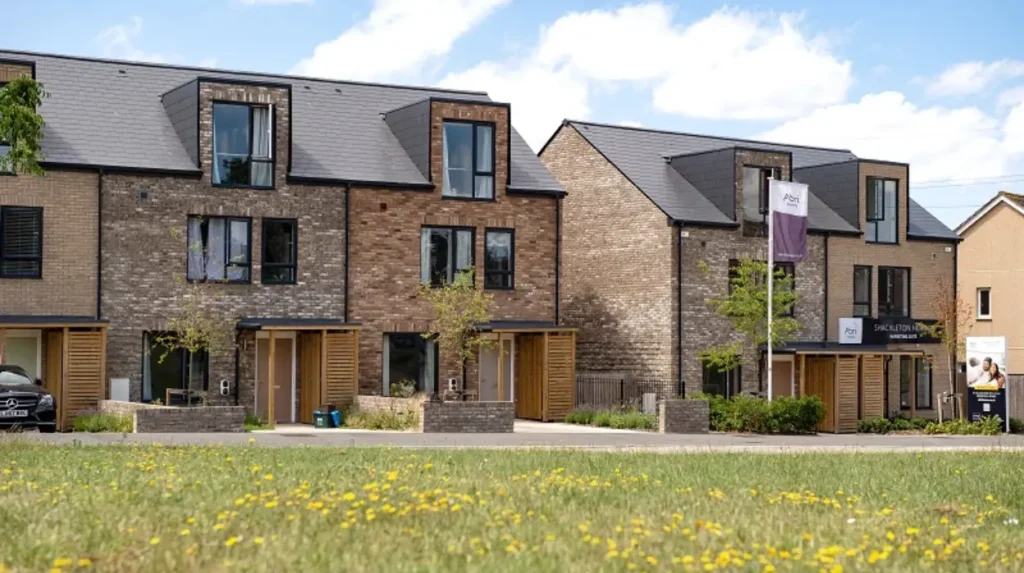
How are affordable homes included in Bristol new build developments?
Affordable housing is delivered through council programmes, housing associations, community-led schemes and private developments. Bristol’s affordable housing strategy prioritises social rent while also supporting shared ownership and other affordable tenure models across suitable development sites.
Bristol’s Homes for Bristol: Interim Affordable Housing Delivery Plan 2025–27 sets the city’s current affordable housing delivery priorities. The plan builds on Project 1000, which covered 2022–25.
Affordable homes can be delivered directly by the council or through partnerships with registered providers and private developers.
Planning obligations also play an important role. Section 106 agreements are legal agreements connected to planning permissions. Bristol uses Section 106 arrangements to secure affordable housing and other infrastructure contributions where applicable.
Council-led development provides another route. At One Lockleaze, the wider development contains 268 homes, with 55% identified as affordable in the council’s affordable housing delivery plan. The development includes social-rent and shared-ownership homes.
This approach allows new developments to serve different income groups while supporting broader housing delivery targets.
What role does brownfield land play in Bristol’s new build developments?
Brownfield land is central to Bristol’s housing strategy because it allows new homes to be delivered within the existing urban area. Examples include former industrial sites, underused land and previously developed plots in Temple Quarter, Frome Gateway, Lockleaze and other regeneration locations.
Brownfield land means land that has previously been developed. It can include former industrial premises, commercial sites, garages, transport-related land and previously occupied plots.
Bristol has a strong policy reason for prioritising brownfield development. Urban sites reduce pressure on undeveloped green spaces outside the existing built-up area.
The latest monitoring figures demonstrate the importance of this approach. In 2024/25, 92.5% of Bristol’s housing completions were on previously developed land.
Brownfield redevelopment also supports efficient use of existing infrastructure. Sites close to railway stations, bus routes, employment centres and local services can support shorter journeys and more sustainable transport patterns.
However, brownfield land often has complex development conditions. Contamination, demolition, infrastructure constraints, land ownership, abnormal construction costs and viability issues can increase the cost of delivering housing.
Bristol City Council has specifically identified construction costs, labour costs, building safety requirements and constrained brownfield sites as factors affecting housing scheme viability.
What is happening with new council housing in Bristol?
Bristol City Council is expanding its council housebuilding programme through brownfield development, partnerships and affordable housing schemes. Current projects include homes in Lockleaze, Filwood and south Bristol, with social rent and shared ownership forming important tenure options.
The council’s current new-build programme includes several identifiable projects.
At Branwhite Close in Lockleaze, 47 homes are being built through a partnership between Bristol City Council and Homes England. The scheme contains 37 social-rent homes and 10 shared-ownership homes.
At the Cameron Centre in Lockleaze, the council is building 37 homes, with the homes designated for social rent.
At Filwood Cinema, 30 new council homes are being delivered alongside community and commercial space. Twenty-four are designated for social rent and six for shared ownership.
At One Lockleaze and Romney House, the council is buying 110 homes, comprising 68 social-rent homes and 42 shared-ownership homes. Completions are scheduled to continue through 2026 into spring 2027.
These schemes show how council housing is increasingly integrated into mixed-use and mixed-tenure development.
How does regeneration influence new build developments in Bristol?
Regeneration links housing construction with improvements to transport, public spaces, employment, environmental infrastructure and community facilities. Bristol’s major schemes therefore treat new homes as part of wider neighbourhood transformation rather than isolated residential construction.
Bedminster Green provides a clear example. The project combines housing with River Malago restoration, improved walking and cycling infrastructure, public transport improvements and a low-carbon district heating network.
Frome Gateway similarly combines housing with workspaces, community facilities, green infrastructure and improvements around the River Frome.
Western Harbour is being planned around major transport infrastructure requirements as well as housing. The area is predominantly brownfield and sits within walking and cycling distance of the city centre.
This integrated approach affects the quality and long-term performance of new developments. New homes require appropriate roads, footways, public transport, drainage, open space, schools, healthcare facilities and community services.
Regeneration frameworks help coordinate these elements across large areas.
What should buyers check before purchasing a Bristol new build home?
Buyers should examine the development’s planning permission, tenure, service charges, management arrangements, warranty, energy performance, parking provision, transport connections, construction stage and surrounding regeneration plans before committing to a new-build property.
A new-build purchase involves more than the advertised property price.
Buyers should first establish whether the property is freehold, leasehold or shared ownership. Apartments are commonly leasehold and can involve service charges for communal maintenance, building management and shared facilities.
The planning application provides useful information about the wider development. It can reveal approved building heights, access arrangements, parking, landscaping, affordable housing, commercial space and infrastructure requirements.
Buyers should also examine the property specification. Important information includes floor area, number of bedrooms, storage, heating system, insulation, glazing and energy performance.
The warranty provider and terms should also be checked. New homes are subject to statutory building requirements and developer warranty arrangements, but purchasers should understand exactly what the relevant warranty covers.
Location remains important. A new home close to a railway station or major bus corridor has different transport characteristics from a development that depends heavily on private car use.
Future construction also matters. A newly completed apartment can sit beside active construction for several years if the wider masterplan contains additional phases.
How do new build developments affect Bristol’s housing market?
New-build construction increases housing supply, creates affordable housing opportunities, supports regeneration and changes local neighbourhoods. Its market impact depends on delivery rates, property prices, tenure mix, construction costs, employment growth and the balance between housing demand and available supply.
Bristol’s housing market remains comparatively expensive. The ONS recorded a provisional average house price of £357,000 in June 2026. The average price paid by first-time buyers was £317,000.
Increasing supply therefore remains a significant policy objective.
The city’s latest key facts report recorded 208,000 dwellings at the end of March 2024. It also reported that 16,016 dwellings had planning permission in April 2024, including 3,021 under construction and 3,343 identified as affordable homes.
Planning permission does not equal completed housing. Projects move through land assembly, financing, detailed design, procurement, construction and handover. Market conditions and construction costs also influence delivery.
The gap between permission and completion explains why housing monitoring remains important.
What does the future look like for new build developments in Bristol?
Bristol’s future housing pipeline is closely connected to Temple Quarter, the emerging Local Plan, brownfield regeneration, affordable housing policy and major urban renewal projects. Continued delivery will depend on planning, infrastructure, construction capacity and viable development models.
The emerging Bristol Local Plan sets a minimum annual requirement of 1,925 new homes and a minimum of 12,000 new affordable homes for 2022–2040.
Temple Quarter remains one of the largest long-term opportunities, with an ambition for 10,000 homes and 22,000 jobs across a 135-hectare regeneration area.
Frome Gateway has an ambition for at least 1,000 new homes.
Hengrove Park has an outline programme for up to 1,435 new homes, with at least 30% affordable housing.
Lockleaze is targeting more than 700 new homes alongside estate regeneration and infrastructure improvements.
Western Harbour is progressing through masterplanning focused on housing, transport infrastructure and sustainable urban development.
These programmes establish a substantial long-term development pipeline.
Bristol’s future new-build market will therefore remain strongly connected to brownfield redevelopment, regeneration and public-private housing delivery.
What are the key facts about new build developments in Bristol?
Bristol’s new-build sector is driven by housing demand, brownfield regeneration and long-term planning. Recent evidence records 1,703 annual completions, 92.5% brownfield delivery, a 1,925-home annual planning target and major schemes across the city.
Bristol’s housing development landscape can be summarised through several important facts.
The city recorded 1,703 additional dwelling completions in 2024/25.
92.5% of completions were on previously developed land, demonstrating the importance of brownfield redevelopment.
The emerging Local Plan establishes a minimum annual requirement of 1,925 new homes and at least 12,000 affordable homes between 2022 and 2040.
Bristol delivered 607 affordable homes during 2023/24, while 1,390 affordable homes were delivered between 2021/22 and 2023/24.
Temple Quarter has an ambition for 10,000 homes and 22,000 jobs across 135 hectares.
Frome Gateway has an ambition for at least 1,000 homes.
Hengrove Park has an outline programme for up to 1,435 homes, with a minimum of 30% affordable housing.
Lockleaze has a regeneration programme supporting more than 700 homes.
Together, these figures show why new build developments in Bristol are central to the city’s housing, regeneration and planning agenda. For buyers and residents, the most important factors are not simply the number of homes being built, but their location, tenure, design, affordability, transport connections, infrastructure and relationship with the surrounding neighbourhood.
Where are the main new build developments in Bristol?
Major development and regeneration areas include Bristol Temple Quarter, Bedminster Green, Frome Gateway, Lockleaze, Hengrove Park, Hartcliffe and Western Harbour. These locations include brownfield redevelopment, housing construction and supporting infrastructure.